
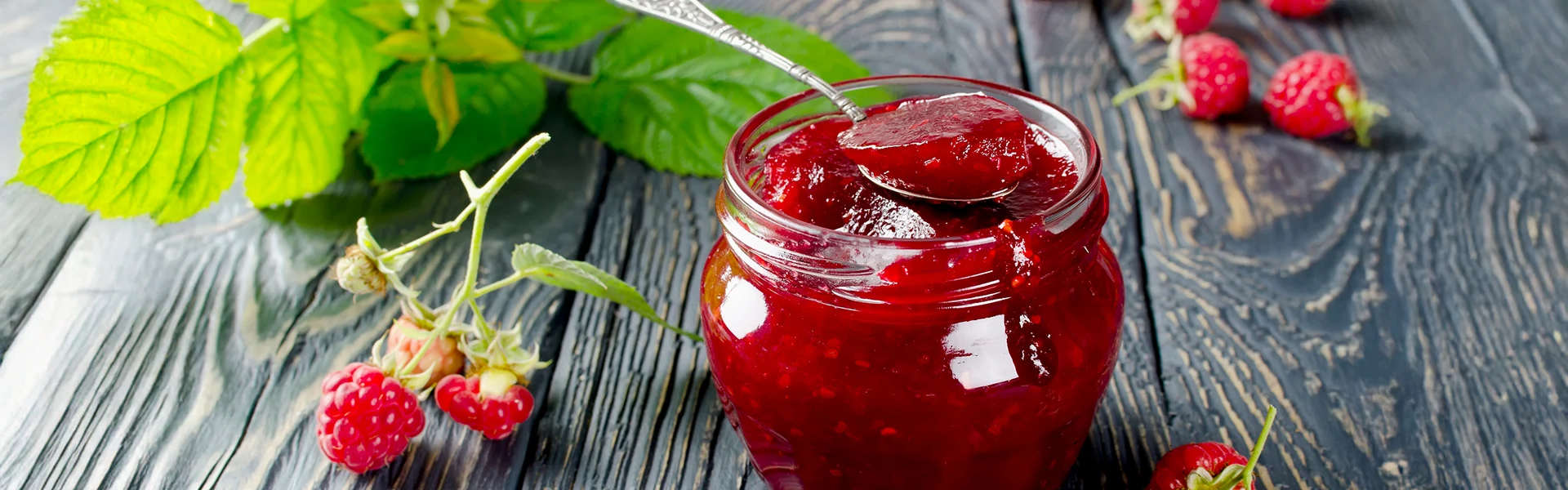
Can you freeze jam?
Preserve, jelly or fruit spread – jam comes in many different forms. Which is also precisely the case when it comes to preserving this sweet-tasting spread. That’s because many people don’t know – jam is suitable for freezing. Read our article to discover all the benefits this brings.
The key points
- Jam can be frozen to extend its shelf life – this is ideal for versions containing less sugar and no preservatives.
- The flavour is retained as long as the jam is packaged in an airtight container and is not frozen for too long.
- Jars are particularly suitable for freezing, but should only be filled to 7/8 full because the jam may expand as it freezes.
- Frozen jam will last for 6–12 months, but should not be refrozen.
- Healthy jam can be made with natural ingredients such as agar-agar, lemon juice and a small amount of sugar.
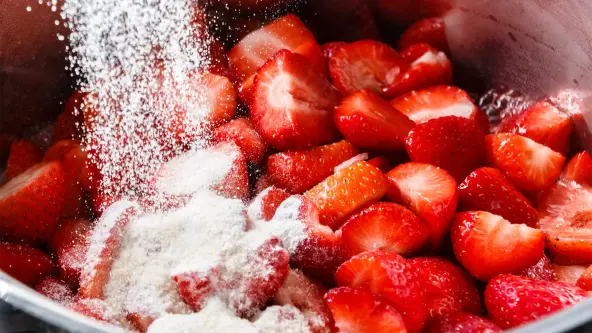
Preserve jam with jam sugar
What is it that actually preserves jam? For our grandparents’ generation, the universal response to this question was “sugar”. Fruit and sugar were mixed in equal parts. While this certainly gave you something tasty to spread on your toast, it was a relatively unhealthy breakfast.
The emergence of jam sugar allowed the proportion of sugar to be greatly reduced. Sugar – known as white gold in the past – is then mostly added in ratios of only 1:2 or even 1:3. One significant disadvantage of this modern ‘helping hand’ in the kitchen is the palm oil it often contains – which is intended to reduce the build-up of foam when boiling – and the preservative. The latter ensures that the preserve will last for several months or even years with very little sugar.
Freeze homemade jam with less sugar and natural ingredients
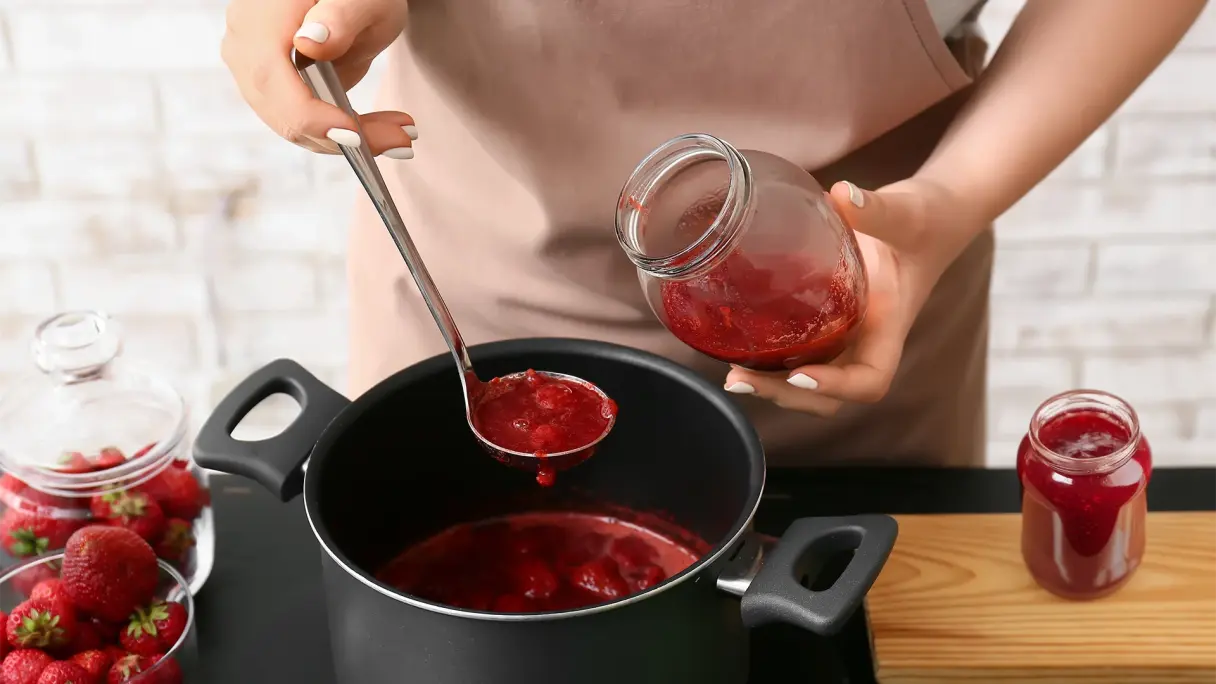
Anyone coping with intolerances or who generally wishes to do without preservatives but still wants to reduce the amount of sugar must expect to compromise on shelf life. Natural and less sweet varieties of jam have significantly shorter shelf lives. This is where a freezer comes in handy. The low temperatures of -18 °C block the enzymatic reactions or cause them to occur more slowly. Freezing homemade, natural jam means you can enjoy eating it for longer.
FAQ: freezing jam
No, the flavour is generally retained if the jam is packaged in an airtight container and is not stored for too long. Freezing preserves the natural fruit flavour so that it hardly changes.
A healthy jam is easy to make with preserving sugar, lemon juice and agar-agar. It’s important to process it carefully so that the jam lasts for as long as possible without any chemical additives.
Frozen jam can be kept for at least 6–12 months. Although it can still be eaten after this time, the aroma and consistency could change. A consistent storage temperature of -18 °C will ensure the best shelf life.
It’s not advisable to refreeze jam after defrosting because repeated freezing and defrosting can cause its consistency to deteriorate. The best option is to freeze it in portions so you then only ever have to defrost the amount you need.
Freeze jam in a jar
Jam should not be frozen until it has completely cooled. Preserving jars are ideal for this because they are extremely heat resistant and are better able to withstand stresses. Generally, however, any jar can be used. It’s now all about the correct way to add the jam: Just to be on the safe side, the jar should only be filled to around 7/8 full as in some circumstances the liquid preserve may expand slightly in the freezing process. We recommend using a jar with as large a diameter as possible and storing the homemade jam upright.
To create better portion sizes, you can pour the jam into ice cube trays. Ice cube trays with a lid are an ideal choice.
To enjoy the perfect homemade jams, it’s best to take them out of the freezer the evening before you want to consume them, let them defrost slowly and then enjoy them the next morning.
This might also interest you

Organising the fridge: clear, efficient and smart
From reusable containers to temperature zones: Organising the fridge, saving space and keeping food fresh for longer.

Strawberry – low-calorie source of vitamin C
Popular among young and old alike – the strawberry. It contains more vitamin C than a lemon or orange and is also very low in calories. Find out more now.

Freezing without plastic using these alternatives
Freezing without plastic: discover sustainable alternatives such as glass, stainless steel and wax wraps to keep food fresh in an environmentally friendly way!