The key points
- Probiotic effect: fermented drinks support the intestinal flora and promote digestion.
- Natural refreshment: fermented drinks offer a healthy alternative to soft drinks.
- Longer shelf life: fermentation naturally keeps drinks fresh for longer.
- Homemade or bought: from kombucha to kefir – find a wide selection in shops or simply make your own.
Fermented lemonades and co. – what’s behind them?
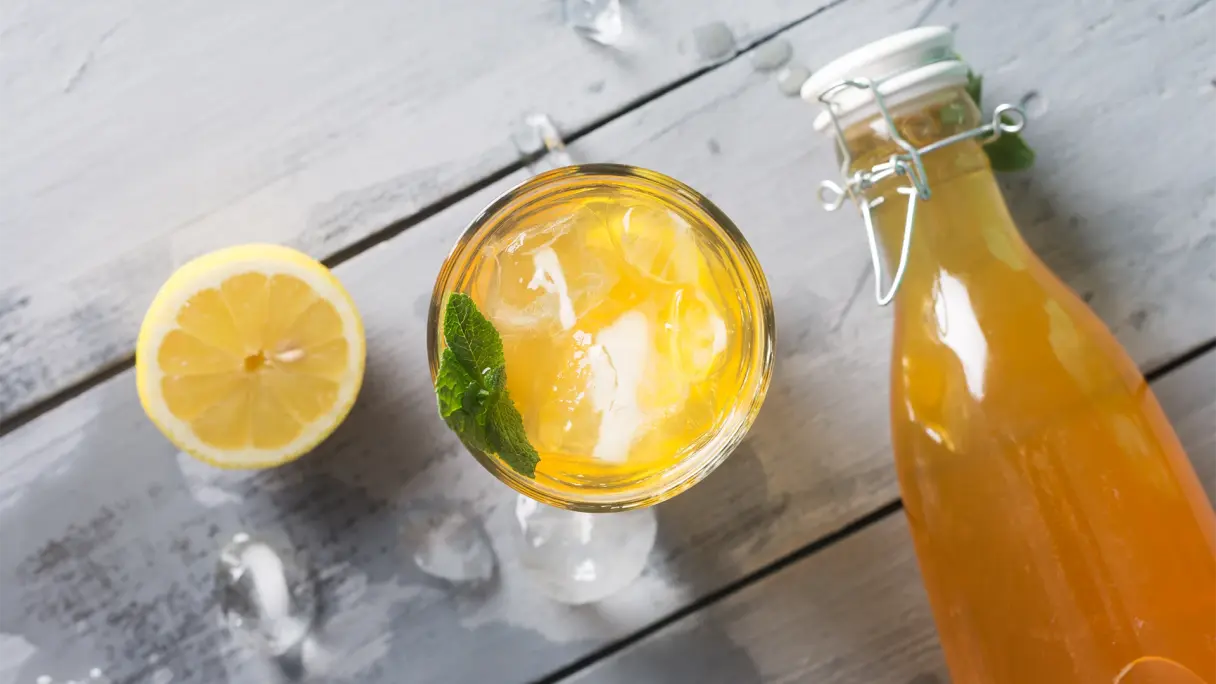
Sour, fizzy, natural and unique: this is how the taste of the (almost) non-alcoholic drinks fermented with lactic or acetic acid can be described. The long-established manufacturing process is currently enjoying great popularity. In addition to an exciting taste experience, milk and vinegar-fermented drinks also have a lot to offer our health! These fermented drinks were widely consumed thousands of years ago, even though their benefits were not yet known. In Egypt and the Middle East, low-alcohol beverages fermented with milk and vinegar were already being consumed in the Neolithic period. In Europe, alcoholic beverages such as wine and beer were mainly produced through fermentation. While the process was mainly used for preservation purposes back then, health aspects are more relevant today. Fermented drinks are an indispensable part of the supermarket range and, for some, of their own fridge.
Fermentation is the chemical conversion of organic substances by microorganisms such as yeasts, bacteria and fungi. In the absence of air, they convert sugar into acids, alcohol or carbon dioxide at room temperature. The acids ensure that harmful bacteria which could otherwise spoil the beverage are killed off. Fermenting a drink makes it last longer.
Fermented drinks – a real source of probiotics!
Milk and vinegar-fermented drinks are considered a healthy and natural alternative to artificially carbonated soft drinks. Lemonades can be produced by fermentation, for example. Fermented drinks are particularly popular because they can help maintain a healthy balance of intestinal flora, which has a positive effect on digestion. Due to the large amount of probiotics they contain. These are microorganisms that occur naturally in our intestinal flora. Their task is to provide enzymes for breaking down food, vitamin K, certain B vitamins and minerals. Probiotics also prevent the build up of pathogenic yeasts and bacteria and inhibit inflammations.
In addition to these health benefits, taste also plays an important role. If you enjoy flavoured drinks and are looking for something other than unsweetened tea, fermented drinks could be just the thing for you. Various ingredients such as fruits, herbs or spices can be used to create individual flavours ranging from tangy and fruity to mildly sour.
Make your own fermented drinks or buy them?

Fermented drinks come in many varieties, which you can either buy or make yourself. One of the most well known fermented beverages is kombucha, which has its origins in Asia. It is a fizzy drink made from sweetened black or green tea and the kombucha ‘mushroom’. After about one to two weeks, the kombucha fungus ferments into a carbonated drink, which you can also make yourself at home.
Kefir is another fermented drink. It is a sour milk beverage made by fermenting cow or goat milk with small kefir grains. You can find this fermented drink in every supermarket’s fridge and freezer section.
Fermented juices and lemonades can also be made at home. Fill a clean jar with a handful of your favourite fruit. Add one tablespoon each of honey and whey and a few herbs, such as mint or rosemary if you like. Then fill the mixture with water and leave it to stand at room temperature for two to three days. The finished soft drinks will keep for up to a week in your fridge-freezer. Try them all and find your favourite fermented drink!