Spring onions – calories, vitamins and other nutritional values
Spring onions are one of the most popular spring vegetables and are loved for their taste and nutritional value. They are low in calories and rich in vitamins and phytochemicals. In this article, you will learn more about their nutritional values and health benefits as well as the best way to store spring onions.
The key points
- Low in calories: only 27 kcal per 100 g
- Rich in vitamin K (blood clotting) and vitamin C (immune system)
- Contain folic acid, potassium and anti-inflammatory allicin
- Green leaves especially rich in nutrients – do not throw away
Effects, benefits and nutrients of spring onions
Spring onions are a real insider tip for anyone who lives a healthy and sustainable lifestyle. Thanks to their low calorie content of around 28 kcal per 100 g, they are ideal for a calorie-conscious diet. At the same time, they provide important micronutrients such as vitamin C, vitamin K and folic acid as well as minerals such as potassium and calcium. The secondary plant substances they contain, in particular flavonoids and sulphur compounds, can not only aid your digestion, but also support your metabolism. Another advantage is that spring onions are filling due to their high water and fibre content, without weighing the body down. They can help to avoid food cravings.
If possible, they should be eaten before flowering, as their flavour and nutrient content decrease significantly afterwards. If you grow them yourself or buy them fresh from the market, you should therefore choose young, crunchy specimens. This ensures that both the mild flavour and the healthy ingredients are optimally preserved. The typical flowering time is usually May to July in the second year after sowing. The plants then sprout a long flower stem with a spherical, white or slightly greenish flower (similar to chives or ornamental onions).
Whether raw in salads, lightly steamed in vegetable stir-fries or as a fresh topping on soups, spring onions are very versatile and enhance any meal with their mild flavour and healthy ingredients. Utilise the whole plant, as the greens of the spring onion are also edible and contain many nutrients. Simply cut the vegetables into small pieces and remove only the roots. In this way, you avoid wasting food and utilise the vegetables holistically.
With BioFresh technology, sensitive vegetables such as spring onions stay fresh for much longer at just above 0 °C and optimum humidity. This allows you to enjoy the valuable ingredients for longer. If you want to freeze spring onions in portions, NoFrost is the perfect choice. It prevents ice from forming on the food and preserves its structure and flavour.

When spring onions are in season and flowering
In Germany, they’re in season between April and October. During this time, they are particularly fresh from local cultivation and are particularly flavourful and rich in nutrients. If you want to shop regionally and seasonally, spring onions are a good choice. It’s not only good for the environment, but also your taste buds. You can usually get the best quality at weekly markets or in farm shops, as these have often been freshly harvested.
Hobby gardeners should take a look in their own garden, as spring onions are easy to grow and can be harvested just a few weeks after planting. It is important to utilise them in good time. When they start to flower between June and August, they lose a lot of flavour and nutrients. So look for plants that are vigorous but not yet flowering.
The difference between spring onions and green onions
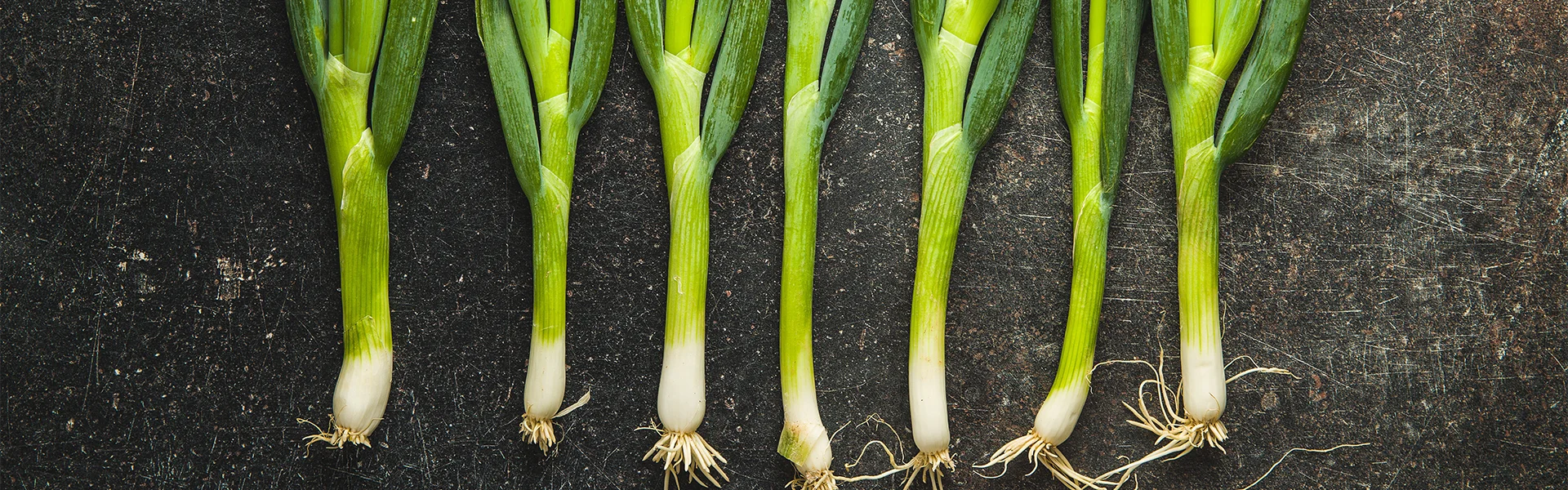
The terms spring onions and green onions are often used as synonyms. In fact, there is a subtle but important difference, both in terms of cultivation and in the kitchen. Spring onions are a distinct type of onion that do not form a fully developed bulb. Instead, its stem is white to green throughout and remains slender and delicate. They are usually used including the green part and have a milder flavour than onions.
Green onions, on the other hand, are young edible onions that are harvested very early. They often already have a slightly thickened onion base and a more intense flavour. Their flavour is somewhat stronger and more reminiscent of traditional onions.
In practice, this difference has an impact on use and storage. Green onions lose their flavour more quickly and are more robust in preparation.
Both varieties are healthy, low in calories and versatile. If you prefer mild and fresh, you should opt for spring onions. For more intense flavour, green onions are the right choice.
FAQ – spring onions
Spring onions can be enjoyed raw or cooked and are versatile in the kitchen. The mild flavour makes them ideal for salads, dips, soups, wok dishes or as a fresh topping. Both the white and the green part are edible. Wash the vegetables thoroughly and cut them into rings. Depending on the recipe, you can use them raw or sauté them briefly. In Asian dishes or as a substitute for chives, spring onions provide a fresh, slightly spicy flavour. They are particularly popular finely chopped over potato dishes, scrambled eggs or bowls. Spring onions are not only delicious, but also low in calories and rich in nutrients.
Spring onions are rich in vitamin C, K and folic acid, as well as important minerals such as potassium and calcium. They also contain antioxidant plant substances, such as flavonoids and sulphur compounds, which stimulate the metabolism and support the immune system. Their high water content gives you a feeling of fullness with few calories. At only around 28 kcal per 100 g, the calorie count is quite low.
Freshly bought or harvested spring onions will keep in the fridge for around 3–5 days if they are stored in the vegetable drawer or wrapped in a damp cloth. You can store spring onions even better in the BioFresh safe from Liebherr at just above 0 °C. It is important not to seal them airtight to prevent moisture from forming. You can also cut the onions into rings, pack them airtight and freeze them. Thanks to NoFrost technology, they retain their quality for weeks without freezer burn.