
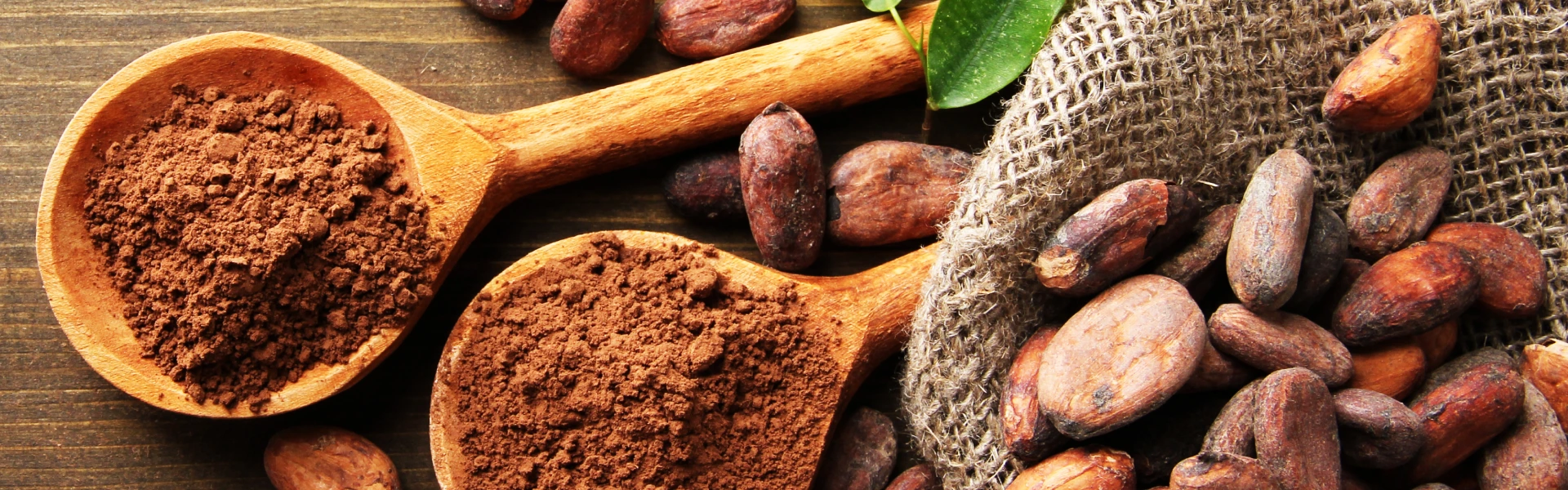
Cocoa: nutritional values, fat content and origin of the treat
A cup of hot chocolate on a cold day, a comforting piece of chocolate if you're feeling down. With such delicious forms of cocoa, who is going to ask about the nutritional values? This might be an everyday treat for us today, but in earlier times it was a genuine luxury item. We’ll tell you the history of cocoa and explain what the nutritional values of cocoa actually are.
The key points
- Origin: cocoa trees originate from tropical regions like Africa, Central and South America and were already used by the Mayans and Aztecs.
- Production: initially, cocoa beans are white and it’s not until they undergo fermentation, drying and roasting that they develop their brown colour and typical aroma.
- Nutritional values: cocoa contains 50–60% fat due to the cocoa butter, along with minerals such as magnesium and calcium.
- Special feature: cocoa can have a mood-lifting effect due to ingredients like caffeine and theobromine – but it’s toxic to pets.
Cocoa and its nutritional values – list of contents
The origin of cocoa
Let’s first look at the cocoa plant before we move on to nutritional values and vitamins. Cocoa trees belong to the mallows family and, like coffee, grow in tropical rainforests. The plants require a high level of moisture and temperature, which is why they only thrive here. The main growing regions for cocoa are therefore located in Africa, the Ivory Coast in particular, Indonesia and in Central and Southern America. A single fruit from a cocoa tree contains 20 to 50 cocoa beans which supply the raw material for chocolate.
Cocoa has a cultural history stretching back almost three thousand years. Cocoa origins can be traced to the Maya people in South America in 600 AD. During the conquering of the Maya people by the Aztecs, cocoa beans had a key role to play. The valuable beans were demanded as a tribute payment by the Aztecs. The Aztecs then used the beans as a means of payment and to prepare a cocoa drink known as “Xocoatl”. It was only due to Hernán Cortés, the Spanish Conquistador, that the cocoa beans made their way to Spain in 1528. Up until the 19th century, however, chocolate or cocoa had been the preserve of society’s upper classes. The exclusivity was due to the costly manufacturing process and the valuable ingredients, including, of course, cocoa beans, but also sugar and expensive spices such as vanilla and cinnamon.
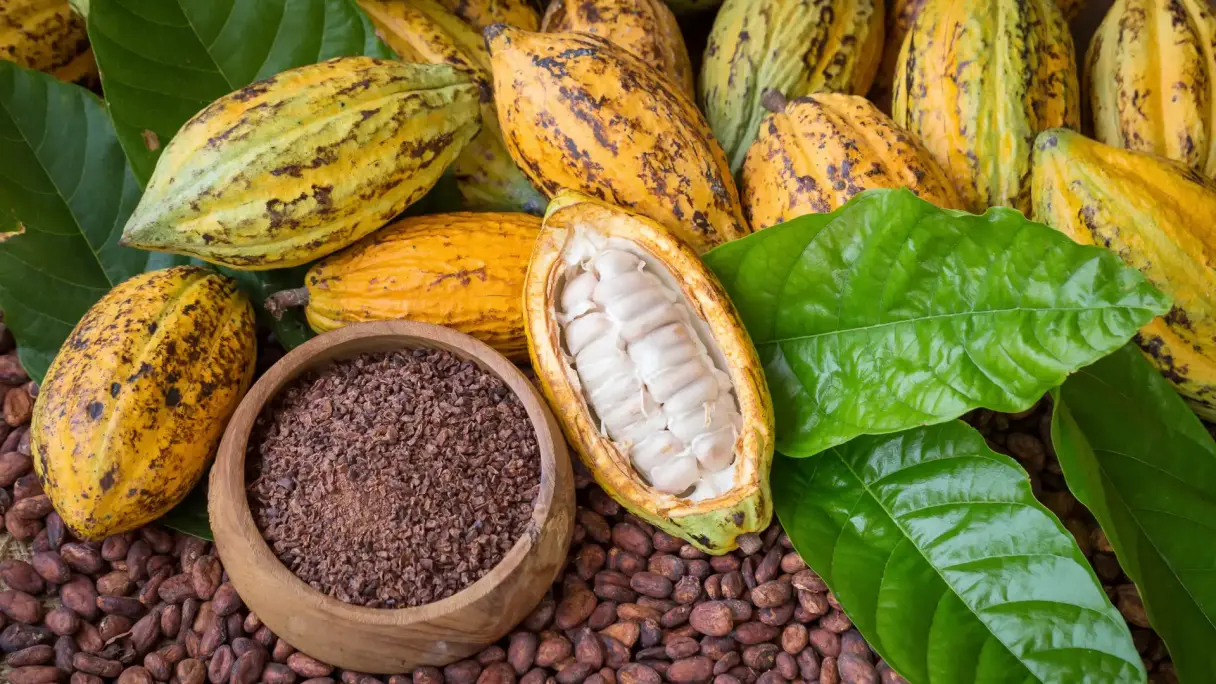
How is cocoa produced and what are its nutritional values?
You'd be forgiven, straight after the harvest, for thinking cocoa beans to be brown in colour – the colour of the chocolate we love. But rather than being brown, cocoa beans actually start off white. It’s only the fermentation process that gives them their brown colour and characteristic aroma. The beans are then dried and roasted. The roasting in particular is essential because it's not until then that the typical cocoa aromas are created. To turn the beans into chocolate, they are broken open, the shell is removed and they are ground into cocoa mass.
But what are the nutritional values and fat content of cocoa? Cocoa beans have a very high fat content of 50 to 60 percent due to the cocoa butter they contain. Besides fat, cocoa contains the minerals magnesium and calcium. But which nutritional values of cocoa give it its unhealthy reputation? Chocolate and chocolate products frequently contain large amounts of sugar which makes them a treat full of calories.
However, as chocolate has a mood-enhancing effect, it’s still very popular. What causes this feeling of happiness when we eat chocolate? It’s quite possible that the caffeine and theobromine contained in cocoa produce a mood-enhancing effect. A further reason may be due to the increased sugar content of chocolate products. This is because it ups serotonin levels. It causes a feeling of happiness which is why serotonin is referred to as the happiness hormone.
And pet lovers be warned! Theobromine from cocoa is poisonous to dogs, cats and even horses because they don’t have the enzyme enabling them to break down the substance. So, what may be a treat for us, is genuinely poisonous for our four-legged friends. Therefore never leave chocolate unattended around animals. The nutrients in cocoa can make us feel happy – but not our pets. In summer, chocolate should be placed in your fridge.
This might also interest you

Chocolate: nutritional values and calories of this tasty treat
Do you like eating chocolate to reward yourself from time to time and want to find out more about the nutritional values and calories of this sweet delight? Read on to learn more about the tasty treat.

Shelf life of chocolate: correct storage and freezing
Chocolate and shelf life: Here you can find out how to freeze, store and preserve chocolate.

Storing tea optimally – in the fridge?
Tea is drunk all over the world. We’ll tell you the best way to store it and the best things you can do with freshly brewed tea. What do you need to watch out for and can you store hot tea in the fridge? Find out more!