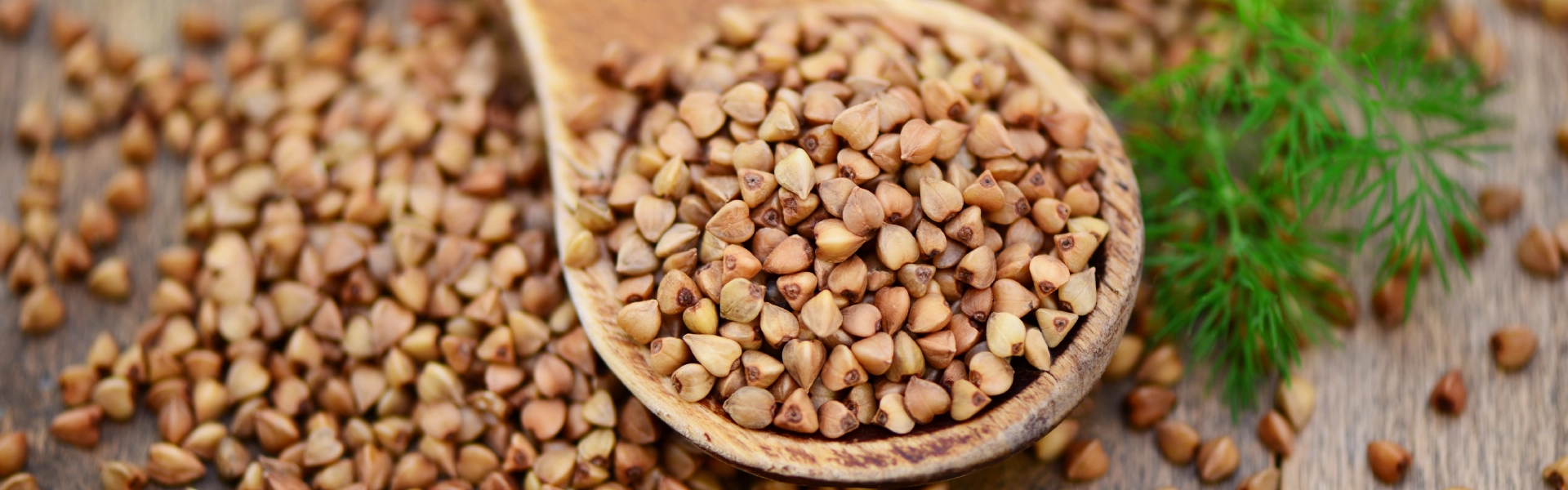
Buckwheat – healthy, wholesome and tasty
Buckwheat is healthy, contains about as much protein as wheat and helps to maintain a varied diet. Find out here how to make buckwheat part of your diet, what dishes it goes well with, and plenty of other information about the triangular pseudocereal.
The key points
- Buckwheat contains quite a lot of protein for a plant-based food, at around 10 g per 100 g.
- Buckwheat contains many minerals and vitamins, such as iron, magnesium and numerous B vitamins.
- Buckwheat products do not contain gluten.
- Buckwheat is a pseudocereal and has poor baking properties on its own.
- It has a strong, slightly nutty flavour.
- You can use buckwheat to conjure up wonderful breads, cakes, quiches, muffins, casseroles, patties, porridge, in muesli or as a topping for salads.
Buckwheat – a pseudocereal
In the Middle Ages, buckwheat was one of Europe’s staple foods because it was one of the few plants that grew reliably in poor soil. However, it was later displaced by the potato, which could also withstand such conditions. With the coming of the agricultural revolution and the development of fertilisers, people were able to grow more and more varieties of plants and buckwheat fell into obscurity. Despite what its name suggests, buckwheat isn’t a true cereal, but a pseudocereal. This is because it doesn’t belong to the grass family and, unlike true cereals, has poor baking properties on its own. However, pseudocereals can be processed in a similar way to cereals. They’re also comparable to cereals in terms of the substances they contain.
Is buckwheat healthy?
Buckwheat contains quite a lot of protein for a plant-based food, at around 10 g per 100 g. In addition, its composition makes it very digestible for the human body. Buckwheat also contains many minerals and vitamins, such as iron, magnesium and numerous B vitamins, which makes it a good part of a varied and balanced diet. On top of this, buckwheat doesn’t cause the blood sugar level to rise as quickly as wheat. This means it’s suitable for people suffering from diabetes, but a stable blood sugar level is also good for everyone else, warding off sudden cravings or the feeling of constantly wanting to eat.
Buckwheat as an alternative
People who have coeliac disease can enjoy buckwheat products without any worries, because it doesn’t contain gluten. But buckwheat is also a welcome alternative on everyone else's menu. With its strong, slightly nutty flavour, it brings entirely new aromas to the table. It can also be used to make a wide variety of dishes. In Eastern Europe in particular, buckwheat groats are a popular side dish to hearty meals. Small pancakes called blinis, which are made from buckwheat flour, are also very popular. But in France, too, the savoury version of the crêpe, the galette, is often made with buckwheat flour. In Japan, noodles are also made from buckwheat flour. Known as soba, you can buy them here in well-stocked supermarkets or Asian grocery stores.
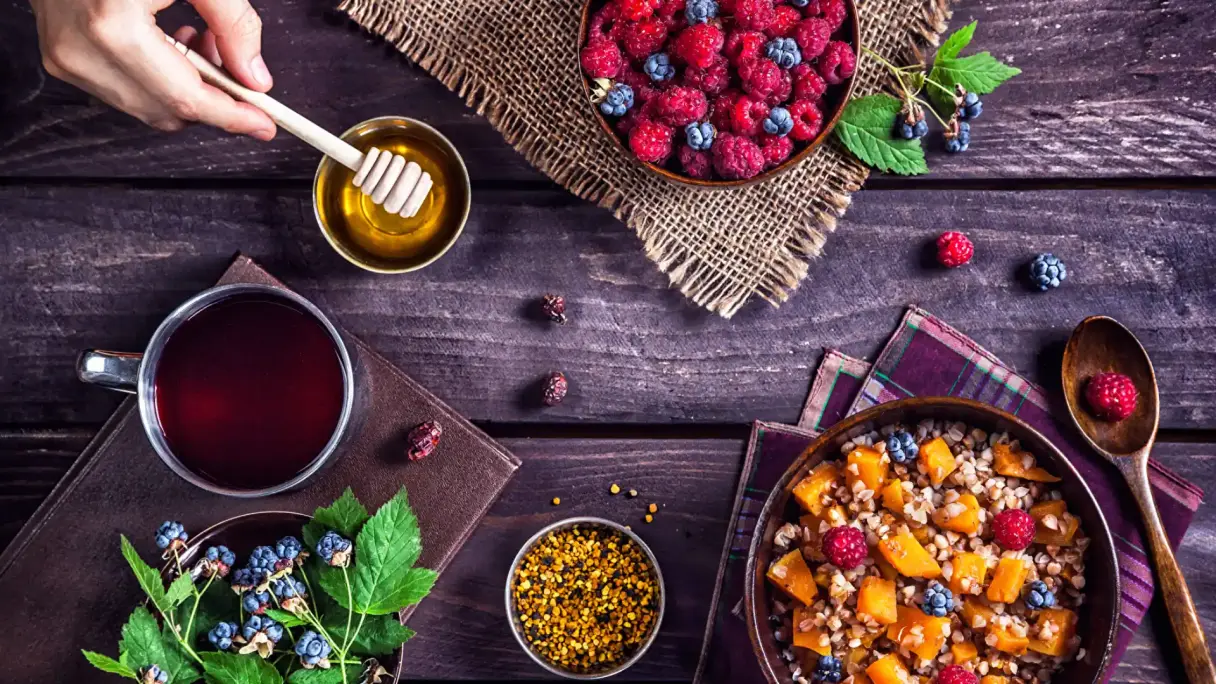
Particularly when mixed with other flours, buckwheat can be used to conjure up wonderful breads, cakes, quiches, muffins and many other goodies. You can also use it for casseroles and fritters. Raw or roasted if you like, buckwheat is great as a topping for salads or as part of your muesli. Just like oatmeal, you can cook it as porridge for your breakfast in the morning.You can even use the leaves of buckwheat by infusing them as a tea.
Disadvantages of buckwheat
For consumers, buckwheat doesn’t have any disadvantages. That’s because the buckwheat sold in supermarkets is always hulled. And it’s a good thing too, because the husk contains the red pigment fagopyrin, which if consumed in large quantities increases the sensitivity of the skin to light, and can lead to sunburn and inflammation. Also, the hard husks don’t soften enough when cooked, so the grain wouldn’t be suitable to eat.
But because buckwheat doesn’t contain gluten, its dough lacks the glue that binds it together. This means that when baking cakes and bread, you should add either other cereal flours, starch, egg, or soy flour, for example, for the best results. However, this is not necessary for pancakes.