
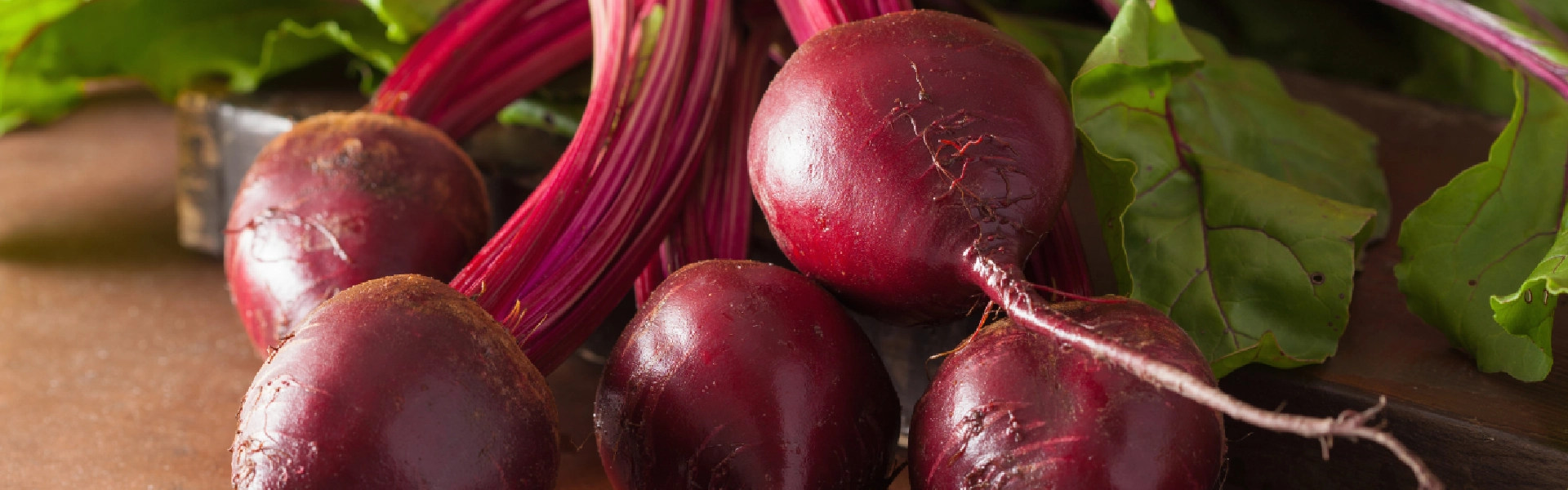
Beetroot – lots of vitamins and also a delight to eat raw
Beetroot is one of the healthiest vegetables of all. We’re familiar with it mainly in its cooked form. But what nutrients and vitamins does beetroot contain? Can you also eat the vegetable raw as it is and what’s the best way to store it? We’ll give you a number of facts and tips you need to know about this red tuber.
Storage time*
| BioFresh Fruit & Vegetable safe just above 0 °C with high humidity | 18 days |
| EasyFresh safe 7 °C with air regulation plate | 6 days |
| Fridge compartment 7 °C | 5 days |
| Freezer compartment -18 °C | 12 months |
The key points
- Beetroot can be eaten raw – this is a better way to preserve all the heat-sensitive vitamins and nutrients.
- The leaves of the beetroot are also edible and actually contain even more vital substances than the tuber.
- Cooked and peeled beetroot can be frozen in cubes or slices – ideal for prolonging its shelf life.
- With its many vitamins, minerals and few calories, beetroot is a real superfood.
Can you also eat beetroot raw?
Whenever we eat beetroot as part of our daily diet, it’s usually cooked. But can you not eat the vegetable raw? Quite the contrary! The healthy ingredients and vitamins in beetroot are sensitive to heat and are broken down during storage. That’s why raw beetroot is in fact even healthier than the cooked version. So the best option is to use fresh beetroot and enjoy eating it as a raw food.
And what should you do with the leaves? Beetroot leaves are far too good to end up in the compost! They also contain valuable vital substances, many more than the tuber itself. And they also taste wonderful.
Storing beetroot: how to keep it fresh for longer
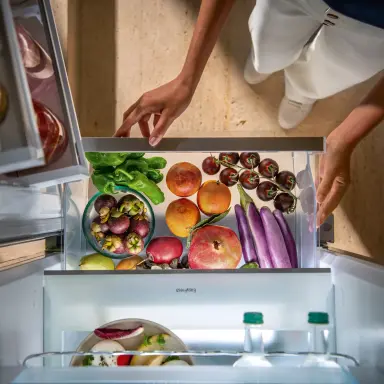
To make sure that beetroot stays fresh for as long as possible, it’s best to store it in the fridge, where it will stay fresh for up to six days. In a Liebherr appliance with a BioFresh safe, beetroot with all its vitamins and nutrients will even keep for up to 18 days. If you’d like to enjoy beetroot for even longer, you can also freeze it. But to do this, you should first cook the winter vegetable in boiling water with the skin on for around 30 to 50 minutes. Let it cool down and then peel off the skin. You can then process the tubers as you wish and cut them either into cubes or slices. To stop the cut beetroot from sticking together in the freezer, it’s a good idea to use a freezer tray, for example. At the same time, the freezer tray will also serve as a drip tray for the melting water when you decide you want to defrost the beetroot.
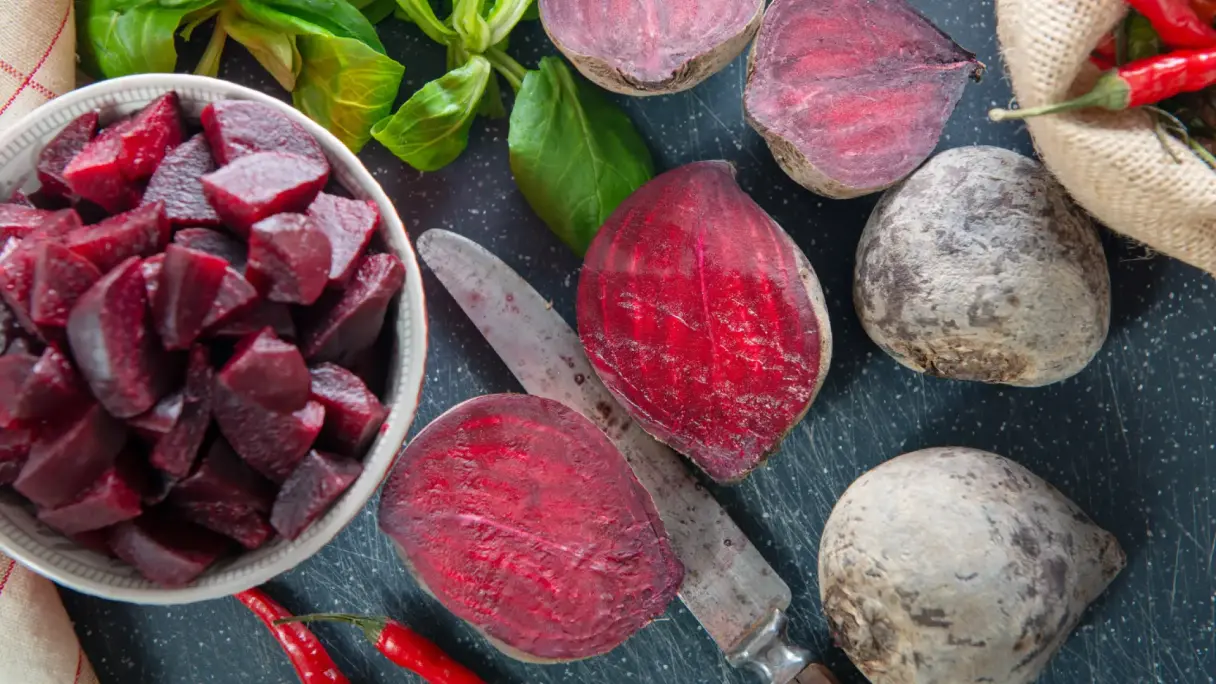
What makes beetroot healthy: vitamins, minerals and more
For more than 2,000 years, beetroot has been regarded as a vegetable and medicinal plant because of the vitamins, minerals and folic acid it contains. With its rich supply of vitamin B, potassium, iron, folic acid, fibre and secondary plant substances, it boosts the immune system and stimulates the metabolism. Just under 40 calories per 100 g make it a true power beet.
Beetroot stimulates the function of liver cells, stimulates digestion and fat metabolism and, if it’s consumed regularly, it helps to prevent heart attacks, strokes and vascular diseases. So beetroot really is healthy. If you drink beetroot juice, this also has an impressive effect. It will enhance your performance and also makes for a delightful drink.
*All specifications given are to be considered as guideline values, and depend in each case on the type of foodstuffs and on the proper storage without interruption of the cold chain from harvest/production through to the Liebherr appliance. Should food products have information about minimum shelf life, the date on the packaging always applies.
This might also interest you
Strengthening your immune system – 10 foods to improve your health
Can you strengthen your immune system by improving your diet? You sure can – and these 10 foods can help you. Read on to find out.
Superfood list for the summer – our top 10
Find out what’s behind the fruits and seeds on the superfood list. Are they really that healthy? Everything you need to know about local and regional alternatives.
Preserving food in the fridge for longer
Most foods can be preserved for longer if they’re stored in the fridge. This is why cool temperatures have an impact on the shelf life of food.