
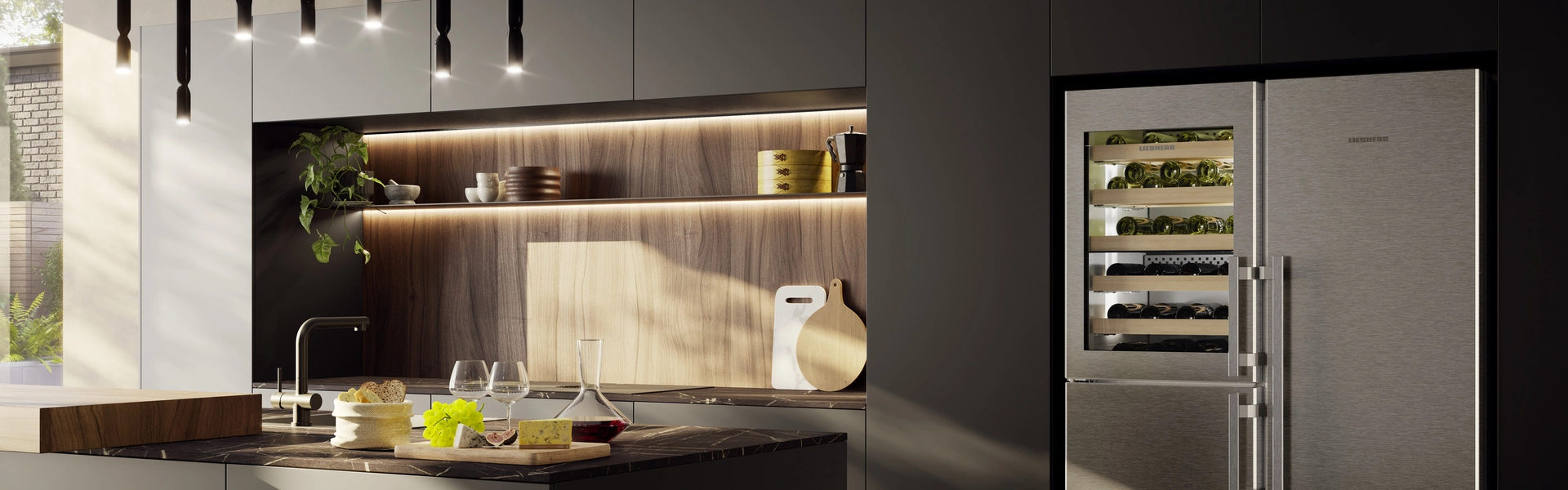
Kitchen planning: what you should consider – key tips
Every kitchen needs a fridge, a stove and work surfaces. But where should they ideally be located and what should you consider when planning the kitchen? Convenience and ergonomics play a key role in kitchen planning. Would you like to find out more about this? Read on to find out the best way to plan your new kitchen.
The key points
- Space and layout: a sensible division of the hob, sink and fridge will create short distances and let you work efficiently.
- Ergonomics and storage space: work surfaces should be adjusted to the correct height and the design should include sufficient cupboard space to keep things tidy.
- Lighting and materials: bright work areas and easy-care, durable materials will make your daily life easier.
- Technology and connections: sufficient sockets, good ventilation and clever positioning of appliances will improve functionality.
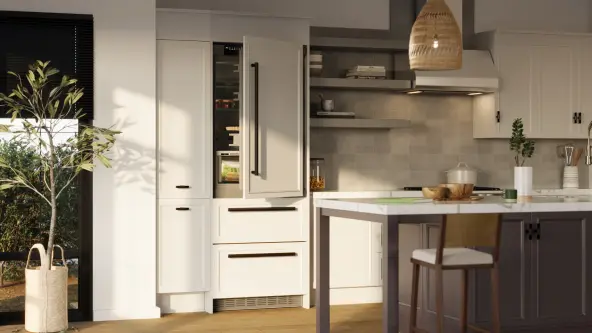
What you should consider when planning a kitchen
Before you start planning your kitchen, you should consider a few things. How many people will be using the kitchen regularly? Do you like cooking and do a lot of it, or do you tend to prepare quick snacks? Also consider what style you want your kitchen to have – modern, traditional or maybe even a cosy country-style kitchen? Think very carefully about what you want to place in your kitchen and which layout would be most convenient for you.
- Kitchen work triangle: short distances between the hob, sink and fridge so you can work efficiently.
- Storage space and work surface: enough space for crockery, food and kitchen appliances, combined with a spacious work surface.
- Ergonomics: appropriate worktop height and sensible arrangement of the elements to allow convenient working.
- Lighting: bright light sources above the work areas and atmospheric lighting for the living area.
- Materials and appliances: durable, easy-care materials and energy-efficient kitchen appliances for sustainable use.
You decide what’s important to you and what you want to consider in your kitchen planning.

Valuable tips for kitchen planning
- The fridge should not be placed right next to heat sources like a stove or radiator as otherwise the heat that is given off will compromise the energy efficiency and lifespan of your fridge.
- Design a work surface to be next to the fridge so you don’t have to walk far when you take food out of the fridge. It’s also very sensible to have a storage shelf for putting away the groceries you’ve purchased.
- The fridge should be sufficiently large for your household and have enough room for ventilation in its location. As a rule of thumb, a household of one or two people will require around 70 to 100 litres of usable capacity. For households with more people, you should add 40 to 50 litres for each additional person. You may wish to integrate a Side-by-Side fridge into your new kitchen.
- Think about the ergonomics of your kitchen and feel free to install appliances a little higher. The worktops should be sufficiently high that you can easily chop food and knead dough on them.
Leave space for sensible appliances in kitchen planning
When you plan your kitchen, you should set aside enough space for important appliances and extras. Air fryers or coffee machines, for example, should be easily accessible in a stable place. Toasters, kettles and blenders should also be in a fixed place so the work surface does not become cluttered. Bear in mind that you will require enough power sockets to connect all appliances.
FAQ: kitchen planning – what you need to consider
Mistakes that people commonly make when planning a kitchen are inaccurate measurements, not creating enough storage space or work surface, and creating a kitchen with an awkward shape. You should also allow for enough power sockets.
Yes, a stove and sink can be next to each other, but there should be a gap of at least 20 cm between them. This provides a convenient work surface between the two areas.
A passageway in the kitchen should be at least 90 cm wide so that doors and drawers can be opened easily and you have enough free space to move around. In busy or open-plan kitchens, 100–120 cm are ideal, especially if a number of people are cooking at the same time.
This might also interest you
Accessible kitchens: factors affecting convenience and safety
An accessible kitchen makes daily life much easier! Discover solutions for ergonomic work surfaces, smart kitchen appliances and non-slip floors.

Planning your weekly shop
Planning your weekly shop: saving time and money, enjoying a balanced diet and preventing food waste.
Organising the fridge: clear, efficient and smart
From reusable containers to temperature zones: Organising the fridge, saving space and keeping food fresh for longer.