DIP – flexible, fast and reproducible
In practice, profile modifications on gears often mean additional dressing tools, extra costs, and longer lead times. Processes such as line dressing are flexible, but time-consuming and only marginally cost-effective in series production. With DIP (dresser-independent profile modifications), Liebherr-Verzahntechnik GmbH has developed a generating grinding method that, for the first time, allows for profile modification during dressing using a profile dressing roll, thereby combining flexibility with short dressing times.
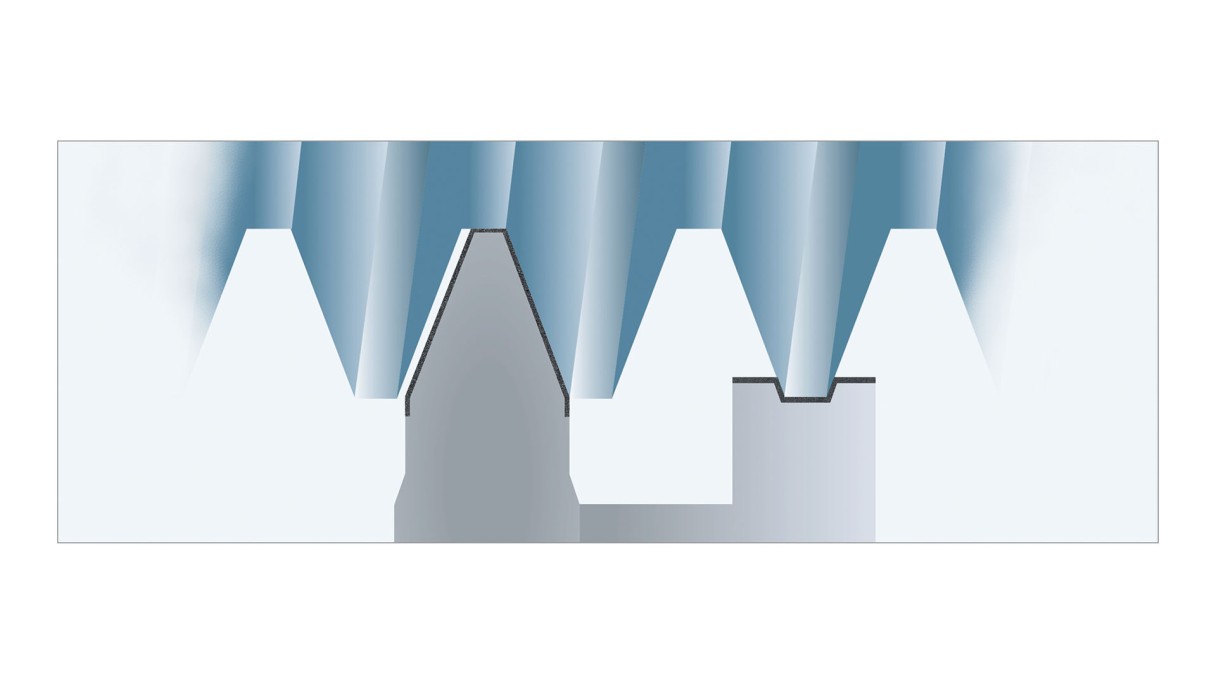
In generating grinding, profile modifications usually require dressing tools designed specifically for the workpiece. This is costly and leads to long lead times. Dressing with a profile dressing roll ensures fast, stable processes, but is limited to a fixed profile. Line dressing with a form disc provides maximum flexibility, but it is considerably slower and, due to grain breakage, wear, and operator influence, cannot be compared to the series production process. Moreover, the risk of grinding burn increases. This is exactly where DIP (dresser-independent profile modifications) comes in: The process offers a level of flexibility similar to line dressing when specifying profile modifications, while using conventional dressing with a profile dressing roll and the corresponding dressing parameters.
Modification via software rather than tools
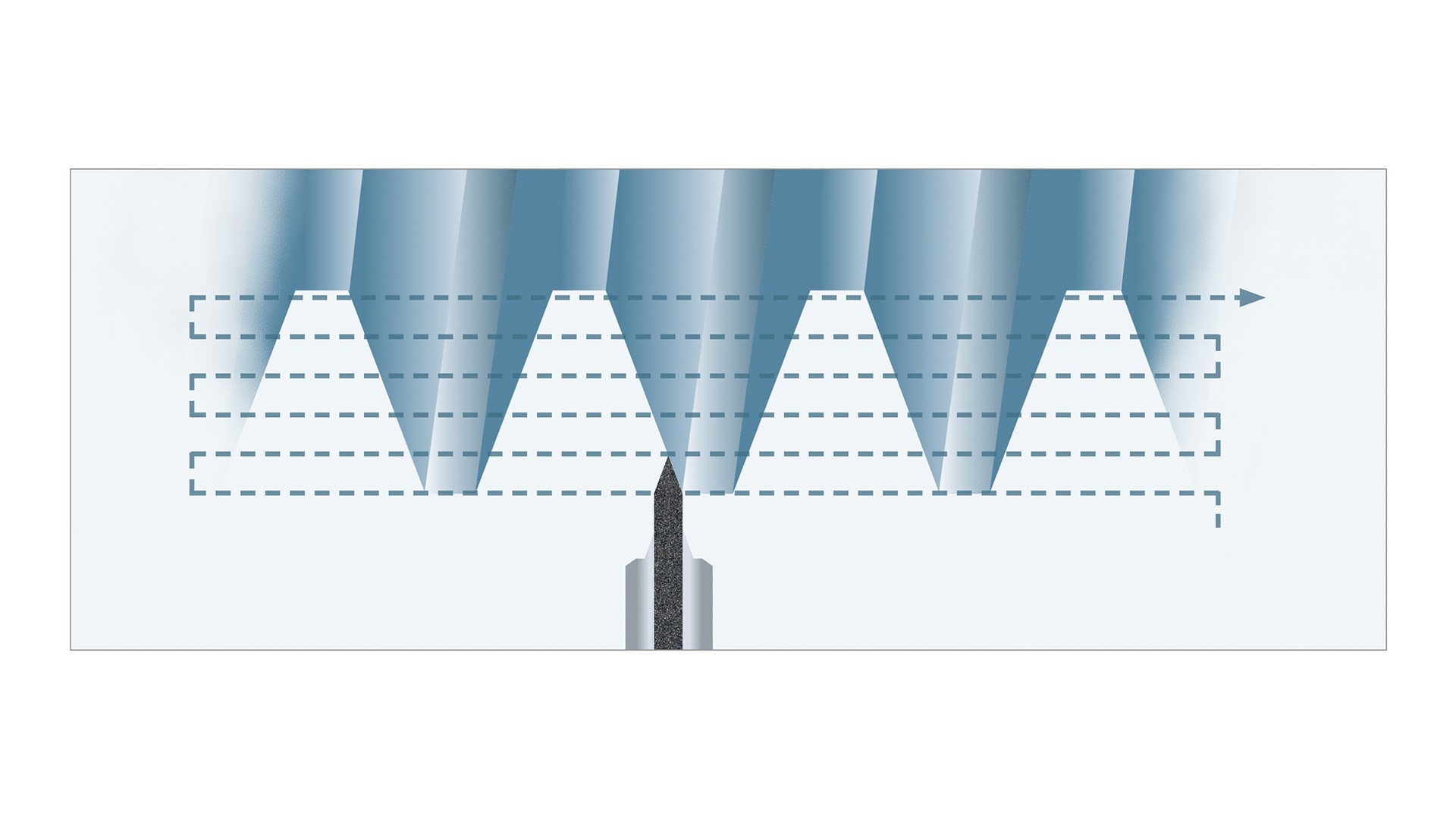
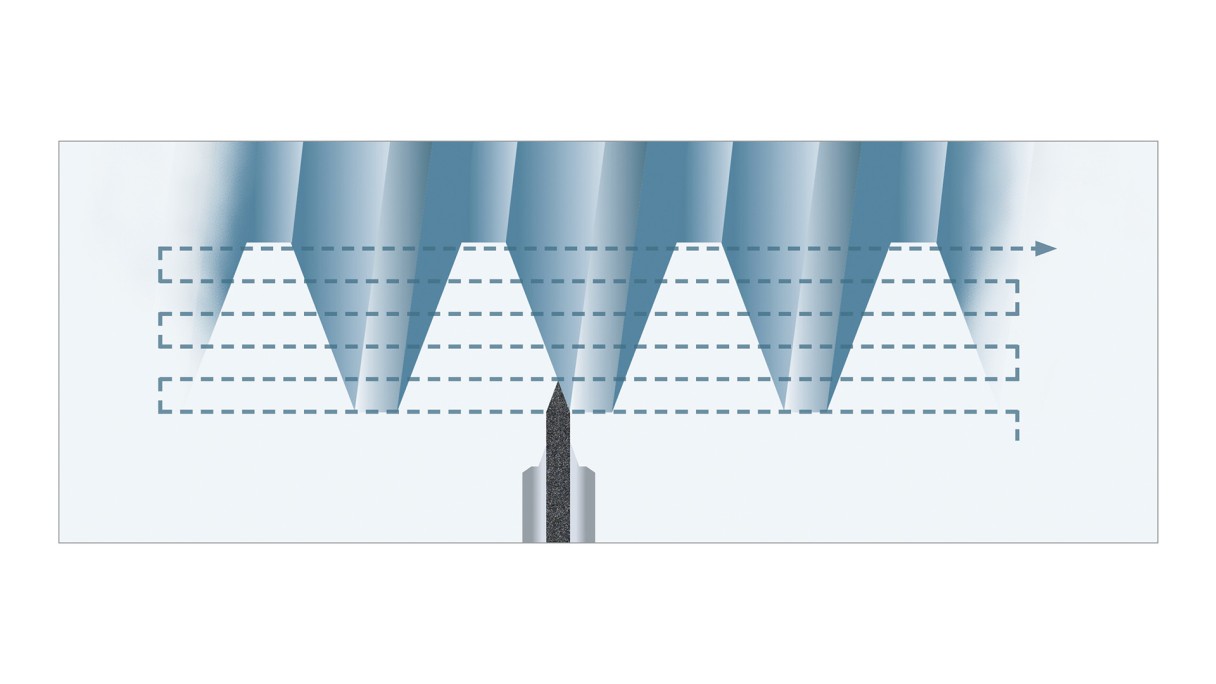
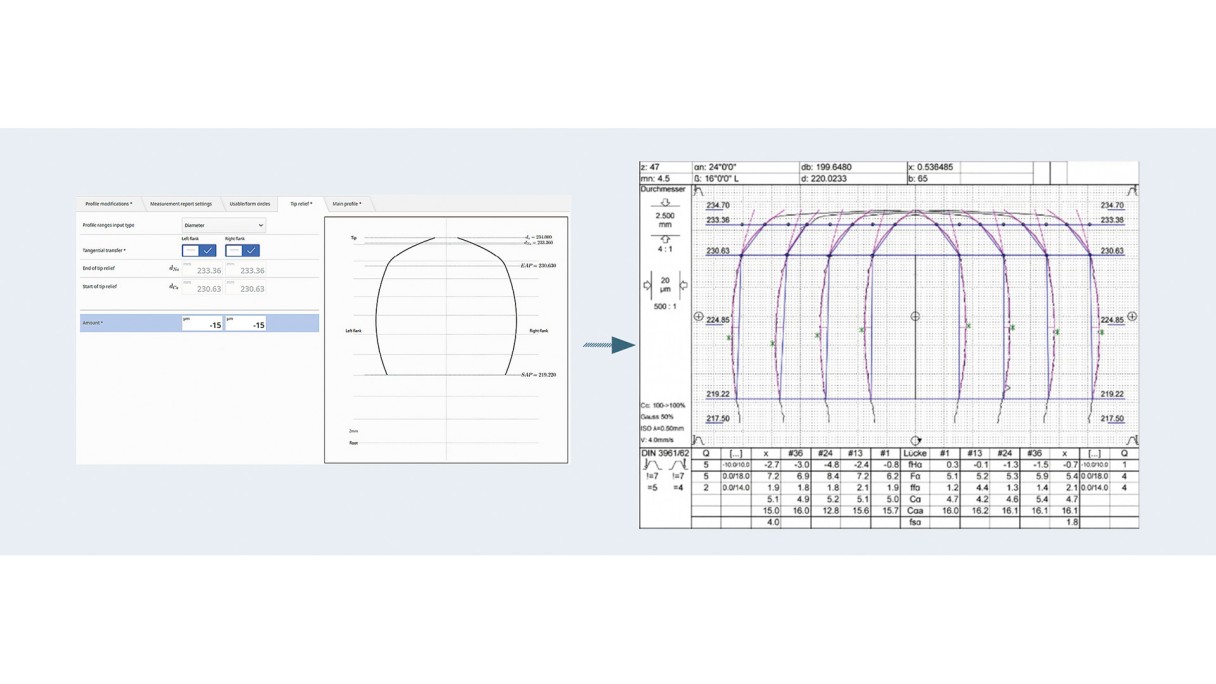
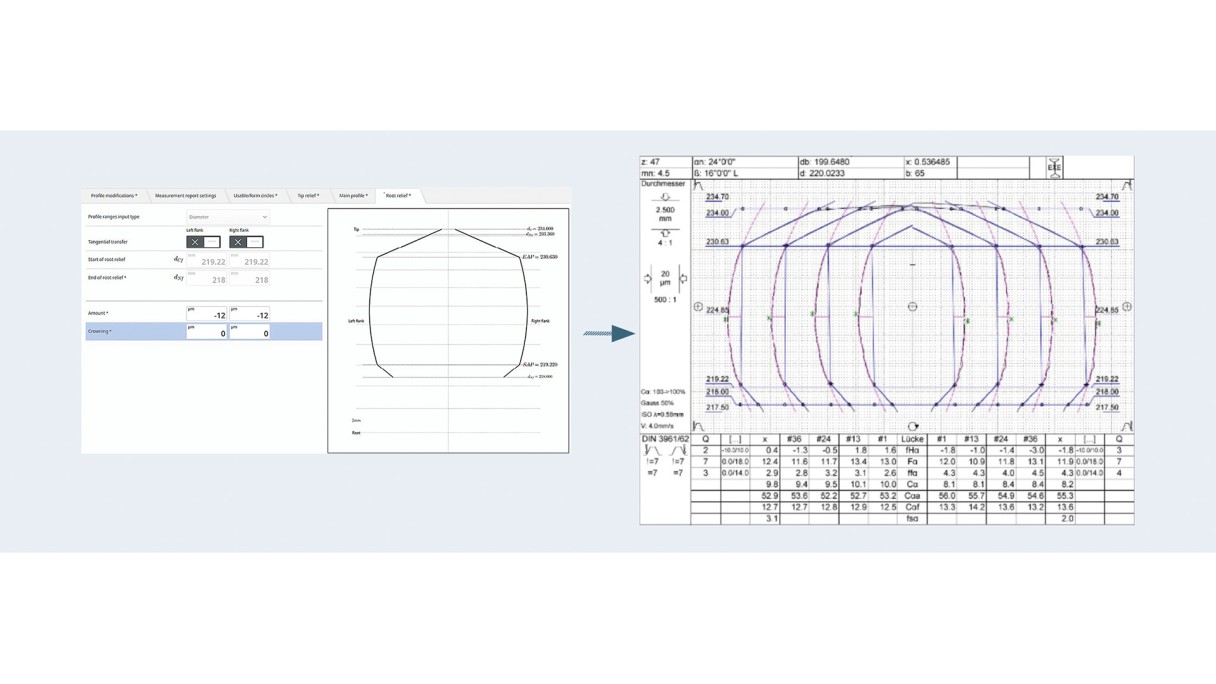
In the DIP process, the profile dressing roll is retained as the dressing tool. However, the modification is not created here using the tools, but via the software in the machine control system by means of additional movements during dressing. This allows for the precise adjustment and reproducible grinding of profile angle modifications, such as profile crowning and tip and root relief. This functionality is integrated into the LHGearTec control system and guides the operator intuitively and reliably through the process, thereby keeping training requirements to a minimum.
Production ready process
A key advantage is that it can be directly applied to series production. With DIP, the same dressing parameters can be used as in subsequent series production, ensuring that the surface of the grinding worm corresponds to the one produced in series manufacturing. It is therefore possible to apply optimized process parameters from series production. “Users reach their first good part more quickly, without an increased risk of grinding burn. Using production near machining parameters makes it possible to carry out realistic and meaningful testing on the end of line test bench already in the preliminary phase,” explains Fabian Stadelmann, technology development manager.
Less effort when requirements change
DIP really comes into its own when dealing with frequently changing orders. Modifications can be made quickly via the software without the need to purchase new dressing tools. “This has made it possible to significantly reduce the number of dressing tools required. In one application, six different dressing tools were replaced by one profile dressing roll,” reports Fabian Stadelmann. This saves costs and minimizes procurement and lead times – a significant advantage, particularly in contract manufacturing.
A clearly defined scope of application
DIP expands the range of machining options without completely replacing existing processes. Very pronounced profile modifications can still be better achieved by line dressing, as this method offers greater scope for adjusting the modification on the grinding worm. Topological modifications in the sense of twist free generating grinding are also not possible with DIP. The reason: “DIP operates without diagonal shifting of the grinding worm, whereas in twist free generating grinding this shifting is absolutely essential to produce the desired modification,” explains Fabian Stadelmann.
Input of profile modifications in the LHGearTec control system and the corresponding ground gear profiles
A balance between flexibility and process reliability
DIP closes the gap that previously existed between maximum flexibility and robust, production safe series manufacturing. The method expands the range of available processes by adding an economical and stable option – especially in ap-plications where short dressing times, minimal adjustment effort, and reproducible processes are required.