
Development and outlook
The Group in 2025
Sustainability
Outlook for 2026
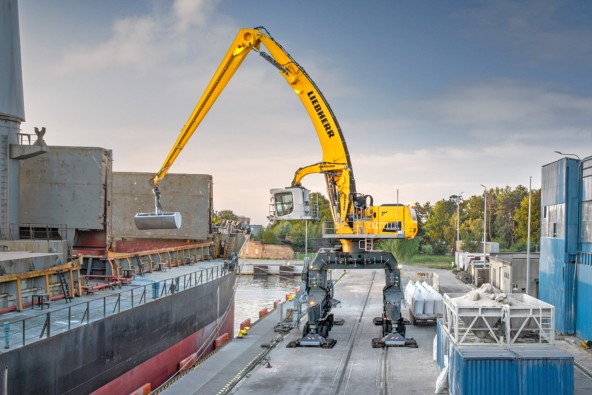
High load-bearing capacities combined with long reach: the Liebherr LH 150 M Gantry Port E material handler is ideal for port handling of scrap and mixed cargo.
In the 2025 business year, Liebherr generated a total revenue of €14,772 million. This represents a year-on-year increase of €150 million or 1.0 %. The Group’s investments, totalling €1,059 million, remained at the high level of the previous two years.
| 2021 | 11693 |
| 2022 | 12589 |
| 2023 | 14042 |
| 2024 | 14622 |
| 2025 | 14772 |
Revenue worldwide € m
Overall economic performance
At 3.3 %, global economic growth in 2025 was approaching the level of the previous year, according to calculations by the International Monetary Fund.
During the business year, the economy grew by 4.4 % in emerging markets and developing economies and by 1.7 % in industrialised countries. The euro area saw a 1.4 % increase, with Germany registering only a marginal gain (0.2 %) after its downturn in 2024. Growth in the USA was reported at 2.1 %.
The economic landscape remained volatile in the business year, and was largely shaped by great uncertainty. Trade barriers established by US tariffs coupled with geopolitical tensions put strain on international transactions. The effects of the artificial intelligence (AI) boom are still difficult to quantify, though AI-induced investments did help to support the financial markets. At the same time, the private sector had the flexibility to react to new barriers to trade. The stabilising effect of declining inflation meant the global economy appeared resilient overall.
Revenue performance by product segment
| Earthmoving | 2586 € m | |
|---|---|---|
| Material handling technology | 489 € m | |
| Deep foundation | 480 € m | |
| Mining | 1542 € m | |
| Mobile and crawler cranes | 3650 € m | |
| Tower cranes | 406 € m | |
| Concrete technology | 192 € m | |
| Maritime cranes | 1246 € m | |
| Aerospace and transportation systems | 1966 € m | |
| Gear technology and automation systems | 296 € m | |
| Refrigerators and freezers | 1171 € m | |
| Components | 634 € m | |
| Others | 114 € m |
€ m
€ m
€ m
The uncertainty surrounding economic conditions had a far-reaching impact on Liebherr and its product segments. Consequently, customers in certain sectors were reluctant to make investments. Deliveries in the USA were temporarily affected by disruptions. Nevertheless, the Group’s growth remained stable. One key reason for this is Liebherr’s diversification and its decentralised structure. Sales drivers such as deep foundation machines, ship cranes, mobile harbour cranes and container cranes alongside components for aeroplanes and rail vehicles compensated for reduced sales in other segments.
With a revenue of €14,772 million, the Group built on its record year in 2024. In the construction machine and mining sector, revenue fell by 5.5 % to €9,345 million. This could be attributed to downward trends in the segments of earthmoving, material handling, mining, mobile and crawler cranes and concrete technology. By contrast, the Group was able to register increases in the deep foundation and tower crane segments.
Liebherr achieved a total revenue of €5,427 million in the remaining product segments of maritime cranes, aerospace and transportation systems, gear technology and automation systems, refrigerators and freezers, components, and hotels. This constitutes a 14.7 % increase on the previous year’s figure, contributed to by all but one product segments.
Revenue development by region
Revenue 14,772 € m
+1.0 % +150 € m
| % the previous year | € the previous year | ||
|---|---|---|---|
| Asia and Oceania | 2,569 € m | −5.5 | −150 m |
| Africa, Near and Middle East | 1,052 € m | +2.7 | +28 m |
| Central and South America | 566 € m | +12.5 | +63 m |
| North America | 2,525 € m | −1.7 | −43 m |
| Non-EU countries | 1,319 € m | −13.8 | −211 m |
| European Union | 6,741 € m | +7.4 | +463 m |
The Group’s sales regions developed differently in the 2025 business year. The Africa, Near and Middle East region registered growth, owing to significant increases in South Africa and in the United Arab Emirates. The Group also recorded higher revenue figures in Central and South America. In North America, by contrast, Liebherr registered a slight downturn, as was also the case in Asia and Oceania. In Europe, it was a tale of two halves: while revenue declined in the non-EU countries, it rose in the European Union. This growth was in part attributable to strong gains in Germany.
Net income
In comparison with 2024, Liebherr’s operating result decreased. The finance result was above the previous year’s value, meaning the Group achieved a net income of €272 million in the reporting year.
Employees
55,963
+1,235
| Employees | Compared to the previous year | ||
|---|---|---|---|
| Asia and Oceania | 5,152 | +362 | |
| Africa, Near and Middle East | 1,357 | +82 | |
| Central and South America | 1,975 | +42 | |
| North America | 2,486 | −30 | |
| Non-EU countries | 3,904 | −39 | |
| European Union | 41,089 | +818 |
The Liebherr Group’s employees are the key to its success: with their specialist training and dedication, they make a vital contribution to the company’s growth. As a family-run company, Liebherr is an employer with a strong tradition of partnership and teamwork based on reliability, fairness, respect and autonomy. Liebherr offers its employees engaging tasks and varied development prospects, especially for those just starting out in their career: from apprenticeships and dual study programmes through to trainee positions. The objective is to develop talented individuals at an early stage and open up their long-term professional prospects.
In the business year, the Group’s workforce grew again: by the end of 2025, 55,963 people were employed by Liebherr. That equates to 1,235 more employees than in the previous year, or an increase of 2.3 %.
The European Union saw the largest rise in the number of employees, whereas numbers in the non-EU countries fell slightly. Liebherr’s workforce also grew bigger in Asia and Oceania. Though the number of employees in North America fell slightly, the figure for the Central and South America and Africa, Near and Middle East regions increased.
For more information about Liebherr as an employer and the composition of its workforce, please refer to the sustainability section.
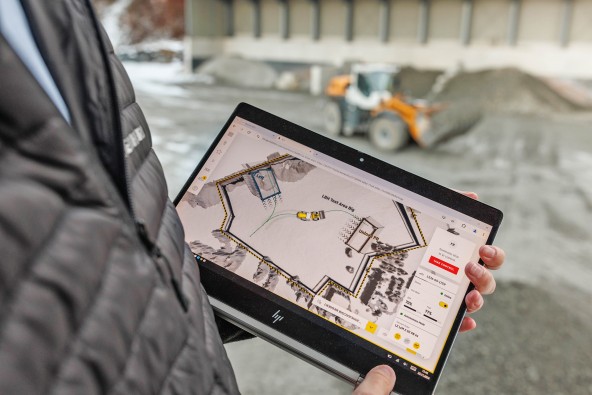
Autonomous operation of wheel loaders is based on a precise definition of the working environment for which an exact map is generated.
Research and development
In the 2025 business year, the Group invested €708 million in its research and development activities, which gave rise to new, innovative machines, components, technologies and solutions. This saw Liebherr teaming up once again with universities, colleges, institutes and other partners. Alternative drives and the digitalisation of products remained the central focus of the innovations.
In the field of autonomy, Liebherr reached numerous milestones. For example, autonomous mining trucks are now in field trials and are almost ready for productive operations. At Bauma 2025, the Group unveiled an autonomous wheel loader and was presented with the Innovation Award for its ‘Liebherr Autonomous Operations’ system. This allows the machine to be operated without a driver. The machine uses the system to detect its surroundings with 3D environment sensors and to independently and dynamically plan its work cycle. Liebherr continued its research into S1 Vision, the prototype of an autonomous, battery-electric, single-axle dump truck. This is designed for the fleet operation of autonomous vehicles.
Liebherr continued to keep a close eye on its customers’ emissions targets – always with the aim of finding the ideal solution for the area of application in question. Of particular note are the new, electrified construction machines, such as the first fully electric duty cycle crawler crane, the HS 8100.2 dual power, or the first battery-electric crawler excavator, the R 920 G8-E. The LTM 1150-5.4E all-terrain crane and the MK 120-5.1E mobile construction crane can be operated on mains power or with an integrated battery. To enable operators to power or charge these machines on the construction site, the Group presented the LPO 600 battery-based energy storage system. As well as developing electric versions of its machines, Liebherr tested other alternative fuels, such as ammonia, as energy sources for engines. Plus, in the business year, the first wheel loader with a hydrogen engine took to field operations. Both drive concepts are dependent on the right injection technology. LiGO Injection Systems forms the technical basis for injecting alternative fuels for more flexible application possibilities.
In aerospace and transportation systems, Liebherr also expanded its product portfolio with sustainable solutions. More energy-efficient and weight-optimised systems – ranging from low-bleed air to highly efficient hydraulic power packs and all-electric systems – continue to drive the decarbonisation of aerospace technology. In the rail sector, the Group relied on propane, a natural gas, to make heating and cooling systems more environmentally friendly.
In the business year, a wide number of digital solutions were developed, including the assistance systems for the K series fast-erecting cranes. These correct any swaying motions and allow the crane to extend to saved positions on a semi-automatic basis. To aid operators in planning their power and energy requirements on the construction site, Liebherr developed the Energy Planner. This software helps suppliers and operators to minimise the increasing risk of supply gaps in the operational machine fleet. It shows the connection points on-site and helps to calculate the charging phases and energy requirements of the machines.
Across all Group companies, Liebherr worked on a standardised software basis for digital services and solutions, allowing these to be developed and made available faster. Another standardisation was further advanced in the Software Defined Machine programme. This is intended to guarantee a standardised, high-performance and future-proof control architecture across all construction machines. In the field of cyber security, Liebherr expanded its Group-wide organisation and its related expertise to ensure and improve product security. The business year also saw Liebherr continue to develop its internal, Group-wide AI competence centre. The centre is intended to accelerate the introduction of artificial intelligence using finely honed skills. The Group launched a selection of AI solutions and implemented these in products, services and internal processes. Plus, employees took part in training courses and an internal guideline for artificial intelligence was published.
| 2021 | 742 | +22.6 % | Rental Fleet: 331 | General: 411 |
| 2022 | 863 | +16.3 % | Rental Fleet: 326 | General: 537 |
| 2023 | 1,030 | +19.4 % | Rental Fleet: 416 | General: 614 |
| 2024 | 989 | −4.0 % | Rental Fleet: 294 | General: 695 |
| 2025 | 1,059 | +7.1 % | Rental Fleet: 305 | General: 754 |
Investments € m
Investments
Liebherr is committed to sustainable, organic and healthy growth. Longterm and targeted investments in the production sites and in the global sales, logistics and service network are covered by funds generated within the Group. In the 2025 business year, the Group’s investments were recorded at €1,059 million, representing a year-on-year increase of €70 million, or 7.1 %. This was offset by depreciation amounting to €587 million.
To meet the increased demand for mobile and crawler cranes, Liebherr acquired a plot measuring more than 500,000 m2 in Ehingen-Berg (Germany). Also in Ehingen, Liebherr renovated a warehouse facility, including office spaces. In Kirchdorf an der Iller (Germany), a new dispatch centre was built. Meanwhile, at the Biberach an der Riss site (Germany), two high-volume orders for slewing bearings for the wind industry called for further investment in production, infrastructure and testing equipment. Parallel to this, the Group’s new sales and administration building was opened at this site. Furthermore, Liebherr announced it would be making extensive upgrades to the production facilities for tower cranes and mobile construction cranes in Biberach, due for completion in 2034.
| 2021 | 507 | −6.6 % | Rental Fleet: 108 | General: 399 |
| 2022 | 528 | +4.1 % | Rental Fleet: 118 | General: 410 |
| 2023 | 623 | +18.0 % | Rental Fleet: 145 | General: 478 |
| 2024 | 589 | −5.5 % | Rental Fleet: 148 | General: 441 |
| 2025 | 587 | −0.3 % | Rental Fleet: 136 | General: 451 |
Depreciation € m
As well as consolidating its industrial sites in Germany, Liebherr is increasing its assembly and production capacities in the Plovdiv region (Bulgaria). There, Liebherr is further expanding its current activities for the rail vehicle and commercial vehicle market and establishing new assembly capacity for aerospace applications. The Group also relocated the production of truck mixers and mixing plants to Bulgaria.
On the American market, too, Liebherr reinforced its production and service capacities during the business year: in Guaratinguetá (Brazil), the Group paved the way for expanding the production site where aeroplane components are made. In Tupelo (MS/USA), construction work was also underway for the new logistics centre. According to the schedule, the first deliveries are due to be sent to customers in North, Central and South America in early 2027. The Group also recently acquired a plot of land in Houston (TX/USA) to strengthen its US presence, to support the customer base and enhance global activities.
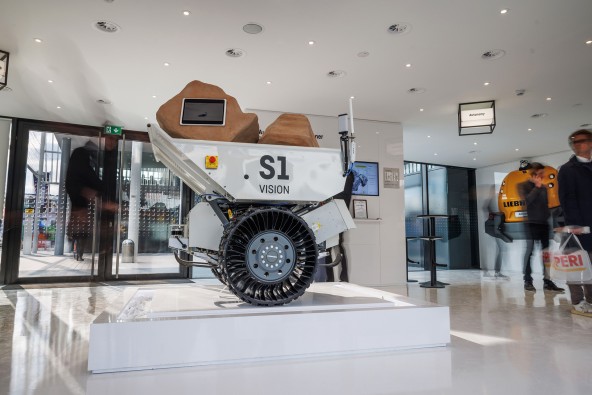
At Bauma 2025, Liebherr presented the S1 Vision, the prototype of an autonomous, battery-electric, single-axle truck.
Risk management and internal control system
In order to ensure that the Group’s success can be sustained, opportunities and risks are systematically identified, evaluated and controlled. The risk management and internal control system, which is anchored and continuously improved within the Group, makes a key contribution to supporting long-term success, as well as ensuring that the relevant legal, regulatory and operational requirements are met through specific measures and controls.
All managers responsible for the risk management and internal control system used in the individual Group companies are involved in ensuring the integrated recording, analysis and evaluation of risks.
Risks are identified and assessed locally in the individual companies, then countermeasures to limit the risks are introduced and the impacts are evaluated. This localised approach also makes it possible to identify and assess areas of opportunity efficiently. The information gained about market-related and technological developments is used in opportunities management to reach decisions about future areas of business and production processes.
At Group level, the current risk situation is regularly reviewed and the effectiveness of the systems and processes used is assessed. The internal audit department monitors compliance with Group guidelines and the implementation of the risk management and internal control systems.
Events after balance sheet date
Events of particular significance which occurred after the reporting date should be recorded, along with their impact on the Group’s assets, financial position and financial performance. There were no events of special significance within the Liebherr Group after the close of the 2025 business year.
The Liebherr Group views sustainability as an all-encompassing principle that spans economical, environmental and social considerations. The company intends to improve the quality of life of present and future generations through innovative solutions, technological progress and responsible behaviour. Liebherr is focused on resource-efficient products, effective processes and sustainable infrastructure, prioritising safety, economic efficiency and environmental compatibility.
For the subsidiaries that are subject to the European Corporate Sustainability Reporting Directive (CSRD), Liebherr now, as of this year, publishes a comprehensive sustainability statement at Group level. In line with the provisions of the CSRD, this statement for the 2025 business year forms part of the Group management report for the first time and has been compiled in line with the currently applicable European Sustainability Reporting Standards (ESRS, Set 1). From June 2026, the sustainability report for the 2025 business year will also be made available on the Liebherr Group’s website.
The following section contains selected content from this sustainability statement, covering the topics of strategy, governance and responsibility, climate change mitigation, energy and circular economy, as well as employees and social responsibility.
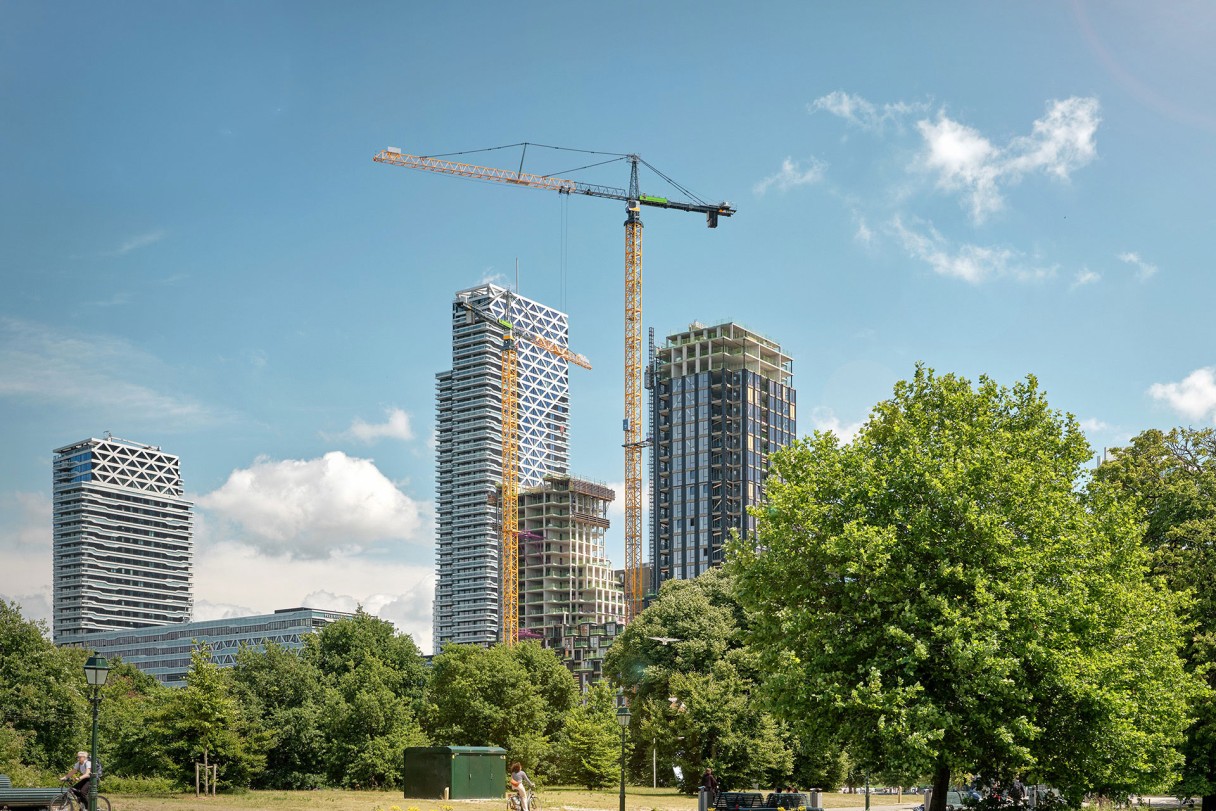
Two 550 EC-H 20 Litronic are working in Den Haag (the Netherlands) on the construction of a new quarter that is a showcase of modern, sustainable urban development.

Organisational structure corporate responsibility
Strategy, governance and responsibility
The corporate responsibility strategy is guided by the 17 Sustainable Development Goals of the United Nations and incorporates four fields of action: products and services, environment and energy, employees and society, and sustainable management. The Group’s divisions derive their own strategies from this, taking into account industry-specific requirements.
One major challenge is the availability and quality of reliable data, which is why Liebherr is continuously expanding its data collection processes. The Group is in the process of developing robust mechanisms to aid traceability, including key performance indicators (KPIs), reporting formats and regular inspections to evaluate the effectiveness of measures and to ensure the sustainability targets are on track.
To manage sustainability matters, Liebherr has a clearly defined organisational structure. The overall strategic responsibility lies with Liebherr-International AG.
The highest decision-making body is the administrative board, led exclusively by members of the Liebherr family. The internal CR Advisory Board provides assistance through representatives of the executive board, the divisional controlling companies and central departments.
The CR core team coordinates the operations of the responsible parties from the Liebherr divisions and central departments. Further to this, project teams and expert groups are working on priority CR topics, such as climate- and compliance-related risks, supply chain risks, and opportunities for innovation and eco-efficiency. Their findings are regularly reviewed with the involvement of the CR Advisory Board.
Management also builds on the binding compliance instruments, such as the code of conduct for employees and associated companies, the supplier code of conduct and the established reporting system. This structure guarantees that sustainability is systematically integrated into strategic decision-making and is embedded within the line organisation. Faced with increasing requirements, Liebherr is continuously developing its CR organisation and enhancing its skills through targeted development and cross-departmental collaboration.
Climate change mitigation, energy and circular economy
The Liebherr Group’s environmental and energy management has a decentralised structure. The divisions implement measures independently, supported by environmental and energy officers and cross-regional working groups. Clear processes and regular audits ensure compliance with all environmental regulations. The goal is to keep minimising the impact production and products have on the environment. The divisions independently evaluate measures, such as the use of renewable energies or low-emission technologies. Work is currently underway to standardise the data across the entire Group.
In 2025, the Group took additional targeted steps to deepen understanding of the company-related environmental impact. Several of Liebherr’s divisions have already made a start on identifying and implementing measures to reduce their Scope 1 and Scope 2 emissions. The most important activities in this regard are focused on the transition to renewable energy sources. This includes measures such as installing photovoltaic panels and heat recovery systems. Liebherr is also working intensively on alternative drive technologies. These initiatives go some way towards helping with the decarbonisation efforts throughout the downstream value chain.
Since a large part of the environmental impact occurs during the production process, Liebherr has set itself the target of certifying all its production facilities to the key ISO standards by 2030 – this includes ISO 9001, 14001, 45001 and 50001. These standards underpin efficient use of resources, contribute to lower emissions and ensure a high standard of health and safety in the workplace.
In the coming years, Liebherr is developing an extensive climate change mitigation plan, which takes into account the targets of the Paris Agreement. A key initial step has been the establishment of a consistent methodological framework for carbon accounting across all product segments. This facilitates the collection of reliable and comparable emission data at Group level and forms the basis for decisions surrounding the development of the transition plan for climate change mitigation.
Energy consumption and energy mix
In 2025, nearly one-third (28 %) of energy consumed by Liebherr came from renewable sources. The Group is gradually transitioning its operations to green energy. Self-generated energy comes from both non-renewable sources – primarily electricity and heat generation on engine test rigs – and renewable sources, such as photovoltaic systems.
Energy consumption associated with own operations
| Description | 2025*, in MWh | Proportion |
| Energy consumption from fossil sources | 690,840 | 67 % |
| Energy consumption from nuclear sources | 52,723 | 5 % |
| Energy consumption from renewable sources | 290,965 | 28 % |
| Total energy consumption | 1,034,528 | 100 % |
| Non-renewable energy production | 19,329 | 48 % |
| Renewable energy production | 20,620 | 52 % |
| Total energy production | 39,949 | 100 % |
| * The values identified may differ slightly from the total sums due to rounding. | ||
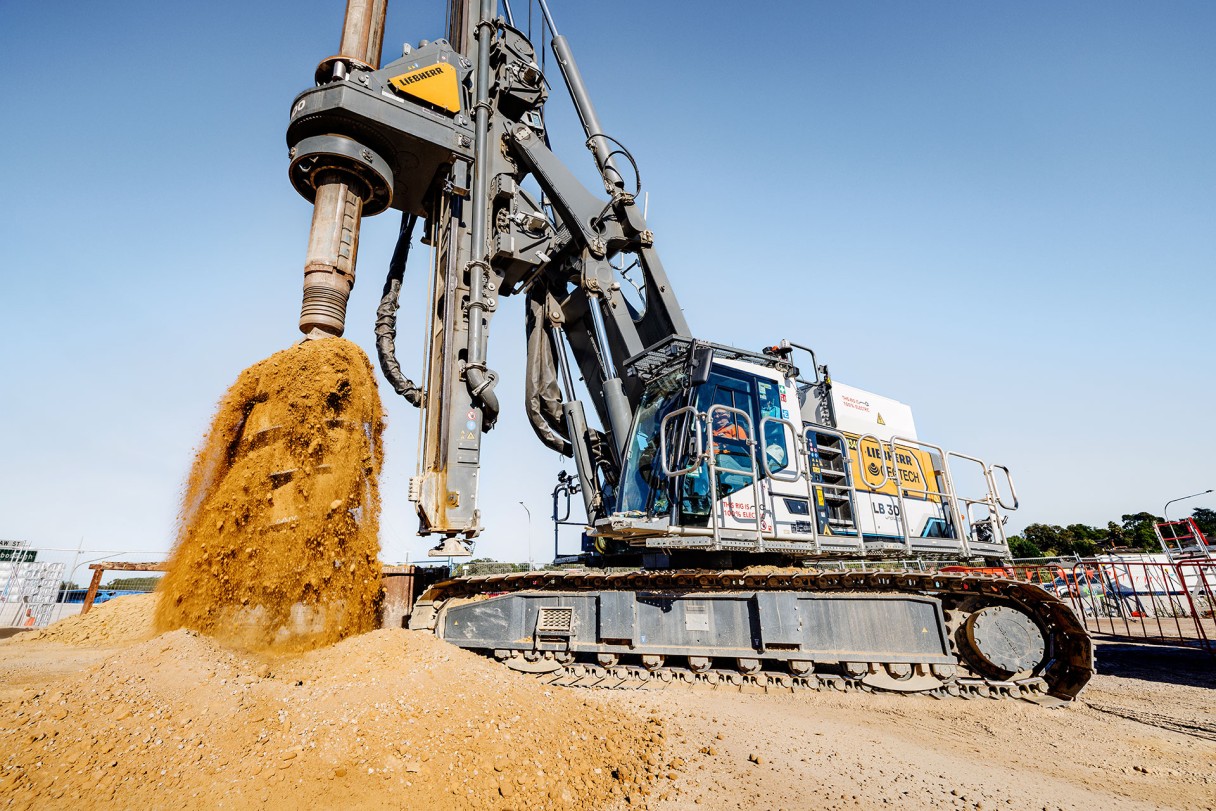
In Melbourne (Australia), the LB 30 unplugged drilling rig is supporting the expansion of local road infrastructure. With its electric engine, it operates CO₂‑free on site and significantly reduces noise emissions.
Greenhouse gas inventory
Liebherr is calculating its greenhouse gas inventory on the basis of the international Greenhouse Gas Protocol to ensure the transparent and comparable recording of the emissions in CO2 equivalents (CO2e). Direct Scope 1 emissions from own sources and indirect Scope 2 emissions from purchased energy were already calculated in previous years; in 2025 Liebherr updated the greenhouse gas inventory to include the calculation of Scope 3 emissions throughout the value chain at Group level. Parallel to this, the emission factors and calculation methods were harmonised for all product segments to ensure consistency and comparability.
Scope 3 emissions account for the majority of the carbon footprint, especially category 3.11 ‘Use of sold products’ followed by category 3.1 ‘Purchased goods and services’. Liebherr is reducing this environmental impact through continuous improvements to its products, alongside alternative drive systems and low-carbon fuels.
Greenhouse gas emissions (GHG emissions)
| Category | 2025, in tCO2e |
| Scope 1 GHG emissions | |
| Gross Scope 1 GHG emissions | 124,363 |
| Scope 2 GHG emissions | |
| Gross location-based Scope 2 GHG emissions | 108,348 |
| Gross market-based Scope 2 GHG emissions | 43,268 |
| Significant Scope 3 GHG emissions | |
| Total gross indirect (Scope 3) GHG emissions | 40,987,620 |
| 3.1 Purchased goods and services | 13,542,092 |
| 3.11 Use of sold products | 27,445,528 |
| Total GHG emissions | |
| Total GHG emissions (location-based) | 41,220,331 |
| Total GHG emissions (market-based) | 41,155,251 |
Water consumption
The local managing directors of the individual Liebherr sites are responsible for the operational management of water-related matters. Over the next two years, Liebherr is reviewing the need for Group-wide guidelines, based on the data gathered and evaluated.
Potential water scarcity in different regions is being monitored and factored into the risk analysis. The findings are used to optimise water resource management and to address financial risks at an early stage, such as rising water costs in risk areas.
The water demand of most Liebherr companies is low and is primarily attributed to sanitary facilities, hygiene, landscape maintenance and cleaning of machines and parts. The majority of the water withdrawn is returned to local water treatment systems. Very few industrial processes – such as surface treatment or dust management – consume any water.
In 2025, various initiatives to reduce water withdrawal were implemented. At the Toulouse site (France), for instance, a system was installed to recover greywater for use in sanitary facilities. Several production sites for refrigerators and freezers also updated their sanitary facilities to further reduce water use. In Pune (India) a new wastewater treatment system enables the reuse of greywater for irrigation purposes. At its Ehingen factory (Germany), Liebherr is also reducing its fresh water demand by recirculating internally treated water to the cranes' wash stations.
Water consumption and water management
| Key figures | 2025 | Proportion |
| Total water consumption | 231,311 m3 | 100 % |
| Of which regions with high water stress | 107,104 m3 | 46 % |
| Of which regions with moderate to low water stress | 124,207 m3 | 54 % |
| Total water recycled and reused | 35,230 m3 | |
| Stored water (e.g. in tanks or basins) | 110,796 m3 | |
| Water intensity | 15.66 m3 per € m revenue |
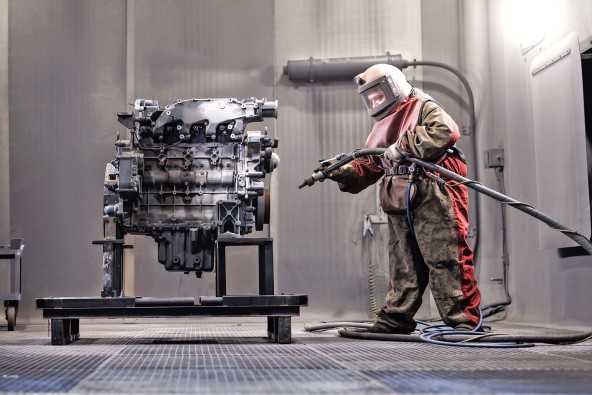
At the Liebherr plant in Ettlingen (Germany), used engines are restored to as-new condition through remanufacturing.
Resource efficiency and circular economy
Liebherr is currently pursuing a decentralised approach, whereby waste management is primarily determined by the local legal provisions and the operational circumstances of each site. Many Liebherr sites have already implemented local measures to reduce waste and to promote recycling. These initiatives are aligned with the health, safety, and environmental protection requirements applicable at site level.
Over the next two years, Liebherr will systematically collect and analyse data on waste. This will establish a clearer understanding of waste volumes, types of waste and waste management practices in the Group. The results of this analysis can be used as the basis for considering Group-wide measures, especially for sites operating in regions with increased ecological or regulatory risks.
For the 2025 business year, Liebherr collected waste-related data for all companies for the first time.
In the business year, no radioactive waste was generated in the Liebherr Group. During this period, Liebherr companies kept working to reduce hazardous waste and to increase the proportion of recyclable materials. Important measures included the switch to reusable packaging, initiatives to reuse and recycle materials and methods to reduce hazardous substances. Additionally, separation of waste streams was improved, internal processes were optimised and waste disposal service providers were audited.
Liebherr products are designed to facilitate a long useful life, whether through repair with spare parts or in some cases reconditioning. A global service network is extending the service life of machines through expert maintenance and repair. The remanufacturing programme to recondition components, such as engines and gearboxes, and the provision of refurbished used machines is reducing the consumption of raw materials and cutting CO2 emissions while extending the product life cycles. When they do eventually reach the end of their useful life, many machines and other products from Liebherr can still be dismantled into individual parts for recycling. Through these measures, Liebherr is reinforcing the circular economy – from product design that lasts to reuse and reconditioning right through to recycling.
Waste management: quantities and treatment methods
| Description | Tonnes | Proportion |
| Total amount of waste generated | 133,414 | 100 % |
| Total non-hazardous waste | 119,436 | 90 % |
| Diverted form disposal | ||
| Due to recycling | 97,951 | 82 % |
| Due to preparation for reuse | 1,984 | 2 % |
| Due to other recovery operations | 2,782 | 3 % |
| Directed to disposal | ||
| By incineration | 6,380 | 5 % |
| By other operations | 2,627 | 2 % |
| By landfilling | 7,712 | 6 % |
| Total hazardous waste | 13,978 | 10 % |
| Diverted from disposal | ||
| Due to recycling | 4,032 | 29 % |
| Due to preparation for reuse | 754 | 5 % |
| Due to other recovery operations | 557 | 4 % |
| Directed to disposal | ||
| By incineration | 3,154 | 23 % |
| By other disposal method | 5,073 | 36 % |
| By landfilling | 408 | 3 % |
| Recycling rate by waste category | ||
| Non-hazardous waste | ||
| Recycled | 97,951 | 82 % |
| Not recycled | 21,485 | 18 % |
| Hazardous waste | ||
| Recycled | 4,032 | 29 % |
| Not recycled | 9,946 | 71 % |
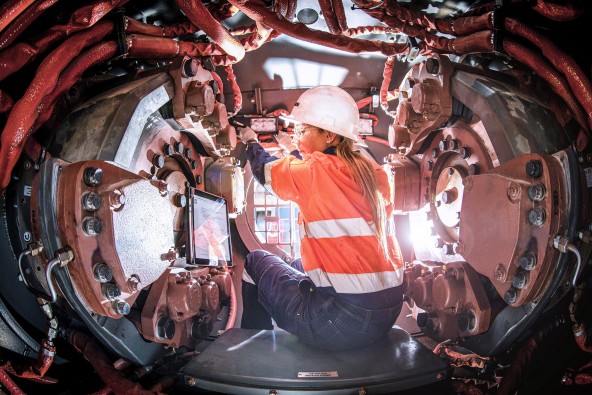
A Liebherr service specialist works on the T 264 mining truck to keep the equipment performing at its best throughout its operational life.
Employees and social responsibility
The Liebherr Group places great importance on protecting the rights of its employees, creating fair and safe working conditions and actively promoting a diverse corporate culture that respects human rights. This also extends to key topics such as occupational health and safety, personal development opportunities, diversity and equal opportunities, working conditions and fair pay. To establish consistent and future-oriented Health, Safety and Environment management (HSE) throughout the entire Group, a new expert group was established in 2025 with representatives from multiple departments. It facilitates the international exchange between the participating departments and forms the basis for an efficient, Group-wide approach. Its tasks include formulating suggestions for a permanent organisational foundation for HSE management at Group level and within the Liebherr divisions – including clearly defined roles, tasks, responsibilities and necessary standards and improvement measures.
Human resource management at Liebherr is organised at a local level. Strategic and operational tasks are divided between the Human Resources (HR) corporate function and the HR units of the divisions and companies, so as to ensure the necessary flexibility to fulfil country-specific legal and social requirements. Most operational HR work, such as training and HR management, is undertaken at a local level.
Parallel to this, Liebherr is currently developing a central framework for standardised management, target definition and reporting. Liebherr offers safe workplaces and a working environment that promotes equal opportunity, diversity and human rights. The Group conforms with international standards, such as the Universal Declaration of Human Rights, the ILO Declaration on Fundamental Principles and Rights at Work, the UN Guiding Principles on Business and Human Rights and the OECD Guidelines. The Liebherr code of conduct obligates all employees to comply with legal requirements, to perform their work safely and to exclude child labour and forced labour, as well as discrimination. A confidential whistleblowing system – also available to external stakeholders – supports the reporting of concerns.
Employees are actively involved through works councils, annual dialogues and ideas management.
Characteristics of the employees
As already cited on page 18 of this annual report, the Group had a total of 55,963 employees at the end of the reporting year, of which 2,708 were non-guaranteed hours employees. The employee figure used in the following sections appears lower by 1,345, because inactive employment relationships are not included in sustainability reporting.
Of the 54,618 people in active employment contracts, 81 % were male and 19 % were female, and one person did not state their gender. In the reporting year, the Group had 3,186 interns and apprentices, highlighting the importance placed on developing young talent and professional qualifications. The workforce also included 3,323 people not employed by the company (e.g. external contractors).
3,525 people left the Group during the reporting period. This results in a staff turnover rate of 6 %.
Employment contracts by type
In terms of the contract length, 51,065 employees (93.5 %) were on permanent employment contracts on the reporting date; of these, 41,793 were men (76.5 %) and 9,272 were women (17.0 %). 3,553 employees (6.5 %) had fixed-term contracts; of these, 2,705 were men (4.9 %) and 847 were women (1.6 %).
At 6.5 %, fixed-term employment contracts represent a far lesser proportion than the permanent employment contracts, highlighting the high level of job security within the Group. At the same time, fixed-term contracts allow flexibility, for example for career starters, parental leave replacements or to cover capacity peaks.
Gender distribution at top management level
The top management level comprises the executive board as well as the managing directors of the divisional controlling companies and divisional companies. At the end of the business year, this accounted for 392 people, made up of 371 men (94.6 %) and 21 women (5.4 %). It is a strategic goal of the Group to increase the proportion of women in management roles.
Age distribution of the employees
The age structure of the workforce shows a focus on the 30-to-50 age group, which accounts for 54.9 % of employees, or 29,988 individuals. Employees under the age of 30 account for 11,078 people, or 20.3 % of the workforce. Employees over the age of 50 make up 13,552 people, representing a 24.8 % share.
This balanced age structure promotes stable teams, facilitates knowledge transfer, and forms a solid basis for the targeted promotion of young talent and age-appropriate HR development.
Remuneration metrics (pay gap and total compensation)
In 2025, the average gross hourly wage was €25.60 for men and €22.40 for women. This gives rise to a gender pay gap of 13 % in favour of men. At present, this salary comparison is made with no regard for other factors such as professional experience. Liebherr is constantly working to improve the availability and quality of data to improve the informative value of this key figure.
In 2025, the ratio of the total annual remuneration of the highest-paid employee to the median of the annual remuneration of all employees in the company (excluding the highest-paid employee) was 10.13.
Number of employees by gender and share of non-guaranteed hours
| Category | People | Proportion | Of which non-guaranteed hours employees | Proportion |
| Male | 44,498 | 81 % | 2,198 | 4 % |
| Female | 10,119 | 19 % | 509 | 1 % |
| Other | 0 | 0 % | 0 | 0 % |
| Not specified | 1 | 0 % | 1 | 0 % |
| Total employees, including non-guaranteed hours employees | 54,618 | 100 % | 2,708 | 5 % |
| + inactive employment relationships | +1,345 | 2 % | ||
| Total employees (annual report) | 55,963 | 102 % |
According to the International Monetary Fund, economic growth is not expected to change much at all in the coming business year or the subsequent year. For 2026, growth of 3.3 % is forecast, and for 2027, this figure is 3.2 %. The World Bank is forecasting weaker growth. Whether these projections prove correct depends greatly on what happens with trade relations and geopolitical tensions and whether the investments in AI continue on their current trajectory.
There is some hope to be found in the European construction industry. At the end of the business year, research network Euroconstruct was projecting a recovery in construction production, with growth of 0.3 %. The trend is expected to continue into 2026 at 2.4 %, driven by improved financing conditions and long-term infrastructure projects. Nevertheless, the sector, especially residential construction, is feeling the effects of high building costs, macroeconomic uncertainty and restrained private investment.
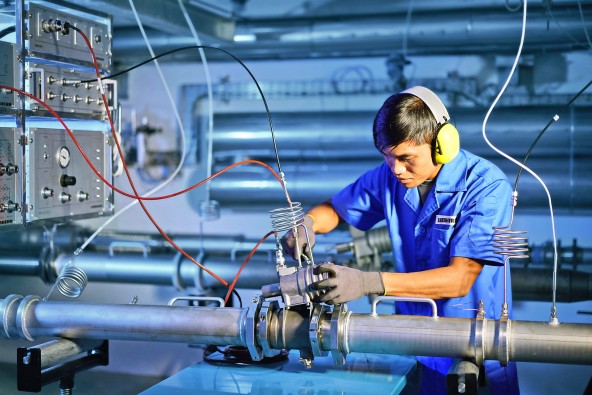
A technician at Liebherr’s own service centre in Singapore is running the acceptance test of a high mass flow valve after its overhaul.
The aerospace industry is also moving at a high level. According to international aerospace association IATA, global passenger traffic will also grow in 2026. The same applies to air freight traffic, which benefits from the demand for time-sensitive goods and from the ongoing growth of e-commerce.
The complex dynamics of the global economy and the individual sectors themselves pose risks for Liebherr, though at the same time they present a range of opportunities. In this regard, the Group has the advantage of its diversification, its international operations and its decentralised structure. These three pillars allow the company to absorb the impact of global uncertainty, trade barriers and economic fluctuation for a while.
The Group went into 2026 with a very healthy order book. The total of the incoming orders at the start of the year exceeded that of the previous year. In light of this positive development, Liebherr is confident it will grow further in 2026. No significant upswing is expected before 2027 at the earliest, however. Until then, Liebherr is using the time to keep doing what it does best, while at the same time preparing itself for the future. Innovative products and solutions together with solid and long-standing customer relationships ensure the company’s commercial success even in the face of challenging economic conditions and high pressure from competitors. Conscious investments in factory expansions and site structures as well as in rental fleets give the company the potential to play a decisive role in boosting business and advancing various industries.
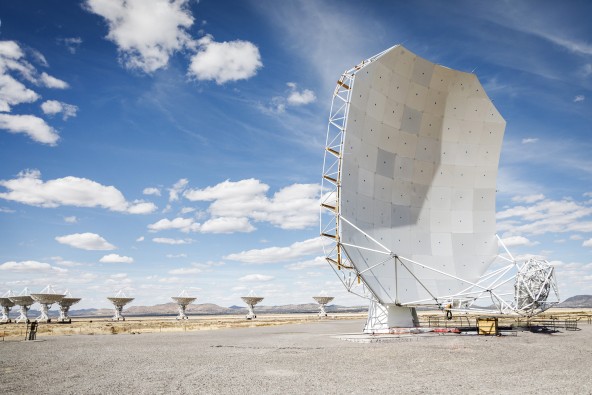
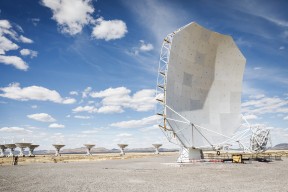
The antennas explore black holes, new stars and planets. Large slewing bearings and drive concepts from Liebherr ensure that they are aligned with millimetre precision.
Individual opportunities and risks
To describe individual opportunities and risks, these have been grouped together along with their potential impacts.
On a macroeconomic level, opportunities may arise from the fact that many industrial countries are faced with the need to renew their public infrastructure, which may lead to increased investments. Fiscal stimuli and an anticipated expansion in exports may lead to a marked increase in GDP growth in Germany. At the same time, there are still opportunities to be found in the transition towards a carbon-neutral economy, which will be reflected in an increase in demand for the Liebherr Group’s products as a result of increasing investments. The Group’s incoming orders are following a continuously positive trend.
At the same time, however, there is macroeconomic uncertainty regarding the future development of global, protectionist measures in world trade, which would impact on already strained supply chains. The outlook for the growth of global trade looks decidedly gloomy over a five-year forecast horizon.
Downside risks are also associated with the numerous geopolitical conflicts. Further uncertainty is to be found in the changed global production and demand structure, especially with regard to China’s new role in the global economy. The USA’s tariff policy also continues to pose risks. In light of the recently increased rates of return on long-term government loans of important major national economies, any abrupt market reactions to fiscal vulnerabilities could have an even greater impact.
In light of this, negative impacts on the Group’s activities cannot yet be ruled out.
In terms of possible economic performance risks, the Group faces changes in costs, especially in terms of energy or freight prices, as a result of these uncertainties. Risks may also be triggered by climate-related or geopolitical shocks, which cannot always be compensated for by price indexation. The information technology (IT) used throughout the Liebherr Group is also becoming increasingly important for the Group, with the result that there is a risk of cyberattacks.
The sections on each of the product segments contain detailed reports on the relevant opportunities and risks.
Liebherr monitors these risks continuously and uses appropriate financial instruments to hedge selected transactions. The Group enters into financial transactions only where these are linked to its operational business activity or for hedging. In principle, Liebherr does not conduct transactions of a speculative nature.
The global nature of the business activities, together with a broadly diversified product base and the risk management system in place in the Group, ensure that the relevant risks are kept under control. Based on the currently available information, there are no further identifiable risks which could have a substantial detrimental effect on Liebherr’s assets, financial position and earnings in the 2026 business year and threaten the survival of the Group as a whole.