What is HVO?
HVO = Fuel from hydrogenated vegetable oils
Raw materials: Vegetable oils & fats from the food industry (ideally waste such as used cooking oil and fat residues). According to the supplier’s certification, the HVO volumes procured by Liebherr-Werk Ehingen GmbH are produced using raw materials derived from waste and residual materials (such as used cooking oil and tall oil) – palm oil and other oil palm products are excluded.
Difference to diesel: Lower density
Addition: In pure form (100 % HVO) or in any ratio with diesel
Standard: EN 15940 (paraffinic fuel)
HVO fuels in accordance with EN 15940 are based on hydrotreated vegetable oils. Depending on the raw materials used, the production process and the manner in which they are used, they can help to reduce greenhouse gas emissions compared with fossil diesel.
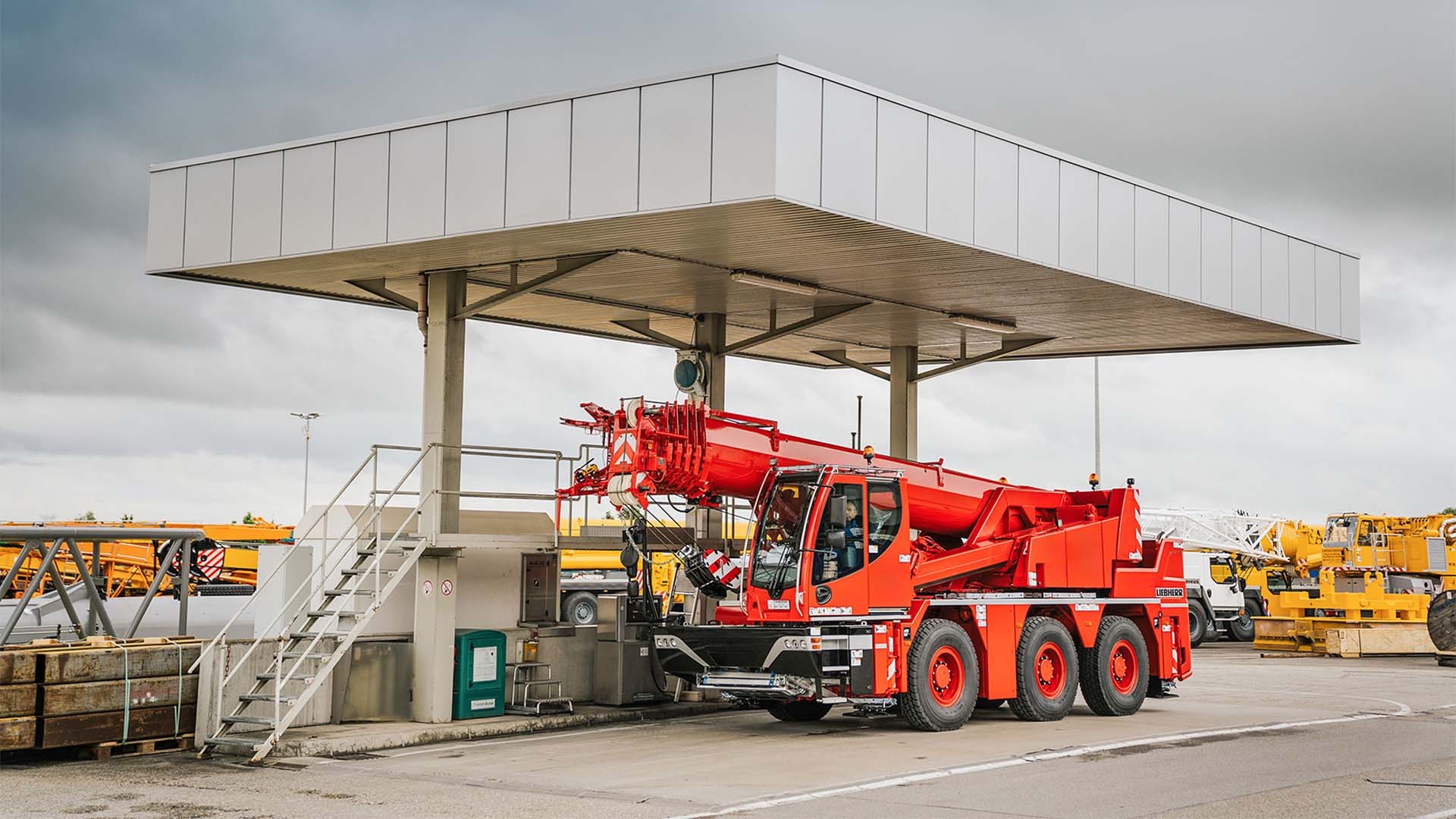
Since September 2021, we have been refuelling all new mobile and crawler cranes in Ehingen exclusively with pure HVO fuel for test drives, crane inspections and prior to delivery.
Life-cycle analysis shows a 74 % reduction in greenhouse gas emissions in the scenario examined
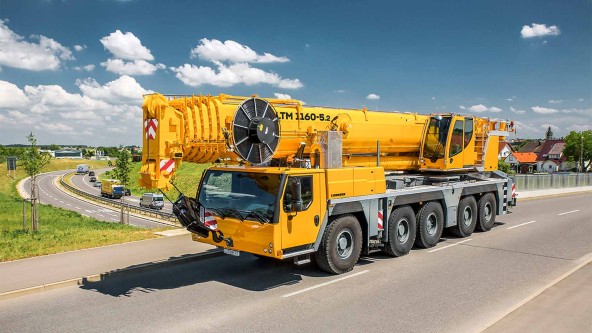
For an LTM 1160-5.2 operated on 100 % HVO throughout its entire service life, the life-cycle analysis in the scenario under investigation shows a reduction in greenhouse gas emissions of 74 % tonnes of CO₂ equivalent compared with the reference scenario (fuel mix comprising 93 % fossil diesel and 7 % biodiesel).*
*This is based on a life-cycle analysis carried out in 2021. The economic expertise and knowledge regarding comprehensive energy assessments and evaluations for life-cycle analyses were provided by the economic consultancy Frontier Economics. The scenario examined is based on an assumed service life of 25 years, as well as 1,000 operating hours and 10,000 km travelled annually. The analysis took into account the manufacture of the crane (cradle-to-gate), energy production (well-to-tank), infrastructure, use (tank-to-wheel) and scrapping or recycling (end-of-life). Different raw materials, manufacturing processes or terms of use may lead to different results. The reported reduction in tonnes of CO₂ equivalent assumes continuous operation using 100 % HVO. In the case of fuel blends, the reduction is correspondingly lower.
More benefits
- No modifications are required
- Good compatibility with all engine components
- HVO can be mixed with fossil diesel in any ratio for use in conventional internal combustion engines
- Up to 10 % lower AdBlue consumption in tests*
- Up to 11 % lower nitrogen oxide emissions in tests**
- Tests show lower exhaust smoke opacity in vehicles without diesel particulate filters***
*During test drives with an LTM 1110-5.1 on a German federal highway in 2020, AdBlue consumption was found to be up to 10 % lower when using 100 % HVO than when running on diesel fuel.
**During test runs with an LTM 1110-5.1 on public roads in 2020, nitrogen oxide emissions were found to be up to 11 % lower when using 100 % HVO than when running on diesel fuel.
***In vehicles without a diesel particulate filter, opacity measurements showed that exhaust gas opacity was lower when using HVO than when running on diesel fuel. The 2020 measurements record only the opacity of the exhaust gas: no conclusions regarding particle number or particle mass can be drawn from these results.
Engine approvals*
All the diesel engines we install have been tested in detail by the manufacturers. Furthermore, our cranes have undergone extensive testing and trials with customers in the field and at our test department using pure HVO (100 %).
→ Cranes before interface emission stage 4: No approval, but we do not expect any technical problems or consequential damages when HVO is used
*Subject to alterations
A comparison of HVO and biodiesel*
| HVO | Biodiesel | |
| Raw materials | Vegetable and animal oils and fats, including waste and residues | In particular, rapeseed oil and other vegetable oils, as well as animal fats |
| Production process | Hydrogenation | Esterification |
| Fuel type | Paraffinic fuel | Ester-based fuel |
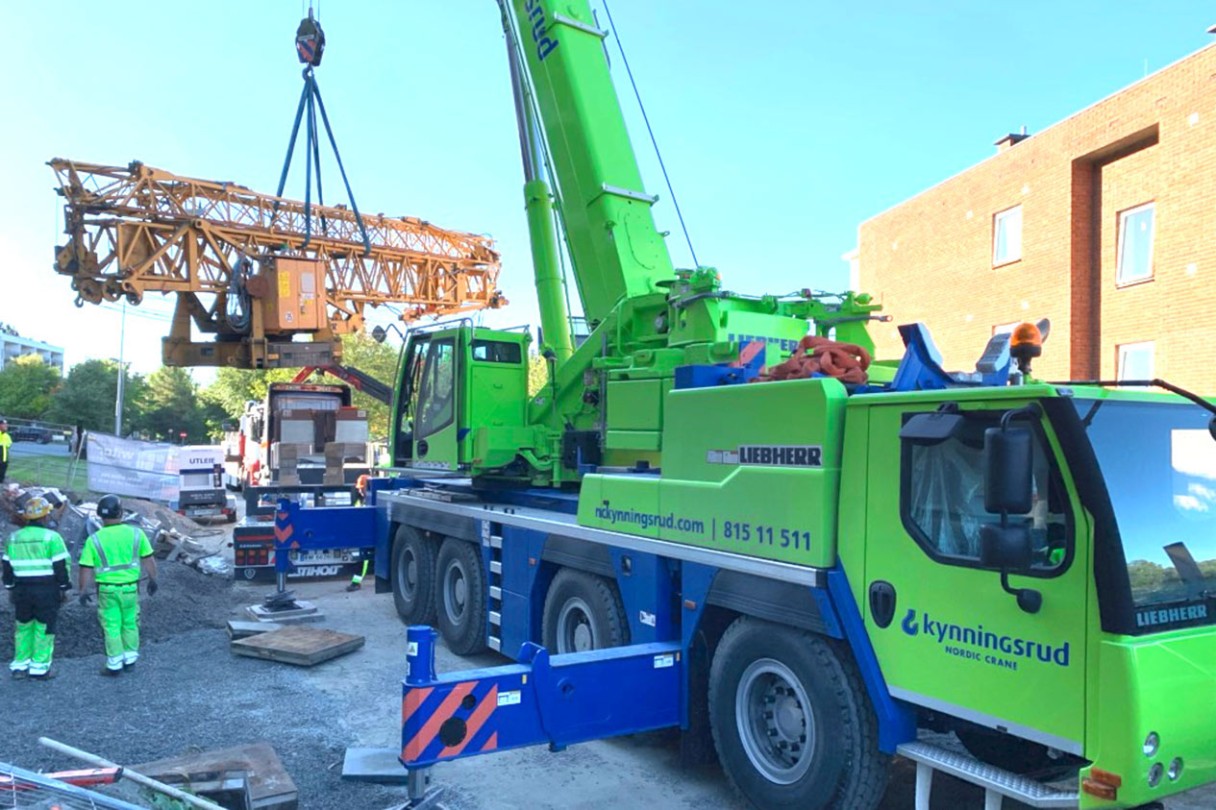
Testing the use of HVO fuel in a mobile crane LTM 1090-4.2 in Norway.