

Liebherr-Werk Biberach GmbH
Memminger Straße 120
88400 Biberach an der Riß
Germany
Press releases | 2026-08-06
Seven Liebherr tower cranes currently dominate the skyline at the Wallstraßenbrücke in Ulm. For the replacement structure being built as part of the B10 project, the ARGE B10 consortium – comprising Matthäus Schmid Bauunternehmung GmbH & Co. KG from Baltringen and LEONHARD WEISS GmbH & Co. KG from Göppingen – is relying on a crane concept developed jointly with Nagel Mietservice GmbH. The cranes lift heavy structural and reinforced concrete components between live rail and traffic routes. Erection of the first cranes began in March 2026.
The Wallstraßenbrücke is one of Ulm’s most important transport structures. It carries the B10 federal highway over the Kienlesbergstraße and the adjoining railway lines. The structure dates from 1967 to 1969 and, due to its condition, must be completely replaced with a new build. The new bridge will be 187 metres long and constructed in two sections: the western half will be built between 2026 and 2027, followed by the eastern half between late 2027 and early 2029. Full reopening to traffic is scheduled for summer 2029.
The project is being delivered by ARGE B10, a consortium of Matthäus Schmid Bauunternehmung GmbH & Co. KG from Baltringen and LEONHARD WEISS from Göppingen. For the crane and logistics concept at the Wallstraßenbrücke, the consortium is relying on a long-standing partner: Nagel Mietservice GmbH from Ulm. Developed in close collaboration, Nagel Mietservice is responsible for project management, technical planning, and provides the crane technology flexibly for partner Matthäus Schmid.
On 12 March 2026, the Nagel Technik Service team erected the first Liebherr 520 EC-B 20 Fibre on site. The flat-top crane operates with a jib radius of 80 metres and a hook height of 52 metres. Its maximum load capacity is 20 tonnes. With its long jib, it covers the entire main construction area and handles the heaviest lifts, including the installation of formwork units and reinforcement cages between the live rail tracks.
A second Liebherr 520 EC-B 20 Fibre followed on 16 March 2026, on the opposite side of the construction area. With a 60-metre jib and 35-metre hook height, it is designed for shorter cycle times and faster handling processes in denser working areas. Together, the two cranes ensure full coverage of the site with optimised load distribution.
Both cranes are equipped with Liebherr’s Fibre technology, in which high-performance fibre ropes replace conventional steel ropes. This significantly reduces the weight of the hoist ropes and, based on the existing components, enables a 40 per cent increase in load capacity compared with equivalent steel-rope cranes. It also brings improved handling and reduced maintenance requirements. The fibre ropes have a total service life of 14 years. In the event of damage, up to 80 per cent of all rope damage can be repaired quickly and easily directly on site, without the time and cost of a full rope replacement. The modular EC-B system also allows project-specific configuration in terms of tower height, jib length and load capacity characteristics.
At the Blaubeurer Tor, a Liebherr 81 K is in operation. The self-erecting crane handles material distribution, logistical support tasks and the supply of peripheral areas. It stands out for its short set-up times and efficient operation with smaller loads.
From 17 April 2026, a Liebherr 202 EC-B completes the crane system. The flat-top crane handles lifting operations in formwork and reinforcement construction. In addition, three Liebherr 81.1 K cranes are being added by ARGE partner LEONHARD WEISS. The three self-erecting cranes are designed for high handling capacity with a small footprint and take care of fine logistics within the site.
The site’s location between rail and traffic routes places high demands on precision, load capacity and safety. Up to 86,000 vehicles pass along the B10 in a north-south direction every day, and the site spans a total of 14 railway tracks. Lifting formwork sections into position between the tracks, as well as placing reinforcement cages, requires millimetre-precise lifting movements. Modern assistance and safety systems on the cranes deployed support reliable and efficient crane operation even under these complex conditions. The interplay between powerful top-slewing cranes and flexible self-erecting cranes forms a coordinated crane system that efficiently covers both heavy individual lifts and rapid material cycles in the immediate working area.
2026-09-10
Press releases
Considerate and flexible: two Liebherr NC-B cranes at work in Sai Kung
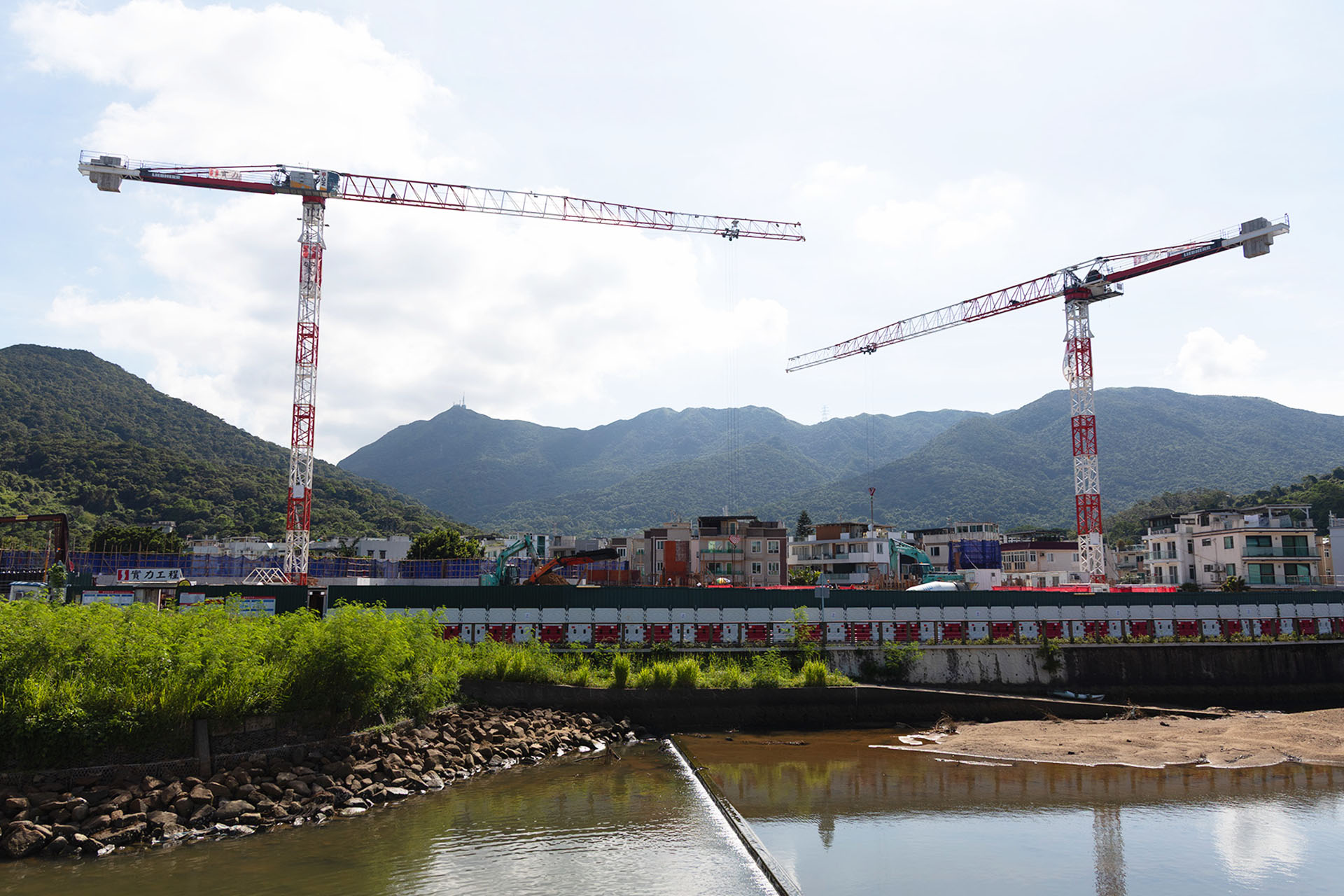
A new residential development is under construction in Ho Chung, Sai Kung. Foundation and excavation and lateral support works have been underway since December 2024 and are expected to continue until end of 2026. Two Liebherr NC-B 12-70 tower cranes are handling material logistics on the confined site.
2026-09-03
Press releases
Water for a whole valley: Liebherr Fibre crane at work high in Val Trompia
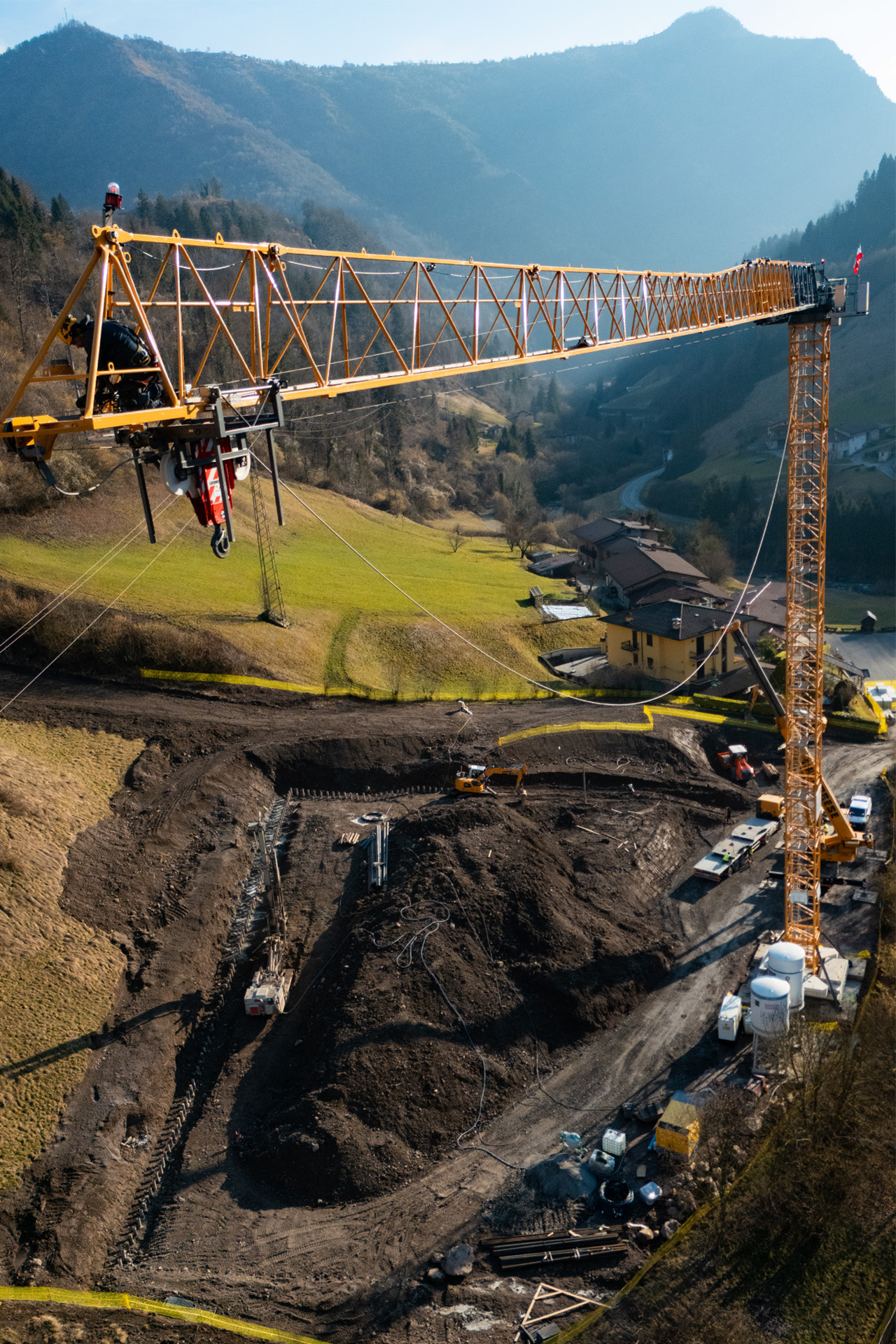
In Bovegno, Italy, work is progressing on a new drinking water treatment plant designed to supply thousands of residents and businesses across the Val Trompia region. Handling the major lifting tasks on site is a Liebherr 240 EC-B Fibre tower crane, its fourth deployment and the first of its kind to arrive in the country.
2026-08-27
Press releases
Precision over Lyon: Liebherr tower cranes conquer one of France’s most complex urban builds
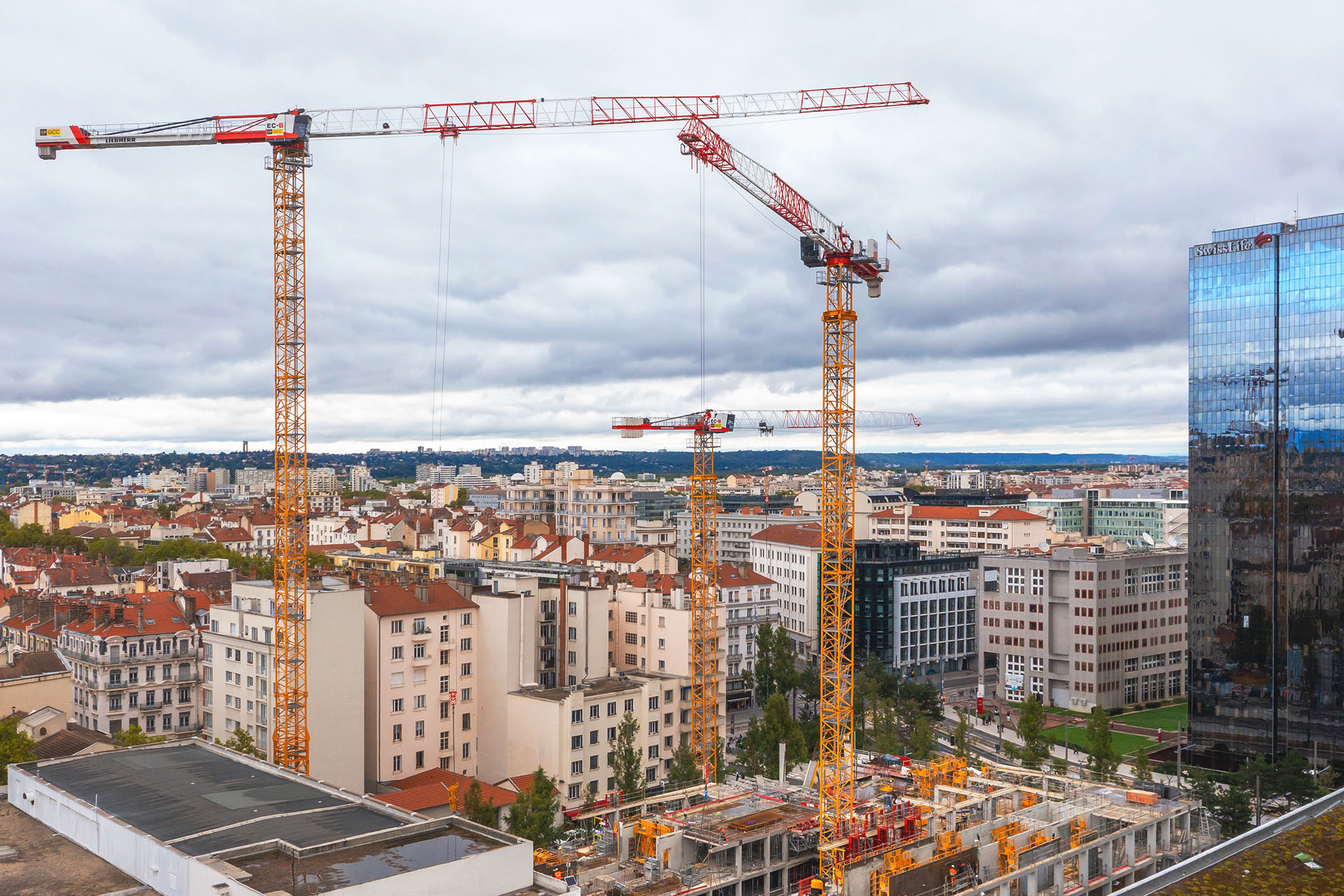
Nestled between a major shopping centre and a 115 metre tower with barely room to breathe, the Ki construction site in Lyon left no margin for error. Three Liebherr EC-B flat-top tower cranes spent 14 months proving that the right technology, when precisely configured, can turn one of France's most constrained urban sites into a functioning, efficient construction operation.