

Liebherr-Werk Biberach GmbH
Memminger Straße 120
88400 Biberach an der Riß
Germany
Press releases | 2026-03-27
Liebherr’s Fibre technology is evolving from an innovation project into an established solution in the tower crane industry. Enhanced repair options, additional rope shortening, and an extended total service life of 14 years are delivering a noticeable improvement in both economic efficiency and uptime. At the same time, projects around the world and extensive customer feedback confirm that Fibre cranes perform in practice, from urban construction to heavy-lift and industrial applications.
Liebherr’s Fibre technology represents a fundamental technological leap in the tower crane sector. Since the market launch of Fibre cranes in 2019, the concept – combining high-performance fibre rope with optimised crane technology – has become increasingly established. Current figures show that more than 400 Fibre cranes are now in service, with the sales split already at approximately 40 per cent. This trend is the result of more than 15 years of development, over 87,000 test rig hours, and more than ten years of field experience.
A key argument in favour of Fibre technology is the significantly improved management of damage incidents. With the expansion of the repair capability, we are raising the on-site repair rate – measured across almost 400 cranes in the field – from an already impressive 50 per cent to 80 per cent. Combined with rope shortening, up to 90 per cent of all rope damage can now be rectified on site, reducing the potential need to purchase a replacement rope to an absolute minimum.
At the same time, based on service feedback to date, the theoretical failure rate is below two per cent. This means the fibre rope achieves a level of uptime that is simply not possible with steel ropes. The foundation of this improvement is an optimised repair process in which both the stitching method and the materials used have been specifically enhanced. This expertise is built on years of test rig experience and is protected long-term by a patent application.
This is precisely where one of the greatest economic advantages of the technology lies: in many cases, the existing rope can be repaired quickly on site, rather than requiring a time-consuming and costly replacement, which, in the case of steel rope, means around one day of downtime and several hours of installation work
Alongside the improved repairability, Liebherr has extended the total service life of fibre ropes to 14 years. This encompasses both the operating period and storage time and applies to ropes already in the field regardless of their purchase date. In addition, Liebherr offers full convertibility in both directions: Fibre cranes can be converted to steel rope and vice versa. This provides investment security and lowers the barrier to entry for customers exploring the technology for the first time.
From a technical standpoint, the fibre rope also delivers clear advantages: it enables easier handling, more economical operation, higher load capacities, and more efficient use of resources. Based on existing steel rope crane systems, load capacity increases of up to 40 per cent are achievable. Further benefits include reduced maintenance requirements and the rope’s resilience in everyday site conditions. Field experience demonstrates that the fibre rope tolerates typical hazards such as concrete edges better than steel rope and should the load prove excessive, it can be repaired rather than replaced.
Numerous projects around the world demonstrate that Fibre technology has proven itself not only in testing but in real-world applications. In Germany, the 1188 EC-H 40 Fibre is supporting a major RWE project in Hürth, marking the German premiere of the most powerful High-Top crane in the EC-H range. In Spain, ArcelorMittal is using a 1188 EC-H Fibre for the first time in the construction of an electric arc furnace, carrying out a decarbonisation project in a confined environment. Following the successful deployment in Spain, ArcelorMittal is also relying on Fibre technology in Brazil: a 1188 EC-H 40 Fibre will be used in the construction of a new steel plant there. In France, a 520 EC-B 20 Fibre supported the construction of a tram bridge in Brest. In Amsterdam, a 370 EC-B 12 Fibre is currently in use on the inner-city hotel project Amstel 111. Fibre cranes are also contributing to precise and cost-efficient lifting operations at the Aurubis industrial project in Hamburg and at the LOVT Vision urban quarter in Munich. Curaçao, meanwhile, demonstrates a further advantage of Fibre technology: unlike steel ropes, the fibre rope is not susceptible to corrosion, making it ideal for use in maritime environments. A 370 EC-B 16 Fibre will support infrastructure modernisation at Damen Shiprepair there.
This breadth of projects illustrates the versatility of Fibre technology: ranging from urban high-rise construction, bridge and industrial building through to maritime applications.
Alongside the worldwide deployments, the feedback from dealers and customers is particularly noteworthy. Six companies have already announced their intention to systematically convert their fleets to Fibre cranes. Benjamin Grillmeier, Head of Building Construction at Beutlhauser Holding GmbH, puts it plainly: “We want to convert our entire rental fleet to Fibre cranes. To do this, we are purchasing exclusively Fibre technology for all new acquisitions and plan to retrofit our existing cranes to Fibre technology.”
Nagel Mietservice GmbH has also taken a clear position: “Nagel Mietservice GmbH has exclusively used cranes with Fibre technology since 2020. Our rental customers specifically request tower cranes with Fibre technology.”
Knud Feurig, Managing Director and shareholder of Feurig Baumaschinen GmbH, highlights in particular the robustness and repairability: “The fibre rope is extremely robust and tolerates operator errors. Most damage can be repaired quickly and straightforwardly on site. We have therefore decided to invest 100% in Fibre technology for all future purchases.”
The international picture is equally clear. Kjetil Tettum, Head of Building Construction at Utleiecompagniet AS, explains: “Our fleet comprises around 180 cranes, of which 15 are equipped with the innovative Fibre technology. In the future, we plan to invest exclusively in Fibre cranes.” And from Switzerland, Patrick Hauser and Roger Keller of Liebherr-Baumaschinen AG report: “Our rental fleet comprises 450 cranes, of which 264 are top-slewing models. Particularly impressive: 32 of these are Fibre cranes, more powerful and more economical. The technology has convinced us. We are therefore investing specifically in Fibre cranes going forward, to offer our customers the best possible solutions.”
Stefan Westermann of Liebherr-Baumaschinen Vertriebs- und Service GmbH summarises: “Thanks to rapid on-site repair and the option of rope shortening, we are significantly minimising downtime on the construction site. Our fibre rope technology delivers maximum availability and ease of handling. For us, the decision is clear: going forward, we will rely exclusively on Fibre cranes.”
The sum of these developments shows that Fibre technology has become far more than a technical alternative to steel rope. The technology combines repairability, with extended service life, reduced downtime, and high performance, backed by genuine investment security. At the same time, projects across Europe, the Caribbean, and beyond demonstrate that Fibre cranes perform in the widest range of applications, delivering their advantages where uptime, load capacity, and economic efficiency matter most. With the positive market response and the growing number of dealers converting their fleets, Fibre technology is steadily becoming the new standard in the modern tower crane market.
2026-10-02
Press releases
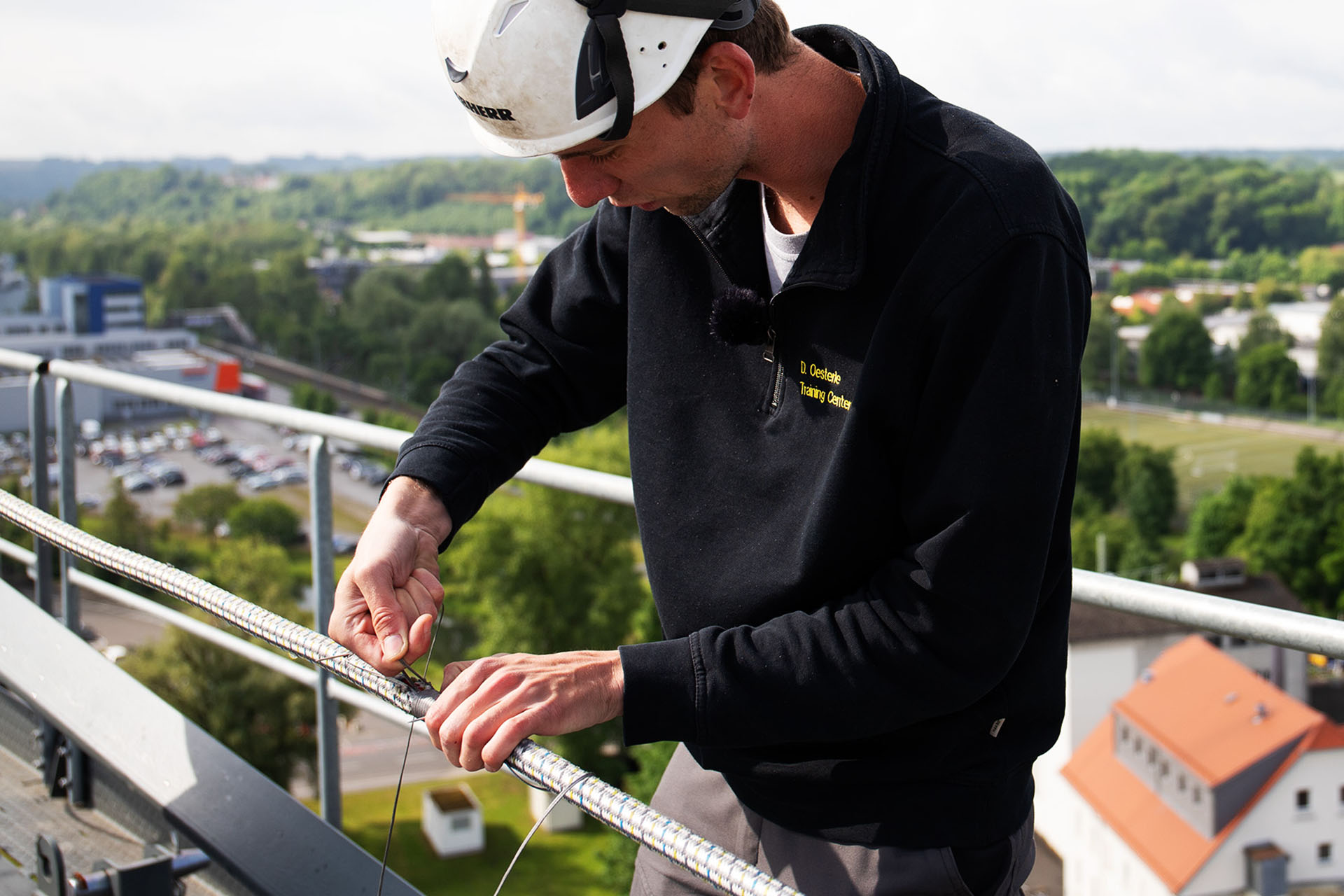
Liebherr is increasing the overall service life of its Fibre ropes from 14 to 16 years, with the decisive period of use rising to up to 12 years. This is based on multi-year ageing trials on test rigs and analyses of ropes already in field. The new ruling applies automatically to all new ropes and those already in the field. This step forms part of Liebherr's ongoing path towards establishing Fibre technology as the new standard in the tower crane market.
2026-09-22
Listicles
Five questions that show why planning a tower crane deployment is more complex than you might think
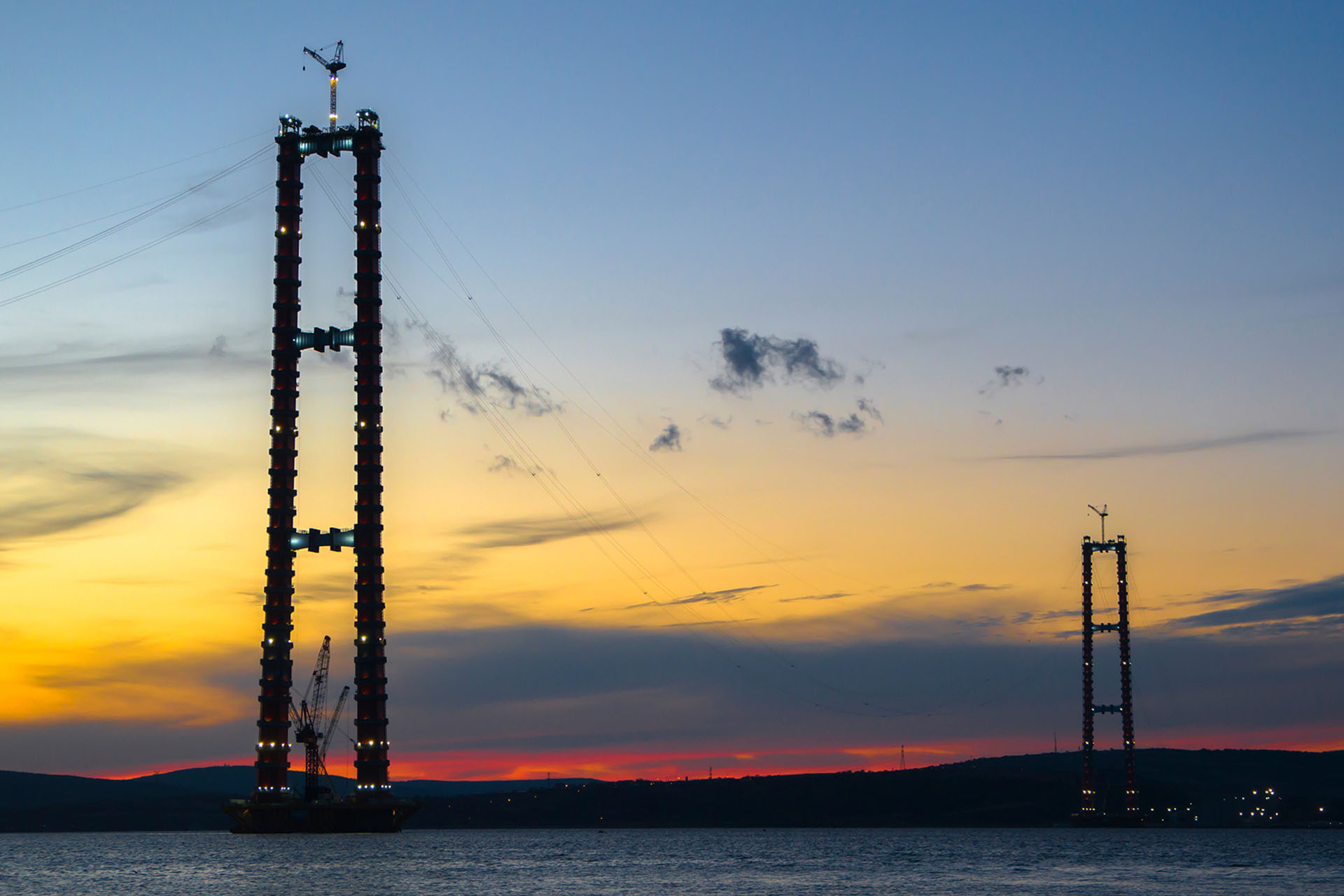
On spectacular construction sites, it's the structures that take the spotlight. But building bridges, tunnels or skyscrapers in the first place often demands equally extraordinary crane concepts. From the Sagrada Família in Barcelona to the Fehmarnbelt Tunnel in Denmark, Liebherr supports demanding tower crane deployments worldwide. Max Widder, Head of Project Planning at Tower Crane Solutions, gives insight into the challenges behind some of the most complex crane projects in the world.
2026-09-10
Press releases
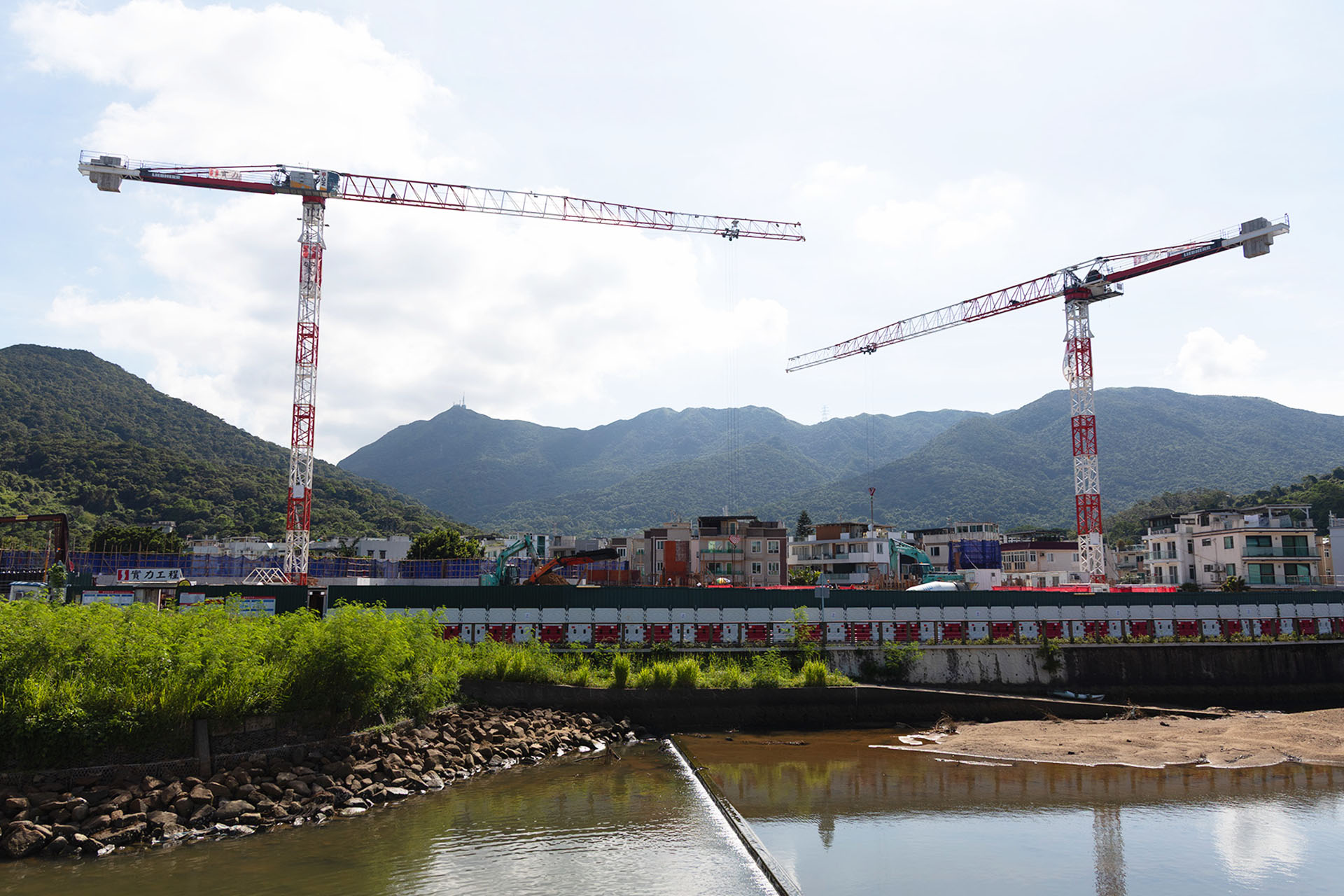
Considerate and flexible: two Liebherr NC-B cranes at work in Sai Kung
A new residential development is under construction in Ho Chung, Sai Kung. Foundation and excavation and lateral support works have been underway since December 2024 and are expected to continue until end of 2026. Two Liebherr NC-B 12-70 tower cranes are handling material logistics on the confined site.