


News | 01/16/2020
Among fascinating jobs of Liebherr mobile and crawler cranes, many categories from the print magazine are also featured in the online edition. The category ‘simply explained’ helps to enlarge the personal knowledge about cranes by explaining typical terms of use in easy words. ‘In focus’ reports this time about engine emission stages for mobile cranes and the extensive test series that has to be done to ensure the Liebherr cranes meet the standards. On top, the massive payload increase of the LTM 1750-9.1 is shown in detail.
The UpLoad video magazine will be published four times per year. With this unique offer for customers and friend of the Liebherr mobile and crawler cranes, the UpLoad magazine is now featured in print, online and in moving images.
Video
You might also be interested in
10/27/2026
Press releases
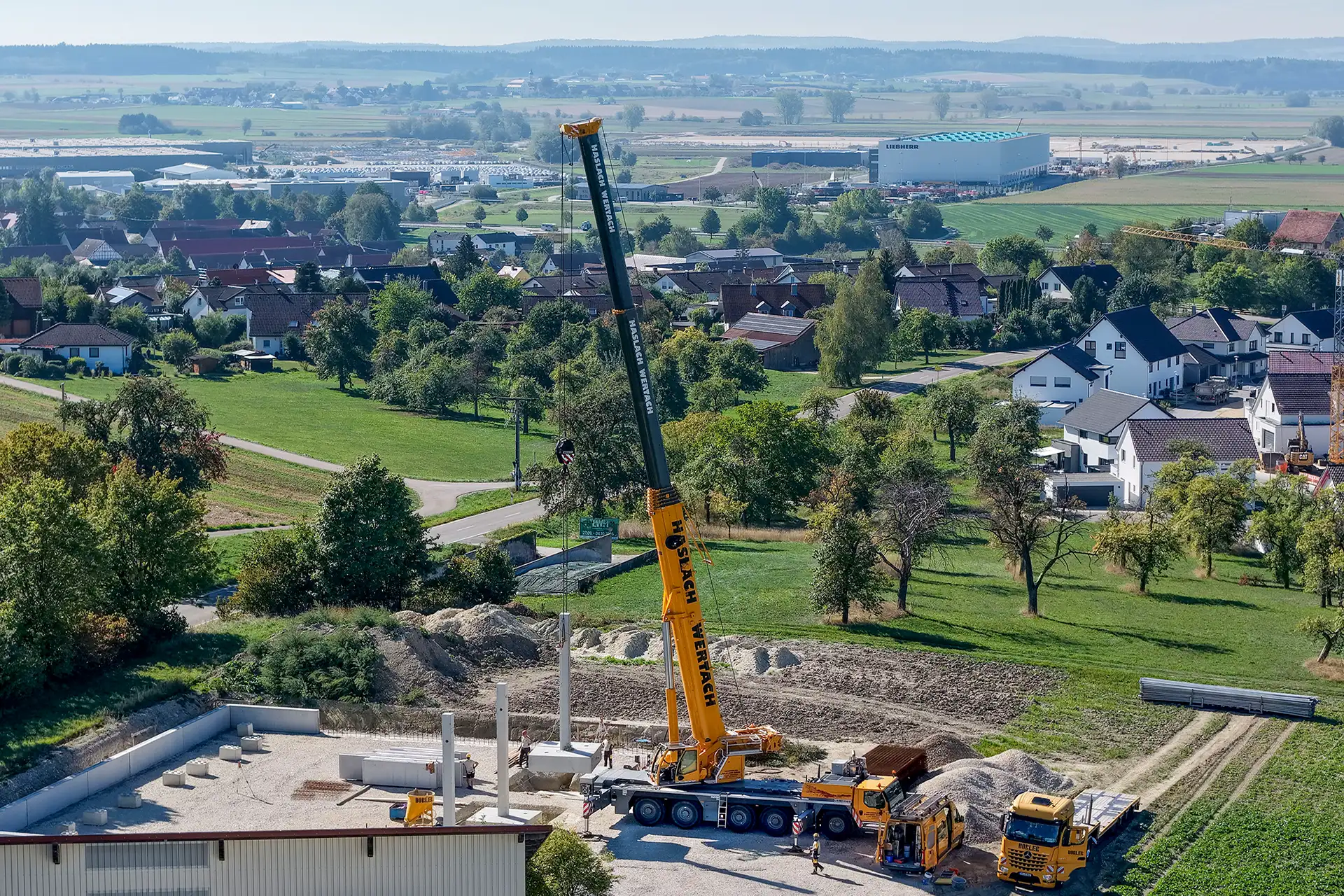
Manufacturer’s plant in sight: LTM 1230-5.1 erects concrete columns in Ehingen-Berg
Haslach GmbH, based in Wertach in the Allgäu region, has used its Liebherr LTM 1230-5.1 mobile crane to install three concrete columns, each weighing 20 tonnes, for a potato storage hall in Ehingen-Berg. These columns play a key role in ensuring the stability of the building. Although a smaller crane would generally have been sufficient for the lifts, the family-run company deliberately opted for the 230-tonne crane.
10/27/2026
Press releases
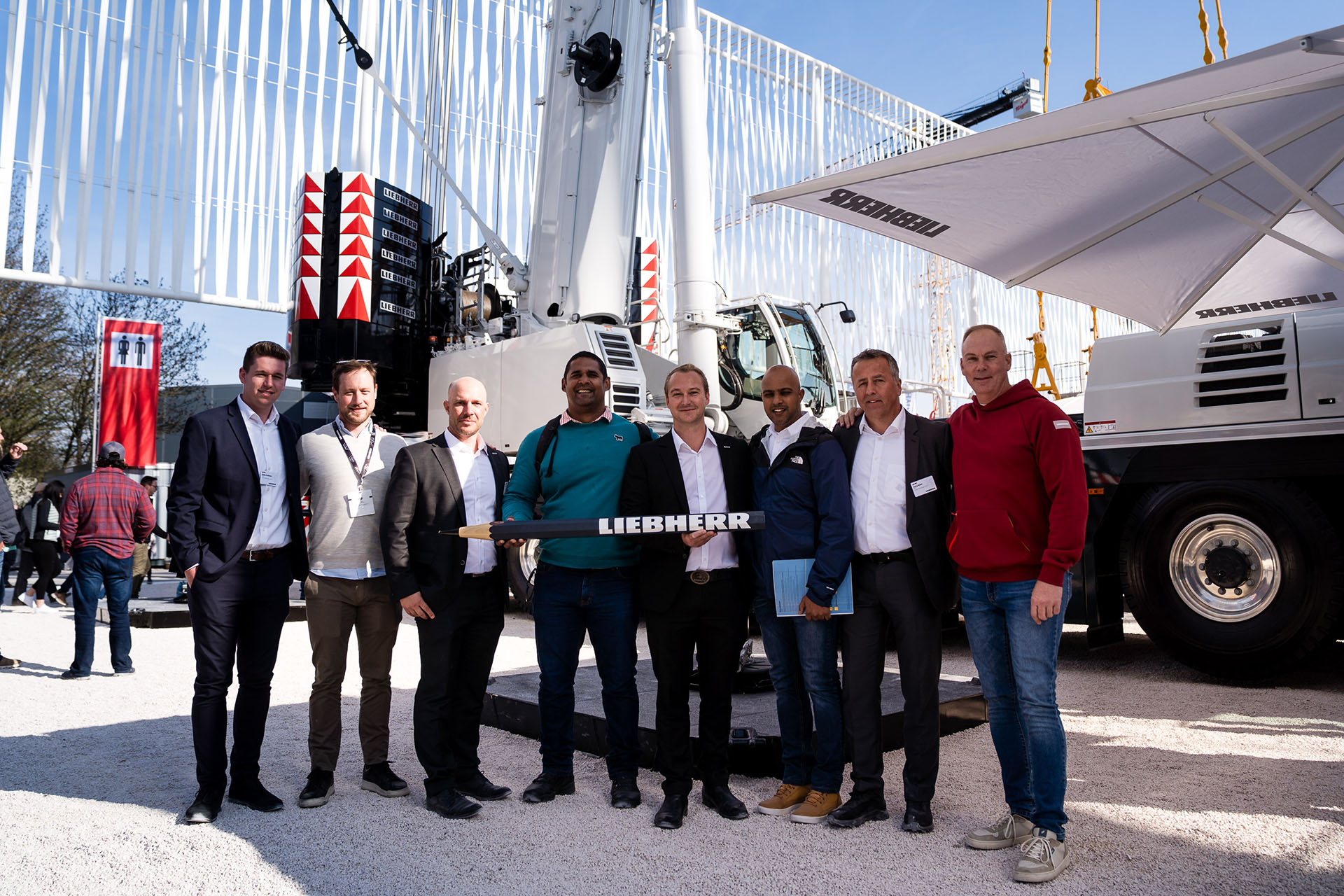
Concord Cranes takes delivery of Africa’s first Liebherr LTM 1400-6.1
Concord Cranes has marked a major milestone for the African lifting industry by taking delivery of the continent’s first Liebherr LTM 1400-6.1 – a new 450-tonne, six-axle mobile crane combining exceptional lifting capacity with all-terrain mobility.
10/21/2026
Press releases
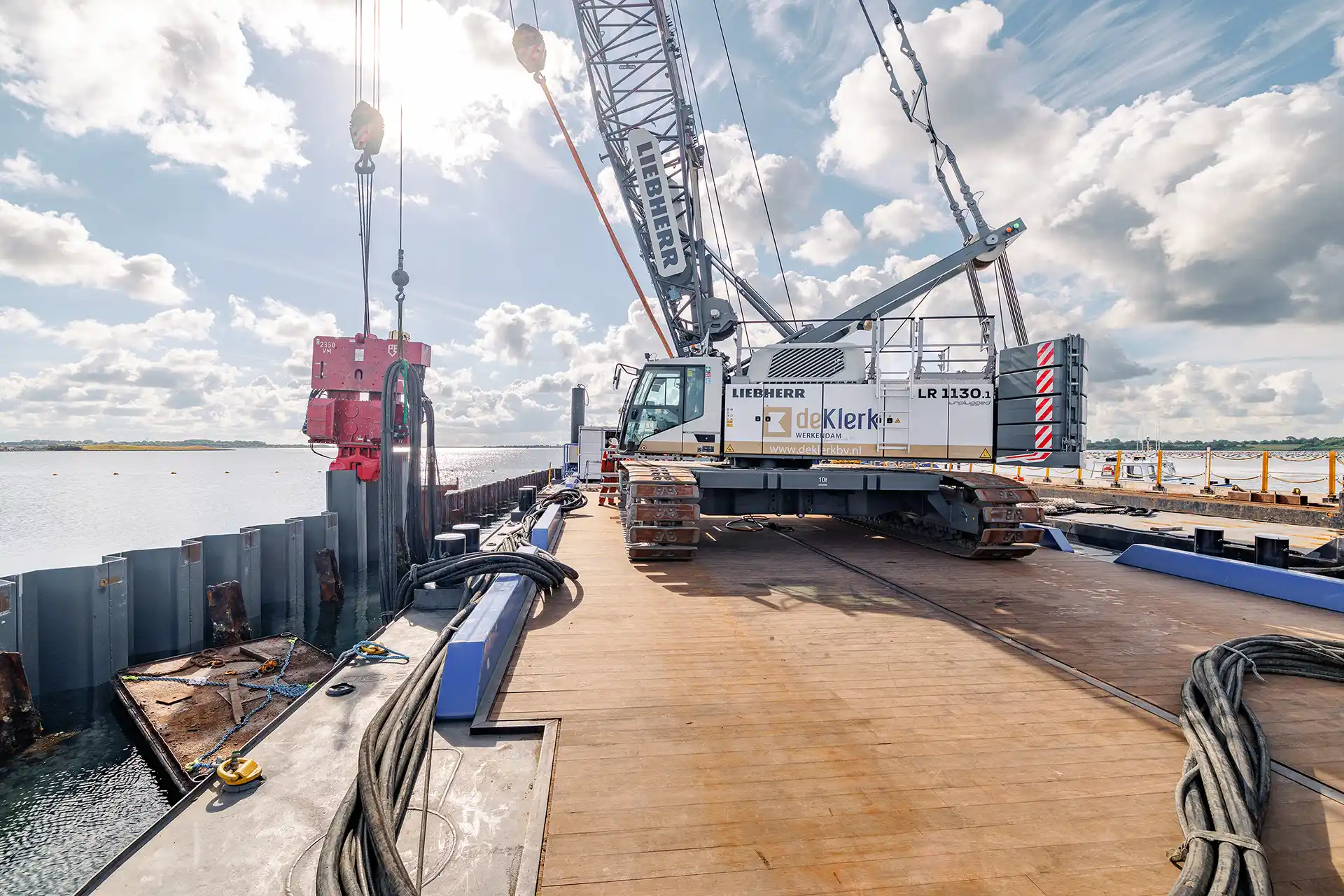
Liebherr electrifies hydraulic construction project with unplugged crawler crane
For the refurbishment of the Brouwer sluice lock complex on the Brouwersdam in the Netherlands, the company De Klerk Werkendam is relying on Liebherr’s battery-powered LR 1130.1 unplugged crawler crane. As part of this, the 50-year-old sheet pile structures are being replaced; these play a key role in regulating the flow of water between the North Sea and the Grevelingenmeer.