Drive technologies: many routes leading to the same destination
Through the systematic defossilization of drive systems for construction machinery and cranes, Liebherr has its own climate targets firmly in its sights, and those of its customers, too. The only way to reach these targets is via a path that embraces technology-neutral approaches. After all, there is not a one-size-fits-all-solution for every application scenario.
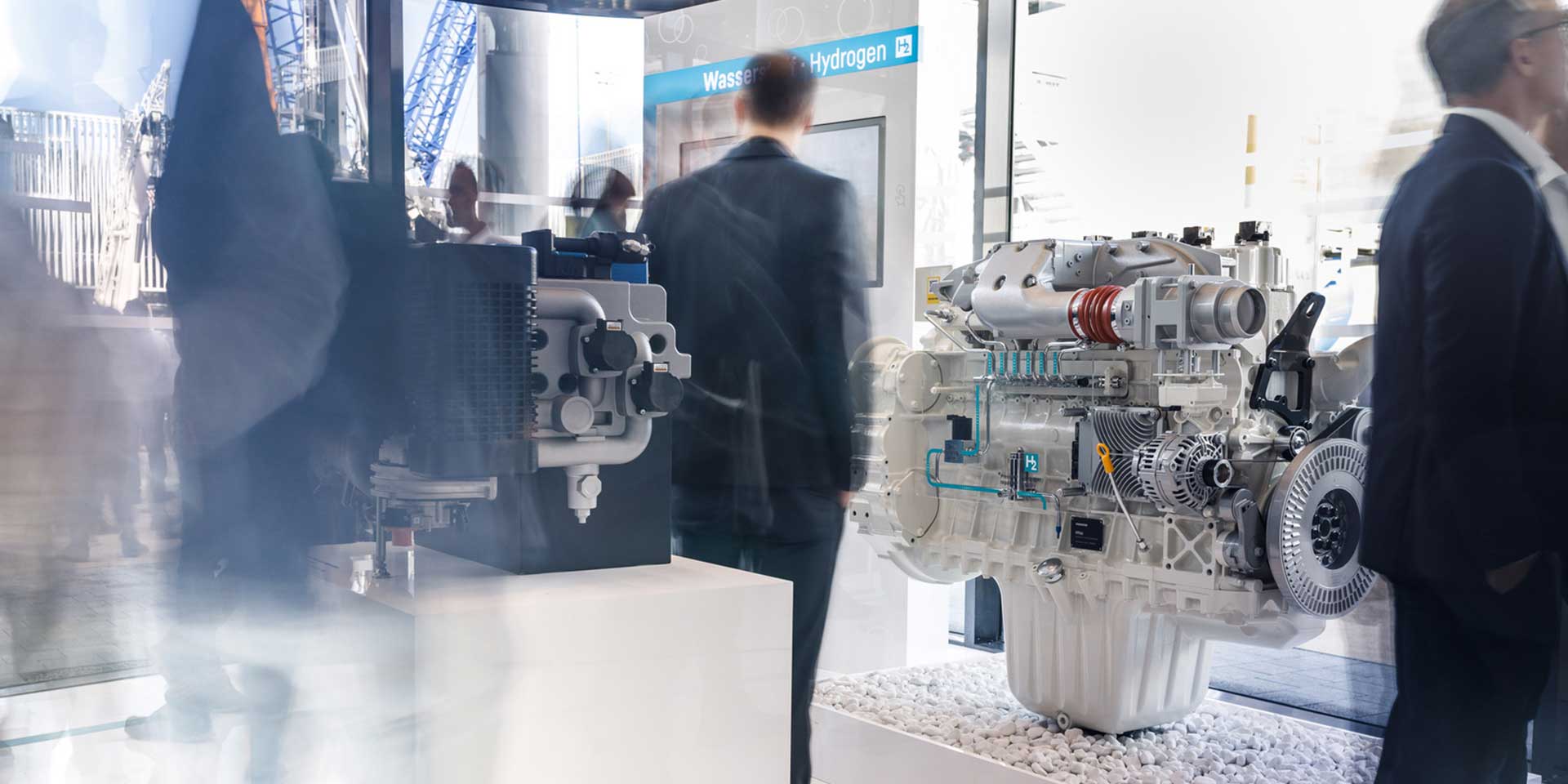
The drive is more than just the “engine” of a machine. It in fact conceals the complex system ofconverting and transferring energy within a machine. This is true not only of combustion engines, but also gearboxes, hydraulic pumps and engines, valves, hydraulic cylinders and, inthe case of electric drives, the electric motors and performance electronic components too. The development departments at Liebherr maintain a clear focus on providing optimal technology for the specific area of application. The basis for this is established by four pillars, upon which rest all of the drive concepts Liebherr has developed as an alternative to burning fossil energy carriers.
These four pillars form the framework for Liebherr’s technology-neutral approach to development, while also paving the way towards the future of sustainable technological leadership.
Reducing greenhouse gas emissions
Availability and infrastructure of the energy carriers
Technological maturity of the developments
Foreseeable costs of future energy carriers
- Fossil diesel
- Synthetic diesel (e-fuels)
- Hydrotreated vegetable oil (HVO)
- Mains-operated machines
- Battery-operated machinery
- H₂ piston engine
- Fuel cells
- Ammonia
Status: still the primary source of energy for heavy, mobile off-road machinery
Areas of use: construction and mining machinery with high performance requirements and long operating times
Potential: further efficiency gains through technological advances. The Liebherr balance sheet: 97 % less nitrogen oxide and soot particles than in 2000
To-dos: to reduce CO₂ emissions by adding or switching to sustainable alternatives (e-fuels, HVO)
Status: still the primary source of energy for heavy, mobile off-road machinery
Areas of use: construction and mining machinery with high performance requirements and long operating times
Potential: further efficiency gains through technological advances. The Liebherr balance sheet: 97 % less nitrogen oxide and soot particles than in 2000
To-dos: to reduce CO₂ emissions by adding or switching to sustainable alternatives (e-fuels, HVO)