Working together for a zero-emissions future
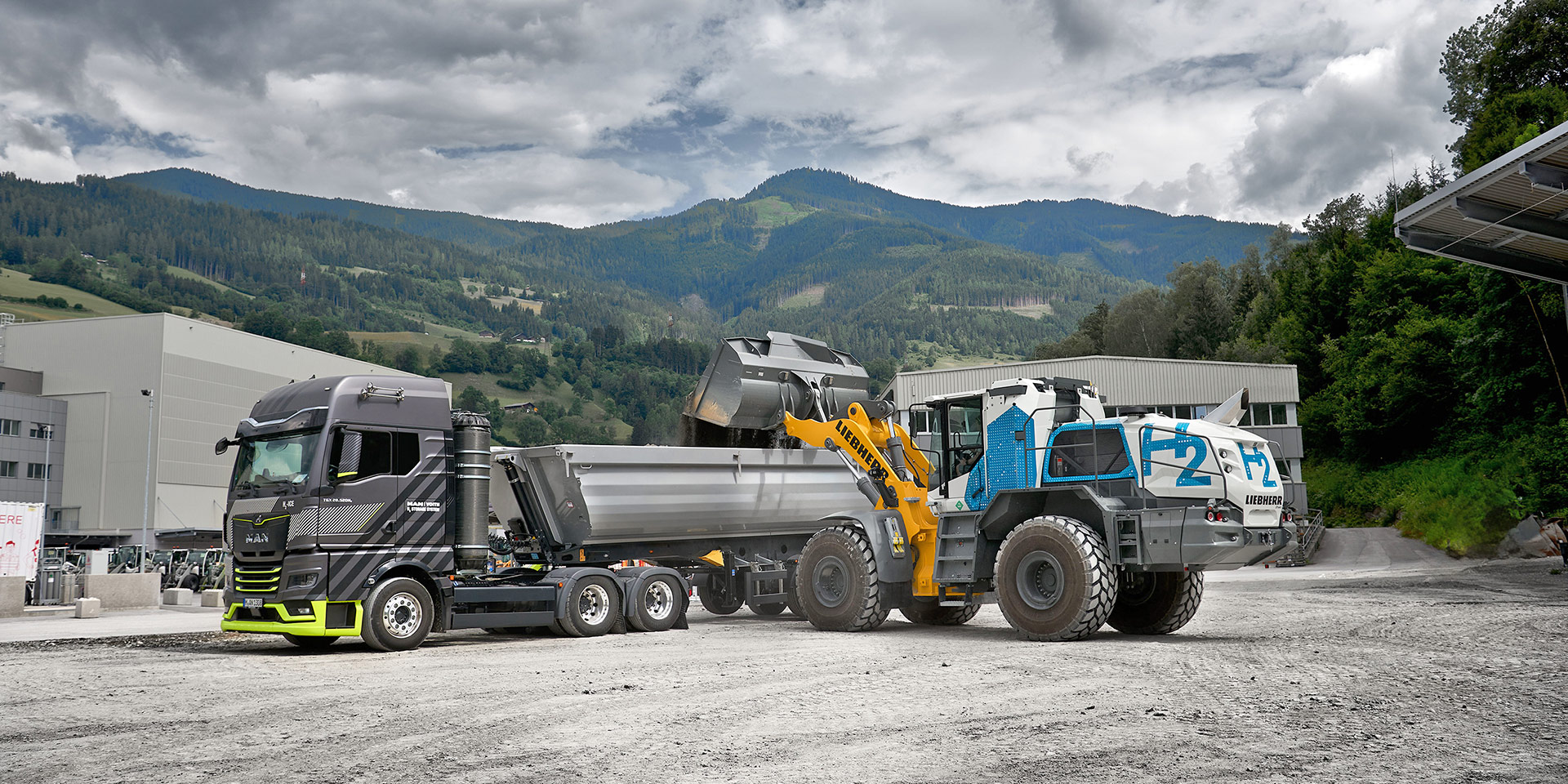
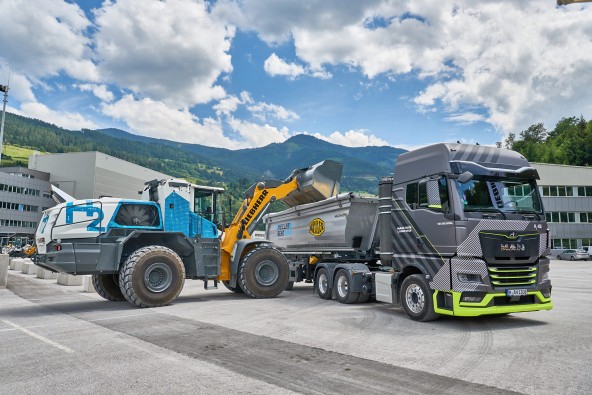
Pioneering work in the quarry: Liebherr and STRABAG are trialling the L 566 H hydrogen wheel loader in Styria (Austria). The pilot project may be a key to further reducing CO2 emissions on construction sites.
The construction and building sector is one of the largest sources of emissions. According to the United Nations Global Status Report for Buildings and Construction, this sector accounted for around 38 per cent of greenhouse gas emissions worldwide in 2020. A large proportion of these emissions in construction are caused by the use of fossil fuels in construction machinery. Zero-emissions technologies are therefore crucial to achieving the industry’s climate targets.
Liebherr und STRABAG, one of Europe’s leading technology groups for construction services, are setting a striking example with a pilot project. At the Kanzelsteinbruch quarry in Gratkorn (Austria), the L 566 H, the world’s first large wheel loader with hydrogen drive, is being put to use.
The use of zero emissions drives in everyday work is a challenge, especially with large construction machinery. While battery-electric drives have already proven their practicality for smaller machines in countless hours of operation, they reach their limits more quickly in vehicles with high energy requirements. Hydrogen engines that use green hydrogen obtained from renewable energies such as wind, hydropower or solar energy offer significant advantages beyond climate protection.
Advantages at a glance
- Longer operating times: hydrogen drives allow for continuous operation without long charging times.
- High performance: large construction machinery such as wheel loaders require enormous amounts of energy during operation, which hydrogen can provide efficiently.
- Easy to refuel: with a hydrogen refuelling station located directly on the construction site or with mobile refuelling solutions, refuelling is quick and easy.
Though the technology is advanced, the big challenge remains: green hydrogen is a very scarce resource. Still, research into the production of technical hydrogen from renewable energies is being conducted at full speed worldwide. Nevertheless, the corresponding refuelling station network in Europe, as elsewhere in the world, is still largely in its infancy. This is largely due to a clear imbalance between the current limited supply and the constantly growing demand.
‘Hydrogen engines make it possible to operate even large vehicles – which are difficult to electrify due to their high energy requirements – extremely efficiently and, above all, CO₂-free,’ says Dr-Ing Herbert Pfab, chief technical officer of Liebherr-Werk Bischofshofen GmbH, gets to the heart of the possibilities. The concept is aimed at both economic and ecological sustainability.
Consistently reducing emissions
This is in line with STRABAG’s goal of becoming climate-neutral by 2040. The way to achieve this is primarily through a consistent reduction in emissions, which also includes the operation of construction machinery. Liebherr-Werk Bischofshofen not only supports STRABAG with innovative technology, but also ensures that solutions are tailored directly to specific requirements through proximity and flexibility. ‘The hydrogen wheel loader project shows how manufacturers and users can join forces to accelerate technological progress,’ emphasises Dr-Ing Pfab.
The result has not only the experts fascinated. The prototype of the L 566 H hydrogen wheel loader that is used in Styria (Austria), is equipped with a hydrogen engine that was specially developed by Liebherr – a technological highlight. The green hydrogen for the drive is supplied by Energie Steiermark. This provides Dr-Ing Herbert Pfab with an ideal test environment for the prototype: ‘In Gratkorn, we can test the wheel loader under real conditions and continuously collect valuable practical data for further development.’
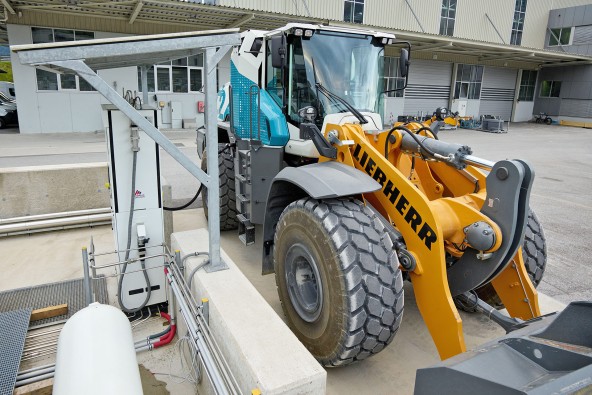
This also includes the fact that Liebherr-Werk Bischofshofen has put its own hydrogen refuelling station into operation as part of the development of the hydrogen wheel loader – the first of its kind in the province of Salzburg. One important strategic partner for Liebherr here is the filling station developer ‘Maximator Hydrogen.’ Together, they are researching mobile refuelling options so that construction machinery can subsequently be refuelled with hydrogen without leaving the construction site. This is particularly important for remote construction sites and machines that are not very manoeuvrable.
‘The two-year test run is aimed at jointly delivering decisive findings to bring the hydrogen wheel loader to series production readiness. Our strength lies in working together with our customers to develop solutions that precisely fulfil their requirements and are convincing in practice,’ emphasises Dr-Ing Pfab. ‘Once again, it’s been proven that innovations are born from pooling all strengths. We must continue to utilise this. In pioneering pilot projects like the one in Styria and beyond. We at Liebherr are ready for this.’