Bauma and the people who make it
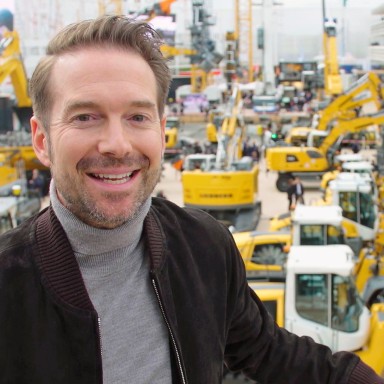
Bauma is a name that stands for innovation, scale and spectacle in the world of construction machinery and the construction industry. Every three years, Munich transforms into a Mecca for technology enthusiasts and professionals from around the globe. An integral part in this event is played by Liebherr. But behind the impressive machinery and the incomparable exhibition booth are people who put months of passion and dedication into ensuring an unforgettable experience for visitors. These are the people who make Liebherr at Bauma so special.
The world’s biggest construction exhibition
Bauma is not just the largest trade show in the world for construction machinery, but also an international event that draws visitors from all parts of the globe. For over 60 years, Liebherr has been a prominent participant, showcasing its products on an area covering over 14,000 square metres. This year there are more than 100 exhibits, including construction machinery, mobile and crawler cranes, material handling equipment, mining machinery and components.
Innovation and perfection: the work at the Liebherr plants
Two imposing buildings are constructed, each 120 metres long, 14 metres wide and 13.50 metres high. The converted space covers 15,000 cubic metres, while the usable area of the buildings is 6,000 square metres. To achieve this logistical feat, 1,200 tonnes of steel are used, consisting of 3,200 individual parts.
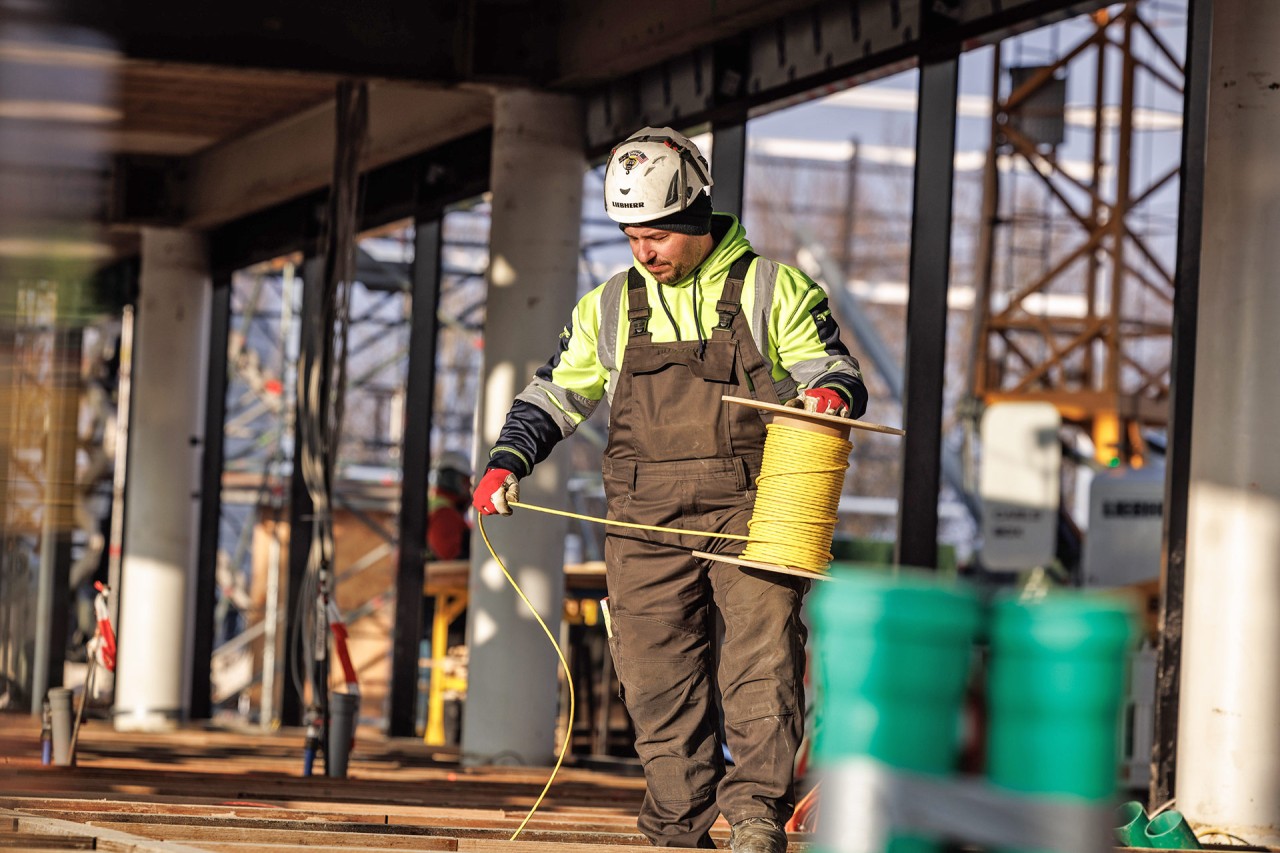
The technical infrastructure is just as impressive: 4,000 lights are installed and 75 kilometres of cable are laid. Around 26,000 bolts are needed for the steel structure, while the wood construction requires a whole million screws, including 800,000 for the drywall alone.
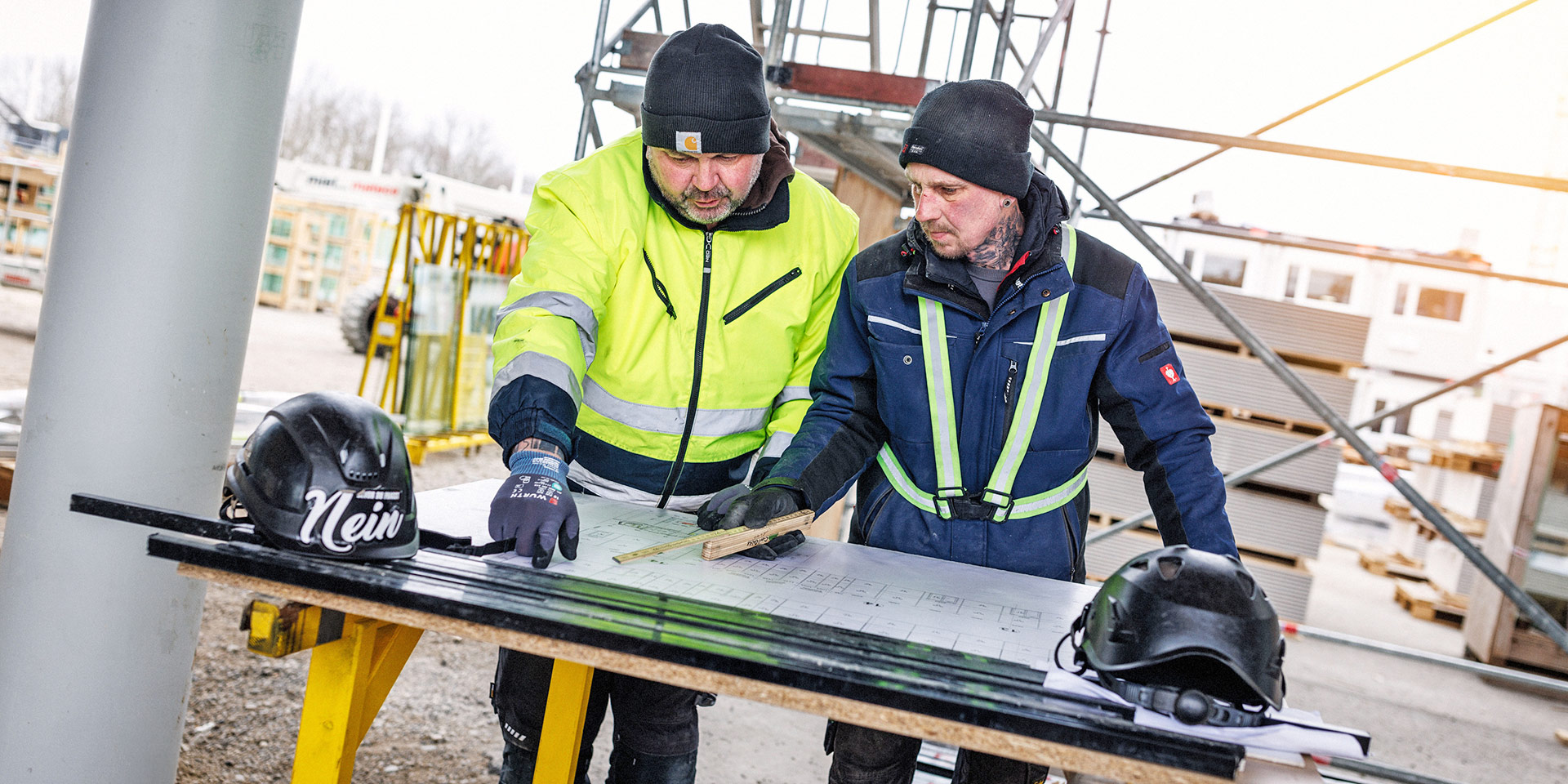
The facade of the buildings is fitted with 5,000 square metres of glass, with individual panes weighing up to 600 kilograms. There are also 8,000 square metres of painted surfaces (not including steel supports for the buildings and filter systems) and 7,000 square metres of carpet.The building is equipped with 400 doors, a main staircase and three lifts. Every day, an average of 30 and, at peak times, up to 90 installers work on the project, which requires a huge amount of teamwork and dedication. This logistical feat not only demands technical expertise, but also impressive coordination and cooperation from everyone involved.