



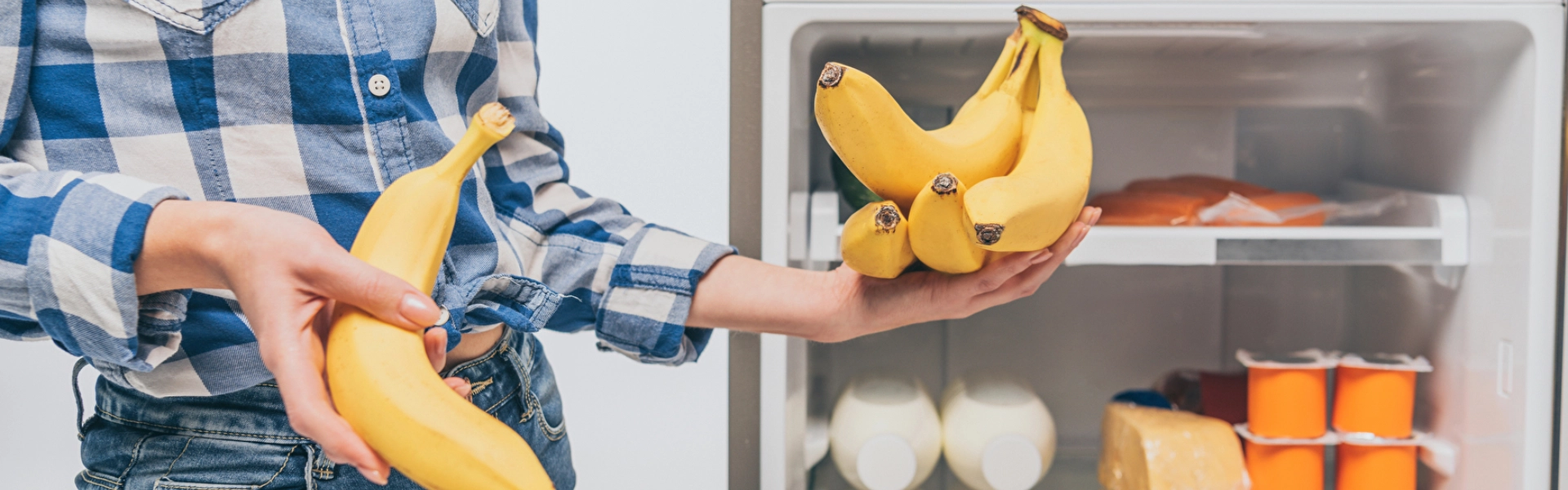
Storing and preserving bananas correctly – in the fridge?
Bananas are harvested unripe in their countries of origin and delivered to Europe by refrigerated ship. The bananas are then ripened using oxygen and ethylene. Ethylene is a ripening gas. It is also produced by the plants themselves. With this knowledge, you can better understand banana ripening in your kitchen and influence it as you wish. We explain how to store and ripen bananas correctly. And whether and when it makes sense to store bananas in the fridge. Because the ripening process can also be slowed down.
The key points
Storing bananas at room temperature:
- Bananas ripen fastest at room temperature.
- Store bananas separately from other fruit to extend their shelf life.
- Hang up bananas to prevent bruising and spoilage.
- The banana will keep for at least five days at room temperature.
Storing bananas in the fridge:
- The cold in the fridge is not ideal for bananas.
- Bananas that have already been opened or are very ripe should be stored in the fridge to slow down ripening and spoilage.
Storing bananas at room temperature
Bananas ripen fastest at room temperature. Green bananas in particular are suitable for simple storage in a fruit basket at room temperature.
If you want the bananas to keep for a long time instead, we recommend storing them separately from other types of fruit. The banana will keep for at least five days at room temperature.
If you regularly eat bananas and store them at home, it is worth hanging them up until you eat them. This avoids possible pressure points that can affect the fruit inside through the skin.
Choose a place that is as dark as possible so that the bananas can keep for longer.
Storing bananas in the fridge
Before the bananas become overripe, it is better to store them in the fridge. This significantly slows down the ripening process and the banana remains in its current state of ripeness for longer.
It is also better to store an opened banana in the fridge. To prevent the cut surface from turning brown, you can use a little lemon juice. Dab some of the liquid onto the cut section using a kitchen towel.
However, the low temperatures in the fridge are not ideal for bananas. The skin soon turns dark in colour. However, this is not a clear sign of spoilage.
If the skin of the banana turns grey in the fridge, this is a sign of frost damage. The flesh will become mushy very quickly and you should then dispose of the banana.
Brief overview: recognising the ripeness of bananas
- Green bananas are unripe.
- Yellow bananas are ripe.
- Green bananas can be stored for longer.
- Yellow bananas are better suited for immediate consumption.
- You can ripen green bananas more quickly by placing them near apples or already ripe yellow bananas.
Banana ripeness
Curved bananas are available in supermarkets with different skin colours. You can tell how ripe a banana is by the colour of its skin.
A greenish skin means that the banana is still ripening. The flesh inside is still firm and not very sweet. A yellow skin indicates a ripe fruit. The flesh is soft and sweet.
You should decide at the supermarket whether you want to eat the banana immediately or keep it for a while. Then you can choose a fruit that is either already ripe or still ripening.
If you want the green banana to ripen more quickly, you can simply place an apple or a yellow banana next to it to speed up the process. Apples and yellow bananas give off the ripening gas ethylene, which accelerates the ripening of other fruit in the immediate vicinity.
Brief overview: do bananas still have a shelf life?
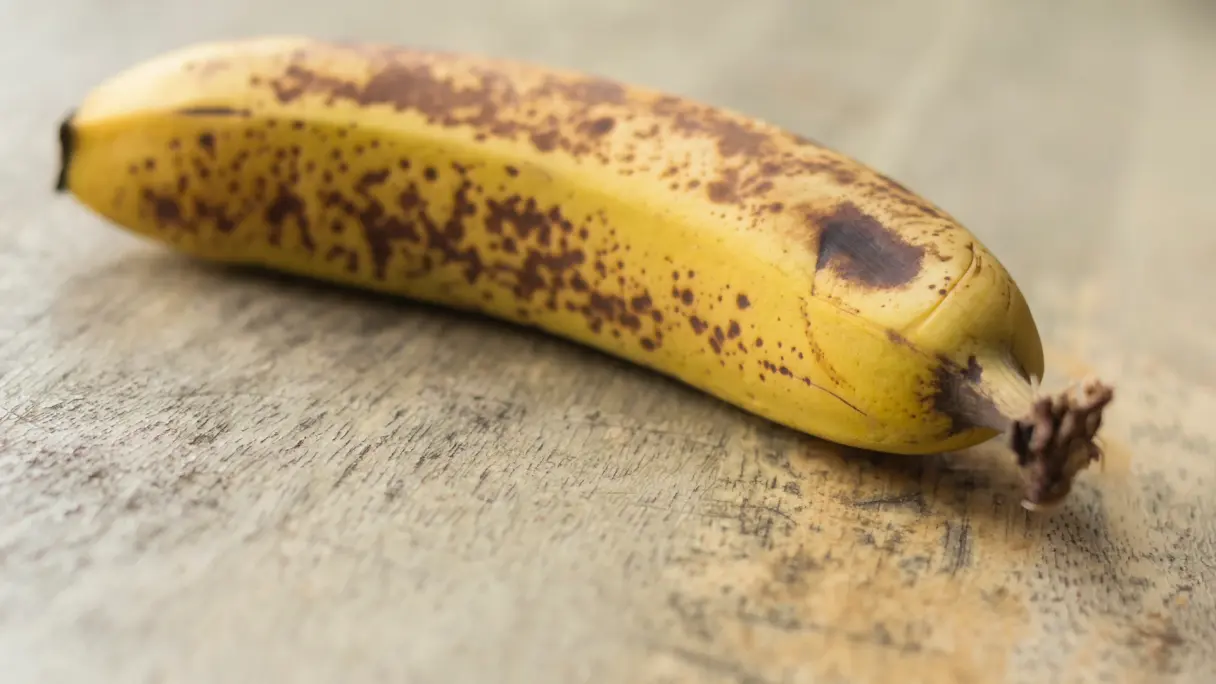
- Brown spots do not directly indicate spoilage. You can only recognise a ripe, unevenly ripened banana by this.
- Bananas with brown spots are suitable for lovers of sweet fruit flesh for eating or as an ingredient in porridge, banana quark or banana bread.
- Grey discoloured bananas indicate frost damage.
Banana shelf life and spoilage
Bananas with brown spots are ideal for porridge, banana quark or banana bread. Brown spots on the banana peel are not necessarily a sign of spoilage. The fruit inside the dotted skin is usually particularly sweet and soft.
However, avoid bananas that are predominantly brown or even black, as these fruits are overripe.
A greyish dark skin also indicates spoilage. This is usually caused by freezer burn due to the storage temperature being too low.
This might also interest you
Storing fruit and vegetables – fridge or room temperature?
Find out how to store fruit, how to keep fruit flies away and how to store vegetables correctly.
How to freeze chard and keep it fresh for a long time
Freezing chard: benefit from the advantages, preserve the flavour and keep chard fresh for many months. Read on to find out.

How healthy is coffee?
Is coffee healthy or unhealthy? How much coffee per day is healthy? Which type of coffee is healthy and how? Read on to find out how.