



Cooling food – the teachings of TCM and Ayurveda
Temperatures are high and you want to cool yourself and your body from the inside – with cooling foods? We give you a first insight into traditional Chinese medicine (TCM) and Ayurveda, an Indian healing art. Both teachings explain, among other things, how you can cool down your own body with the help of food. At the end of this article, we will tell you whether TCM and Ayurveda correspond to the current state of scientific knowledge.
TCM – traditional Chinese medicine
The teachings of TCM consider the human being in relation to the environment. It distinguishes between Yin and Yang, which are in opposition to each other. Within the context of nutrition, Yin stands for cold, liquid and cooling foods, while Yang stands for warmth, dryness and warming foods.
To cool ourselves down in summer, we should therefore reach for the cooling foods associated with Yin. These include fruit and vegetables, for example, as they contain a lot of water. Fish should also be used as a source of protein instead of meat.
When it comes to spices and herbs, TCM recommends peppermint, dill, lavender, sage, tarragon and cress, as these are considered to have a cooling effect. Chilli powder, pepper and ginger should be avoided in summer as they are warming foods.
According to Chinese teachings, the preparation of food can also have a warming or cooling effect. According to TCM, barbecuing and prolonged hot cooking are rather unsuitable for summer, as a lot of energy is stored in the food, which warms the body when it is eaten. Instead, steaming or stewing is recommended – cooking only over a low heat. Finished dishes should be allowed to cool before eating.
When it comes to drinks, avoid alcohol, coffee and liquids containing caffeine in general. Alternatively, you should drink plenty of water.
TCM assigns specific thermal properties to many foods. To achieve a cooling effect, warming foods should be avoided. You should favour cooling foods. The following table gives you an overview of some foods.
Brief overview: cooling and warming foods according to TCM
Cooling food: apples, artichokes, aubergines, pears, butter, strawberries, ice cream, lamb's lettuce, cream cheese, grapefruit, cucumber, oats, celeriac, dandelion, mung beans, olives, cranberries, rye, beetroot, red cabbage, sesame oil, bean sprouts, asparagus, tofu, tomatoes, water, watermelon, wheat, lemon, courgette
Warming food: alcohol, chillis, ginger, coffee, garlic, nutmeg, sweet peppers, pepper, beef, black tea
Ayurveda – the ancient Indian art of healing
Ayurveda is about taking a holistic view of the human organism and bringing it into balance. The doctrine distinguishes between three types of life energy:
- the slightly freezing, ethereal Vata type
- the fiery Pitta type
- the grounded Kapha type
These energies are related to the digestive fire and body temperature.
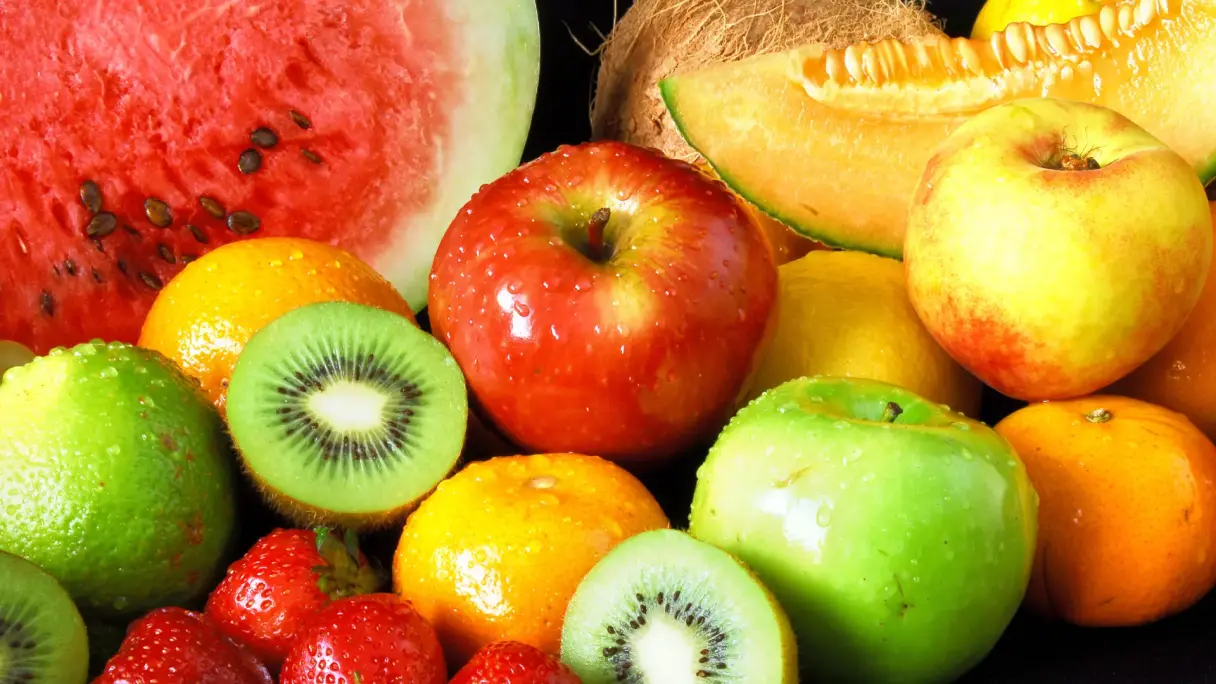
According to Ayurvedic teachings, we can support the desired balance by choosing certain foods, among other things. Sweet fruits, for example melons or coconut, have a cooling effect.
On the other hand, warming spices, such as ginger, curry, cinnamon, ginger, chilli and cumin, should be avoided. Mint and sage, among others, are more suitable.
The main aim of the preparation is to aid digestion. The aim is therefore to break down and split up the structures of the food. You can achieve this by boiling, frying, braising, grating or pureeing, for example.
Ayurveda also differentiates between heating and cooling flavours. Salty, acidic and spicy foods have a heating effect. Bitter, sweet and tart foods, on the other hand, have a cooling effect on your body.
Similar to TCM, there are cooling and warming foods. We have also created an overview table for Ayurveda.
Brief overview: Cooling and warming foods – according to Ayurvedic teachings
Cooling food: apples, dill, fennel, cucumber, cardamom, coconut, coriander, mangoes, melons, dairy products, mint, quinoa, rice, saffron, lettuce, sage, soy products, watermelons, sweet foods, bitter foods, tart foods
Warming food: chillis, curry, ginger, cumin, cinnamon, spicy, salty and acidic food
Cooling food: myth or reality?
Perhaps you are now wondering whether these two old teachings reflect reality. Both TCM and Ayurveda are hardly scientifically proven. They are based on experience, observations and traditions.
However, some foods can actually be said to have a cooling or warming effect.
Food at certain temperatures triggers reactions. The same reactions can also be caused by odours or molecules. This is due to trigeminal perception. Certain nerves in the mucous membranes of the mouth or nose perceive the temperature or odour of the food. Warm foods warm us up, and the same applies to spicy foods such as chilli. We start to sweat.
Cold foods and plants that contain menthol, such as mint, have the opposite effect. They cool the body down.
TCM and Ayurveda therefore agree with science when it comes to some spices and herbs as well as the temperature of the dishes.
You should also always drink enough water in high temperatures, as the body needs more water to cool down due to the heat from outside.
This might also interest you

What should you cook on hot days? Easy summer recipes
What should you cook on hot days? Discover refreshing recipes that are ideal for the summer months, quick to prepare and taste fabulous.
Energising nutrition – energetic throughout the day
Start the day full of energy and stay energetic all day long – with energising nutrition. Read on to find out.

Low carb diet – low carbohydrates, lots of flavour
This is how good a low carb diet can look. Delicious food and practical meals are the key. Read on to find out how.