



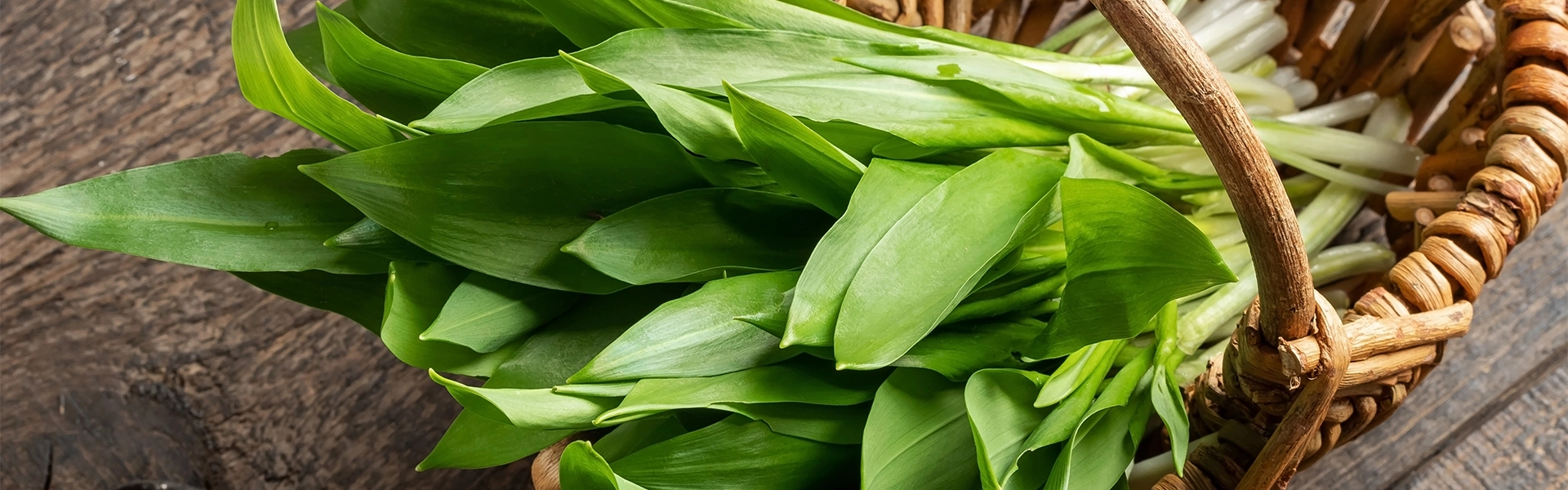
Wild garlic – the garlic alternative in spring
Wild garlic is more than just an aromatic wild herb – it is packed with healthy nutrients, supports liver and digestive health, and is a mild alternative to garlic. In this article, you will learn how versatile wild garlic is, how it differs from garlic, and how to identify it safely.
The key points
- Nutrient profile per 100 g: 25 kcal, over 90 % water, 4 g carbohydrates, 2 g protein, 0.5 g fat, 2 g fibre
- Vitamins and minerals: rich in vitamins C, A, E, B vitamins, calcium, iron and magnesium
- Season: March to May
- Health benefits: antibacterial, detoxifying, aids digestion, supports liver function, intestines and immune system
- Wild garlic vs. garlic: differences in nutrients, but similar health effects
Wild garlic is so versatile: nutrients, season and use
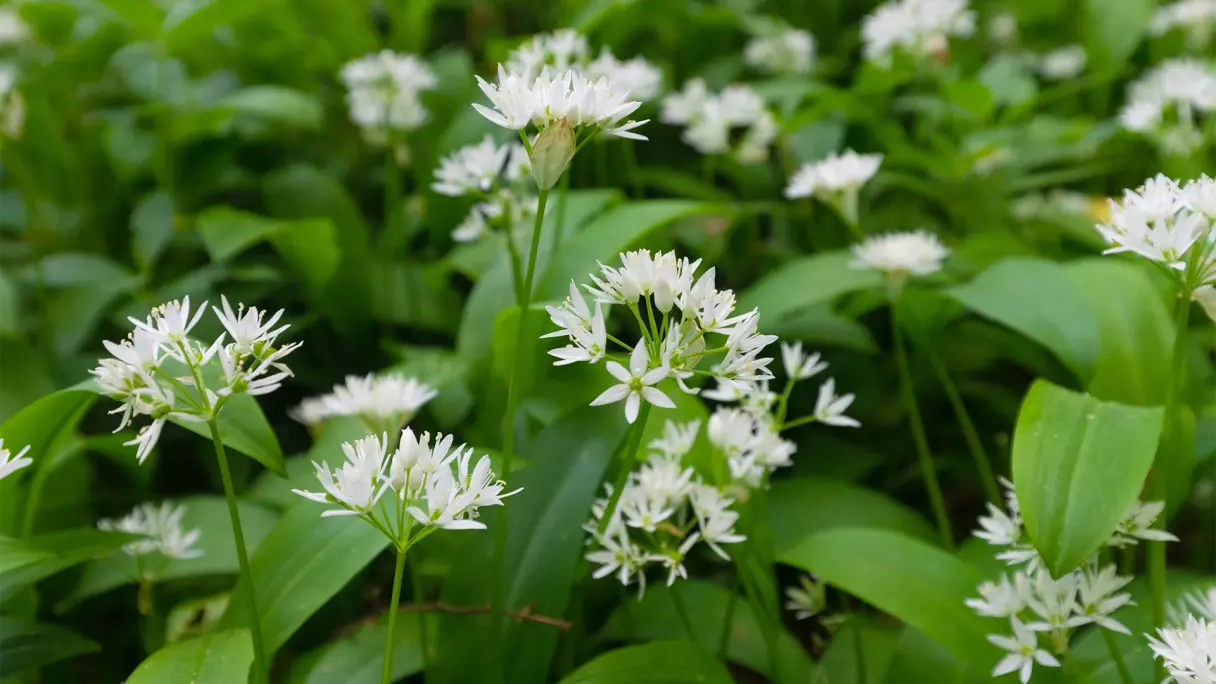
The start of spring also marks the beginning of wild garlic season: this “forest garlic” can be harvested from March to May. Wild garlic is not only appealing due to its intense aroma, but also due to its high vitamin and mineral content. It contains lots of vitamin C, potassium, calcium, iron, vitamin A, B vitamins, vitamin E and magnesium.
| Vitamin | Content per 100 g |
|---|---|
| Vitamin C | 150 mg |
| Vitamin A | 200 μg |
| Vitamin B1 | 130 μg |
| Vitamin B2 | 60 μg |
| Niacin | 700 μg |
| Vitamin B5 | 110 μg |
| Vitamin B6 | 200 μg |
| Vitamin E | 250 μg |
| Minerals | Content per 100 g |
| Potassium | 336 mg |
| Calcium | 76 mg |
| Magnesium | 22 mg |
| Sodium | 16 mg |
| Phosphorus | 50 mg |
| Iron | 2.9 mg |
With only about 25 kcal per 100 grams, over 90 % water and hardly any fat, it is both tasty and healthy. Its sulphurous essential oils, which are released when crushed, are responsible for its characteristic smell and also have health-promoting properties.
Naturally healthy: how wild garlic can support the liver, intestines and sleep
Wild garlic is not only considered an aromatic wild herb, but also a powerful medicinal plant. It was valued as a “health herb” as far back as the Celts, Germanic tribes and Romans. Today, we know that the sulphur compounds it contains, especially allicin, play an important role in health: they have antibacterial, anti-inflammatory and detoxifying properties.
The liver benefits particularly from these properties. Wild garlic can help eliminate toxins and stimulate the metabolism. Its digestive properties also relieve the intestines, which can alleviate flatulence, bloating and cramp-like pains.
Tea made from fresh wild garlic leaves can stimulate digestion and improve blood circulation. Wild garlic pesto combines many healthy ingredients in concentrated form: vitamin C to strengthen the immune system, as well as iron and magnesium for energy. Long-term consumption of wild garlic can have a positive effect on cholesterol levels and blood pressure.
In traditional Chinese medicine (TCM), wild garlic is considered a warming herb that stimulates the liver Qi. It is said to help relieve inner tension, harmonise digestion and stimulate energy flow in the body. Wild garlic tea in the evening is said to help you relax and promote sleep. However, these assumptions have no scientific basis.
Wild garlic and garlic: so similar, yet so different
Wild garlic and garlic belong to the same plant family and share many health-promoting ingredients, including sulphurous compounds such as allicin. They also taste similar: both have a spicy, slightly pungent aroma. However, wild garlic is significantly milder and, unlike garlic, does not leave a lingering smell in the mouth or on the body.
The two also differ in terms of their nutritional values: while garlic provides more calories, protein, carbohydrates, vitamin B6, magnesium, potassium and phosphorus, wild garlic scores highly with its higher content of water, vitamins C, E and A, as well as calcium and iron. Particularly noteworthy is the high vitamin C content, which is even higher than in oranges. Despite these differences, both plants have similar effects on the cardiovascular system, digestion and the immune system.
However, the popularity of wild garlic also brings risks – especially when picking it in the wild. The leaves of wild garlic look very similar to those of lily of the valley or autumn crocus, but both are highly poisonous. A sure way to tell them apart is the typical garlic smell that wild garlic gives off when the leaves are crushed. If you want to be on the safe side, it is best to buy wild garlic from a specialist retailer or grow it yourself.
FAQ
Yes, wild garlic can be eaten raw; it is actually particularly healthy. During the season from March to May, this aromatic herb is rich in vitamins and minerals. When raw, the nutrients are fully preserved, which is why wild garlic is particularly healthy in salads, dips or as pesto. Its healing effect on the liver and intestines is also effective without heating. The typical garlic flavour is milder, but does not cause bad breath – a clear difference to garlic.
Wild garlic is botanically classified as a member of the onion family and is mostly used as a culinary herb rather than a traditional vegetable. However, with its high nutrient, vitamin and phytochemical content, it is a real health booster – whether eaten raw, cooked or as a pesto. Compared to conventional vegetables, it is particularly low in calories but has many health benefits.
The wild garlic season ends in May, when the plant begins to flower and loses its aroma and potency. The health benefits, especially for the liver, intestines and immune system, diminish, and valuable nutrients and vitamins are lost. Wilted wild garlic can also taste bitter. If you want to use it out of season, you can freeze it or turn it into pesto or wild garlic tea.
*All specifications given are to be considered as guideline values, and depend in each case on the type of food and on the proper storage without interruption of the cold chain from harvest/production through to the Liebherr appliance. Should food products have information about minimum shelf life, the date on the packaging always applies.
This might also interest you
Preserving herbs: our best tips and tricks
Garlic – calories, nutritional values and its effects
Find out everything you need to know about garlic here: calories, vitamins and nutritional values, its effects on the gut and how it can help you lose weight.
Strengthening your immune system – 10 foods to improve your health
Can you strengthen your immune system by improving your diet? You sure can – and these 10 foods can help you. Read on to find out.