



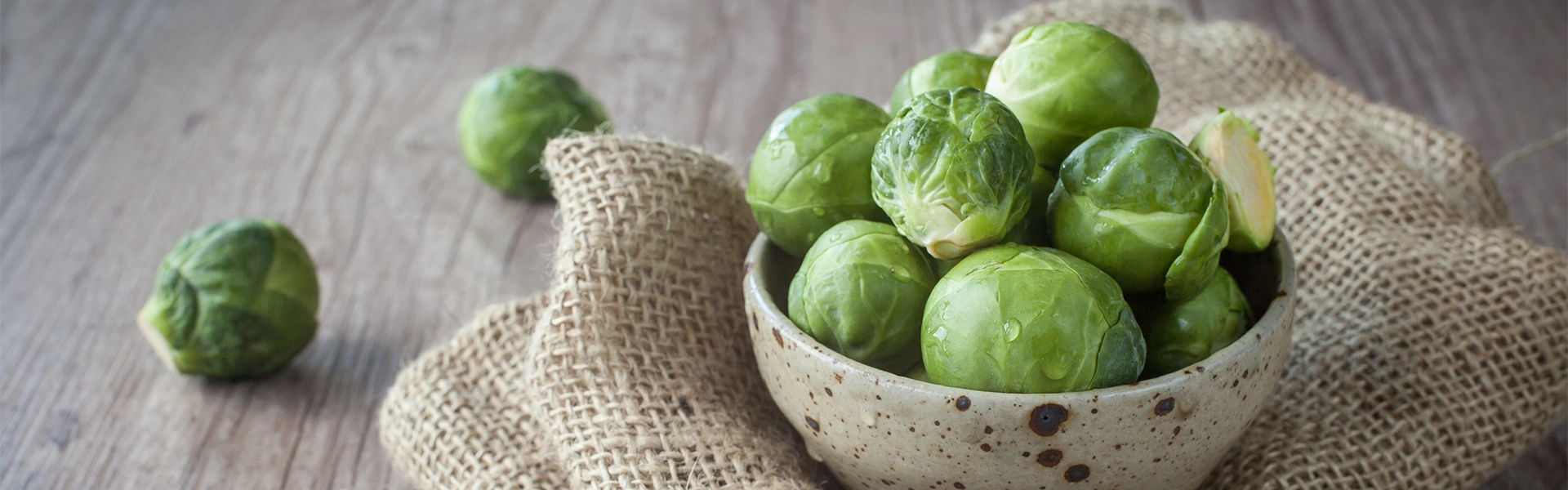
Brussels sprouts – how they benefit your health
Brussels sprouts are among the most nutritious winter vegetables, providing a wealth of health benefits. As well as having a low calorie content, they’re particularly rich in vitamins, minerals and fibre. This article will tell you everything you need to know about the valuable nutrients that the small cabbage provides, how it supports your digestion and whether you can also enjoy sprouts raw.
Storage time*
| BioFresh Fruit & Vegetable safe just above 0 °C with high humidity | 20 days |
| EasyFresh safe 7 °C with air regulation plate | 11 days |
| Fridge compartment 7 °C | 9 days |
| Freezer compartment -18 °C | 12 months |
The key points
- Calories and nutrients: 41 kcal per 100 g, high fibre and protein content
- Vitamins and minerals: rich in vitamin C, vitamin K, potassium and magnesium
- Digestion and fat metabolism: promotes healthy intestinal flora, stimulates digestion
- Stomach tolerance: can cause flatulence, spices can help
- Raw or cooked: raw Brussels sprouts aren’t poisonous, but rather are actually slightly richer in nutrients
Checking out the nutrients in Brussels sprouts: calories, vitamins and minerals
Brussels sprouts are one of the most nutrient-rich winter vegetables. They’re popular not just for their taste, but also because their intrinsic values are impressive. They contain 43 calories per 100 grams and score points with 4.5 g of protein, 3.3 g of carbohydrates and 4.5 g of fibre.
| Energy | Water content | Carbohydrates | Fat | Protein | Fibre |
|---|---|---|---|---|---|
| 41 kcal | over 80 % | 3.3 g | 0.4 g | 4.5 g | 4.5 g |
Their vitamin C content is particularly remarkable: with over 110 mg per 100 g, Brussels sprouts way outperform even lemons and cover an adult’s daily requirement with just one serving. But that’s not all! They also contain vitamin K, B vitamins, vitamin A and E. Among other benefits, minerals such as potassium, iron, magnesium and phosphorus support muscle and nerve function, oxygen transport and bone health.
| Vitamin | Content per 100 g | Minerals | Content per 100 g |
|---|---|---|---|
| Vitamin C | 112 mg | Potassium | 471 mg |
| Vitamin A | 79 μg | Calcium | 33 mg |
| Vitamin B1 | 126 μg | Magnesium | 34 mg |
| Vitamin B2 | 134 μg | Phosphorus | 84 mg |
| Niacin | 670 μg | Iron | 1 mg |
| Vitamin B6 | 350 μg | ||
| Folic acid | 101 μg | ||
| Vitamin E | 560 μg | ||
| Vitamin K | 153 μg |
Brussels sprouts are in season from November to January and are prized as being particularly flavoursome during this time – especially after the first frost. This is when the starch they contain is partly converted into sugar, which makes them taste milder and sweeter.
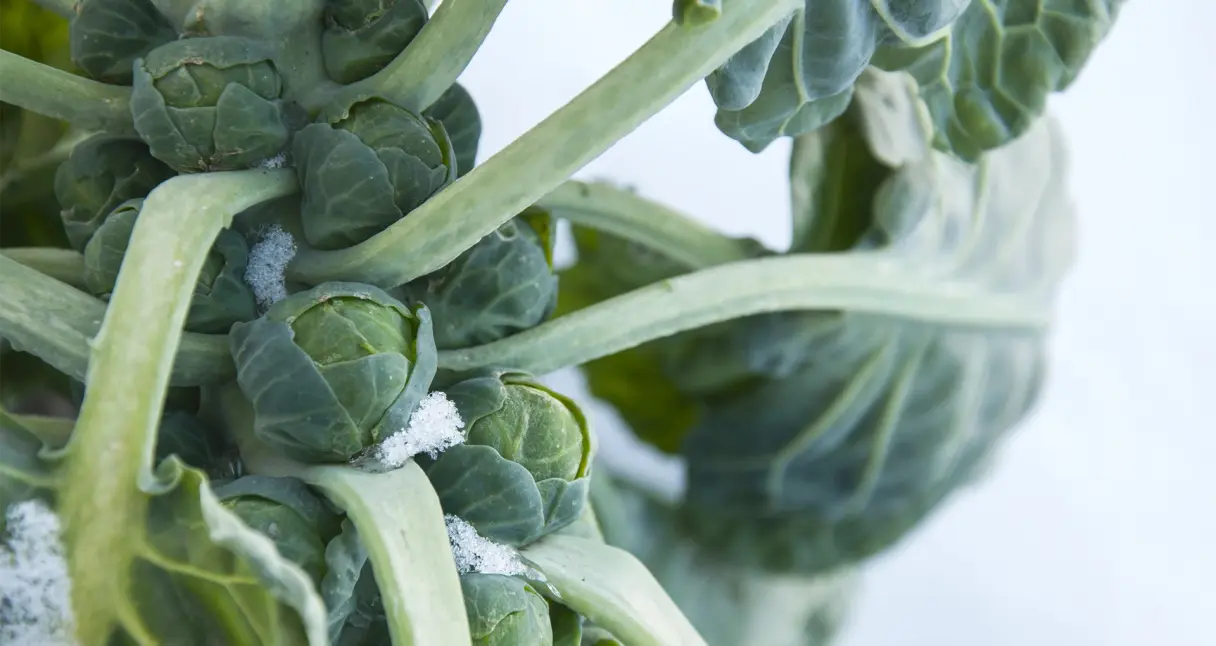
General rule for storing them: in the vegetable compartment in the fridge they’ll stay fresh for up to eight days, and they’ll keep even better if they’re wrapped in some damp kitchen towel. In a 0 degree compartment like the BioFresh safe from Liebherr, they will last longer, with a shelf life of as much as 20 days. Important: do not store together with apples or tomatoes, as these secrete ethylene, which will cause the Brussels sprouts to wilt faster. To extend their shelf life, you can opt for frozen Brussels sprouts, which are shock-frozen as soon as they’re harvested. This is the best way to preserve vitamins and minerals.
Fresh and healthy: Brussels sprouts supporting fat metabolism and digestion
With just 41 kcal per 100 g, but a high percentage of protein and fibre that fills you up, the small cabbage vegetable is ideal if you’re looking to lose weight.
The bitter substances play a key role because they’ve been shown to reduce your cholesterol level and so support good heart health. In addition, they regulate the natural feeling of fullness and prevent cravings. At the same time, they stimulate the production of digestive juices in the stomach, liver and pancreas, which makes digestion more efficient – this is ideal for combating sluggish digestion or building up healthy intestinal flora over the long term.
Despite their health benefits, Brussels sprouts, like any other type of cabbage, can cause bloating in people with a sensitive constitution. This is where spices that promote digestion, such as caraway, anise or fennel tea, can help. If you’ve got stomach ache, you can still enjoy Brussels sprouts because the bitter substances have a soothing effect on the stomach lining.
And don’t forget: thanks to its high content of iron, vitamin C and other micronutrients, Brussels sprouts also supportblood formation – making it a very healthy vegetable in every respect.
Enjoy raw: are Brussels sprouts poisonous or healthy?
The widespread assumption that raw Brussels sprouts are poisonousis a myth – in actual fact, the cabbage vegetable is entirely edible even uncooked and is actually very rich in nutrients. If it’s eaten raw, many heat-sensitive vitamins such as vitamin C, B vitamins and folic acid are fully retained, as are valuable minerals like potassium and iron.
So if you eat Brussels sprouts raw, you’ll benefit from all the health advantages they offer. Nevertheless, when they’re raw, they can be heavy on the stomach, because the high fibre content can cause bloating or stomach ache in people with a sensitive digestive system.
If you want to try eating this vegetable raw, you should start with small quantities and ideally slice it up finely or cut it into thin strips. This will make it more digestible and give it a pleasantly nutty taste with a slight hint of bitterness. Brussels sprouts are particularly delicious in the form of a raw vegetable salad, for example combined with fruity ingredients such as orange slices and a light honey and mustard dressing.
If you really want to play things safe, you can also blanch the florets briefly before you eat them. This will make them milder and easier to digest, without losing too many nutrients.
FAQ
Spices that go particularly well with Brussels sprouts are those that support digestion, such as caraway, fennel or anise. These spices make the vegetable more digestible and alleviate possible flatulence. If you want to enjoy Brussels sprouts raw, you can also combine them with fruity ingredients that offset the slightly bitter taste, such as orange slices or apples. The best accompaniment to cooked Brussels sprouts are spicy herbs like thyme or rosemary and a little nutmeg, which will complement the healthy Brussels sprouts and boost their effect on the intestine.
Brussels sprouts are generally healthy and contain lots of nutrients such as vitamin C and iron. However, their high fibre content means that for some people they can cause digestive problems, flatulence or stomach ache. Particularly if you have an irritable bowel, it’s advisable to start off by eating Brussels sprouts in small quantities or cook them a little before you consume them. Spices such as fennel and caraway can also help shorten the digestion time and increase tolerance.
Brussels sprouts boast lots of health benefits, but their high fibre content can cause sensitive people to experience flatulence and stomach ache. If this is the case, it’s helpful to cook the Brussels sprouts a little or combine them with digestive spices like caraway. If you eat Brussels sprouts raw, these side effects can be more severe because they’ll then contain more raw fibre.
Brussels sprouts should be consumed with caution if you have a sensitive stomach because the bitter substances and fibre can cause stomach ache. You may also need to limit your consumption if you suffer from certain bowel conditions or flatulence. If this is the case, it’s advisable to cook the Brussels sprouts first to make them easier to digest. People who suffer from a particularly sensitive bowel should only eat Brussels sprouts in small quantities or in combination with spices that aid their digestion.
*All specifications given are to be considered as guideline values, and depend in each case on the type of foodstuffs and on the proper storage without interruption of the cold chain from harvest/production through to the Liebherr appliance. Should food products have information about minimum shelf life, the date on the packaging always applies.
This might also interest you
Superfood list for the summer – our top 10
Find out what’s behind the fruits and seeds on the superfood list. Are they really that healthy? Everything you need to know about local and regional alternatives.
Eat healthily: could food replace medicine?
Find out how eating healthily can boost your well-being. Valuable tips, nutrients and inspiration for a health-conscious lifestyle!
Low carb diet – low carbohydrates, lots of flavour
This is how good a low carb diet can look. Delicious food and practical meals are the key. Read on to find out how.