

Liebherr-Aerospace & Transportation SAS
Pfänderstraße 50-52
88161 Lindenberg
Germany
+49 8381 4644-03
News | 06/02/2026
Liebherr-Aerospace Lindenberg GmbH is proud to serve as consortium leader for two pioneering research projects, SONRISA and NewFlAir, within the German aviation research program LuFo VII (LuFo = Luftfahrtforschungsprogramm), funded by the Federal Ministry for Economic Affairs and Energy (BMWE).
The program aims to pursue sustainable goals in line with the German government's aviation strategy. The funding measures are designed to improve the technological basis and economic and technical situation of the aviation industry and air transport. The focus is on strengthening innovation and expertise in research, development and production in Germany.
In partnership with leading companies and research organizations, Liebherr-Aerospace is driving the development of new technologies to make air travel in Germany more sustainable, efficient, and competitive.
The projects SONRISA and NewFlAir are focussing on advancing digitalized additive manufacturing quality assurance and next-generation flight control systems for future regional aircraft.
In the SONRISA project, a digitized and standardizable quality assurance framework for the laser powder bed fusion process (PBF-LB/M) in aerospace is being developed. The aim is to reliably demonstrate the stability and repeatability of additive manufacturing (AM) processes and thereby significantly increase the acceptance of AM components.
The focus is on in-situ process monitoring, statistical process control, and a robust data processing infrastructure. Through advanced analysis methods and integrated quality assurance, inspection efforts are to be reduced, and certification processes accelerated. In addition, new cost-efficient non-destructive inspection zoning concepts are being developed to enable targeted and less resource-intensive part inspection.
The joint project is led by Liebherr-Aerospace Lindenberg GmbH and implemented together with Boeing Deutschland GmbH, MTU Aero Engines AG, Materialise Deutschland GmbH, and the German Federal Institute for Materials Research and Testing. The project is supported by the associated partner Carl Zeiss Industrial Metrology GmbH. The partners work closely with EASA to prepare for future standardization of digital quality assurance methods.
In addition to technical development, SONRISA investigates the lightweight potential of bionic and function-integrated structures, evaluates new monitoring and data fusion approaches, and develops aviation-certifiable quality assurance concepts for digitally supported additive manufacturing (AM) process chains. The results are intended to help establish more sustainable manufacturing processes, reduce the CO₂ footprint of component production, and further advance the integration of additive manufacturing in aerospace.
Contribution of Liebherr-Aerospace Lindenberg GmbH
Within the SONRISA project, Liebherr-Aerospace focuses on the development of an end-to-end, digitally supported quality assurance concept for the additive manufacturing process chain. The company uses the data and signals captured along the PBF-LB/M process to reliably assess process stability and component quality.
A core element of the work is the development of standardized analysis practices for various in-situ monitoring systems, including optical tomography, melt pool monitoring via photodiodes, fringe projection, and image-based powder bed monitoring. These data sources are combined into complementary quality assurance concepts and further enhanced through targeted data fusion. Based on the insights gained, an SPC[UB2.1]-based concept is being developed that is intended, in the long term, to reduce the scope of non-destructive testing.
For final part inspection, Liebherr-Aerospace is developing efficient workflows for detecting surface and volumetric defects, including X-ray and penetrant testing methods. Together with Zeiss[UB3.1], automated evaluation methods for XCT [UB4.1]data are being developed to ensure reproducible and robust quality decisions.
In parallel, Liebherr is developing a design workflow that takes the use of energy-homogenized manufacturing processes into account. This will allow future components to be designed with even higher performance and functional optimization.
The methods and tools developed in the project are to be transferred, after project completion, into the development of new hydraulic valve blocks—both for new products and retrofit applications. At the same time, they are expected to make a significant contribution to increasing the acceptance of additively manufactured components among customers and aviation authorities.
Funding notice
The SONRISA joint project is funded within the framework of the German aviation research program LuFo VII-1. Further information can be found at: www.luftfahrtforschungsprogramm.de
The joint research project NewFlAir is developing an innovative, efficient, cost-optimised and modular Fly-by-Wire (FBW) flight control system with new architectures and components for use in future regional aircraft. The technologies are being developed in collaboration with Deutsche Aircraft (DAG), Liebherr Aerospace Lindenberg GmbH (LLI), German Aerospace Centre (DLR) and TU Berlin (TUB).
The overall development is planned across the three LuFoVII calls, with final testing and validation of the technologies developed to take place on DLR's UpLift D328 flight test vehicle (D-CUPL).
In the first call (LuFo VII 1), FBW concept trades will be carried out, overall system simulations created for validation, and hardware in the loop (HiL) validations performed for individual components. In the second call, selected parts of the overall system will be implemented in hardware and put into operation in ground tests, enabling integration into the D CUPL flight test aircraft in the third phase.
In collaboration with DAG, DLR and LLI, the requirements for the FBW system will be derived from the aircraft level specifications. Based on these requirements, high level architecture and technology trades, studies on the Flight Control Laws (FCL) philosophy, and concepts for the control units will be developed.
Other key considerations for the FBW system include computer architecture, power supply concepts, actuator integration and space allocation. Further important aspects are system cost, reliability, robustness, weight and upgrade capability. LLI will subsequently detail the selected FBW architecture and derive the component level requirements. DAG and DLR will, in parallel, define the FCL requirements and implement them in an initial FCL design. Additionally, DLR and TUB will develop and validate innovative FCL approaches—such as acceleration based or hinge moment based trajectory control.
Overall, the first phase delivers a comprehensive evaluation of different FBW architectures for regional aircraft in terms of feasibility, development effort and cost.
LLI leads the consortium and develops the complete FbW system including FCC architecture, actuators, technology modules, component tests, and system level analyses.
DAG Designs the overall flight control system architecture, including sensors, air data system, and control laws. Defines detailed system requirements and a strategy for testing and certification. DLR prepares test rigs for ground testing, develops full system simulations, designs and implements Flight Control Laws (FCL) with protection functions, evaluates FCL performance in pilot in the loop simulations, and works on torque based control concepts, actuator control, system integration, operation, and safety.
Develops acceleration based control laws and an independent monitoring function for the FCL. Implements these functions in its research simulator and conducts pilot tests for evaluation.
The project NewFLAir is funded under the German Aviation Research Programme LuFo VII 1. Further information can be found at: www.luftfahrtforschungsprogramm.de
Liebherr-Aerospace Lindenberg GmbH, together with its partners, is shaping the future of aviation by driving innovation in manufacturing and flight control technologies.
As these exciting projects progress, Liebherr-Aerospace invites to follow further updates and discover how the ongoing research is helping to make air travel more sustainable, efficient, and forward-thinking.
Liebherr and its partners will share more about their pioneering initiatives that are redefining what’s possible in aerospace on their social media channels.
22/09/2026
Press releases
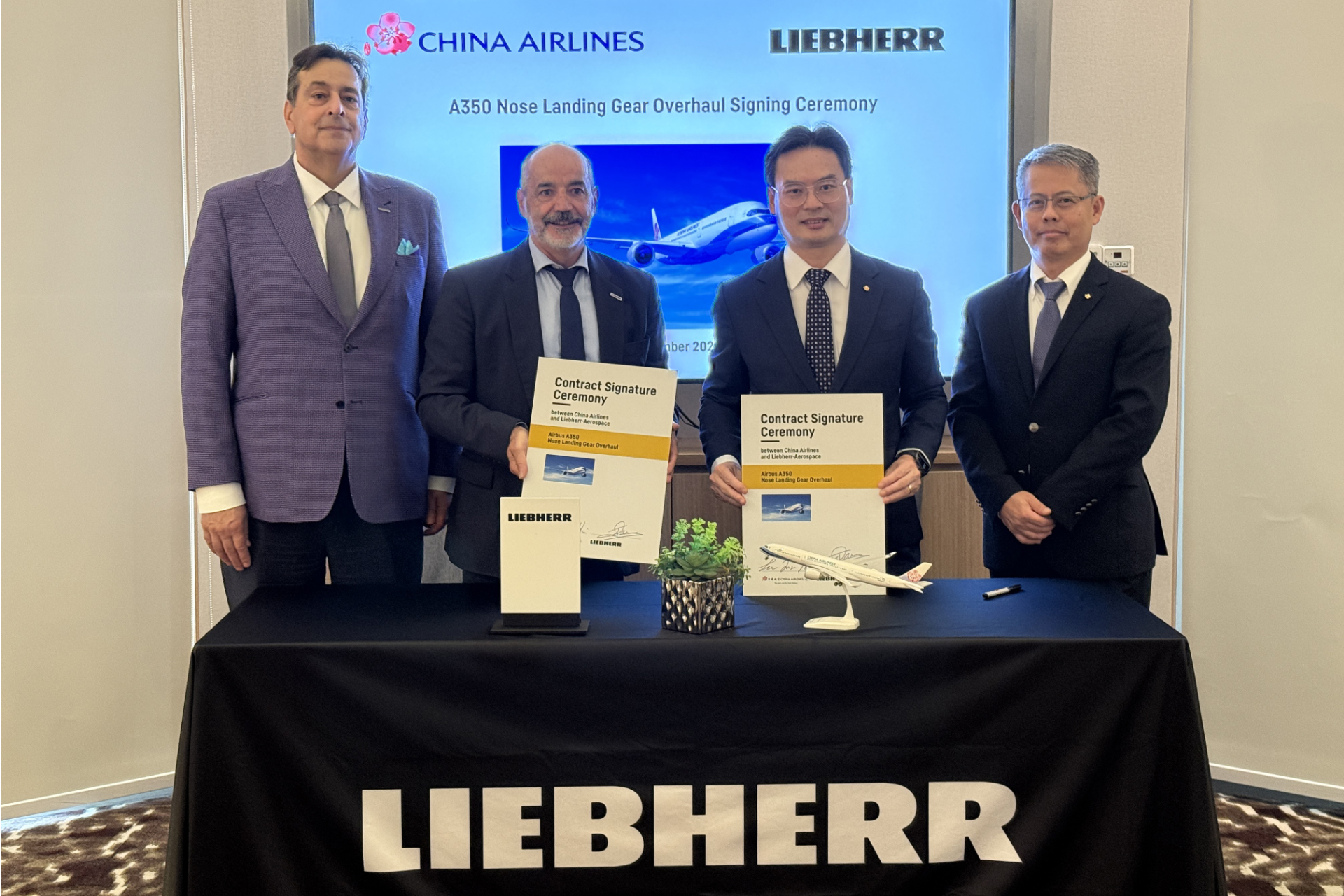
Liebherr-Aerospace and China Airlines reach an agreement for Airbus A350 nose landing gear overhaul
Liebherr-Aerospace and China Airlines have reached a commercial agreement for the overhaul of nose landing gear on the airline’s Airbus A350 fleet. The campaign is set to start this year and will continue through 2031.
21/09/2026
Press releases
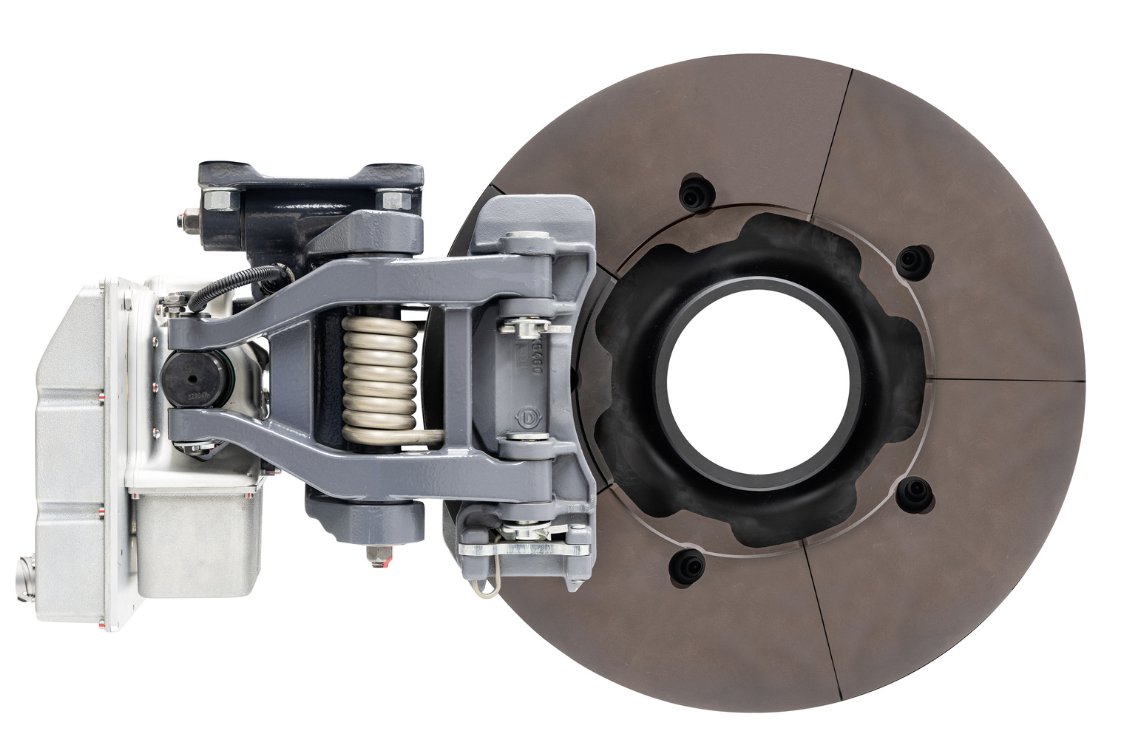
Liebherr – a reliable partner at InnoTrans 2026
At InnoTrans running in Berlin (Germany) from September 22 to 25 2026, Liebherr is presenting solutions from the transportation systems and rail-road excavators product areas. The Group will be displaying its exhibits at booth O/170 in the outdoor area. The Group’s appearance at the exhibition is focused not only on products, but also on topics such as partnership and its joint efforts with customers to actively shape the future.

18/09/2026
News
Liebherr-Aerospace participates in MRO Asia-Pacific 2026
Liebherr will present its customer service solutions [UB1.1]for the Asia-Pacific region from September 22 to 24, 2026, at booth no. 2207 in Singapore.