Development partner for robotic drives
The robotics market is developing rapidly – but it is currently difficult to predict with any certainty exactly where it is heading. Liebherr-Verzahntechnik GmbH has gained expertise and experience from numerous completed projects involving various robotic drive systems. Dr Oliver Winkel, Head of Application Engineering, speaks with product managers Martin Schwarzmann and Laurenz Müller about what makes the company a strong development partner for the robotics industry.
The robotics market is growing, and there are many technological developments underway. How do you assess the current situation?
Martin Schwarzmann: We are seeing significant growth potential in this area – both in traditional industrial robotics and in collaborative systems and humanoid robotics. There is a lot going on, and the first manufacturers are already starting to mass-produce humanoid robots. The pace of change in industrial automation continues to accelerate. So, it is reasonable to assume that humanoid robots will first become established in industrial applications and then gradually find their way into everyday commercial settings.
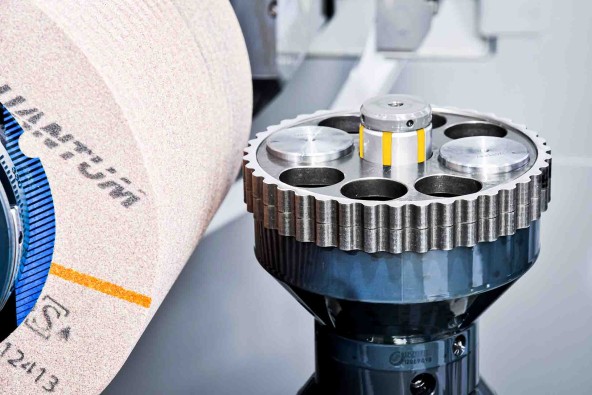
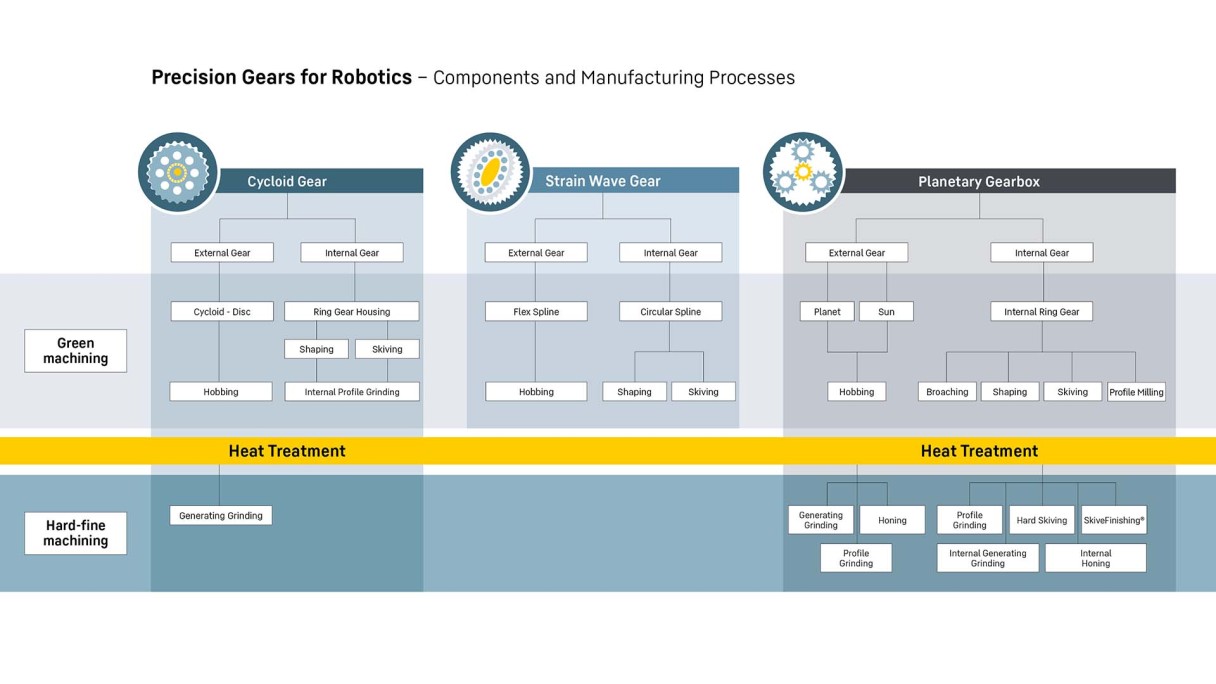
Laurenz Müller: Technologically speaking, the landscape is very diverse: There is no single type of robotic gearbox. There are cycloidal gears, Harmonic Drives, and planetary gears – and different designs are used depending on the application. In addition, there are solutions in the field of linear drives, such as (planetary) roller screw drives. It is still difficult to predict which concepts will gain traction and in what numbers.
What specific manufacturing requirements do robotic drives have?
Oliver Winkel: Robotic drives are among the most demanding applications in manufacturing. Components must be very lightweight yet highly precise. This involves ensuring concentricity and pitch accuracy, as well as machining challenging materials. At the same time, parts are getting smaller and smaller, and the gear teeth are becoming finer-pitch. In many cases, the dimensions and tolerances of the molded parts are at the very limit of what can be measured.
Schwarzmann: Economic conditions are also changing. What was once the domain of high-precision custom machine building must now increasingly be approached from a productive perspective and with an eye toward mass production. Quality and output are equally important, and this requires comprehensive solutions that go beyond individual technologies.
And where does Liebherr-Verzahntechnik GmbH fit into this landscape?
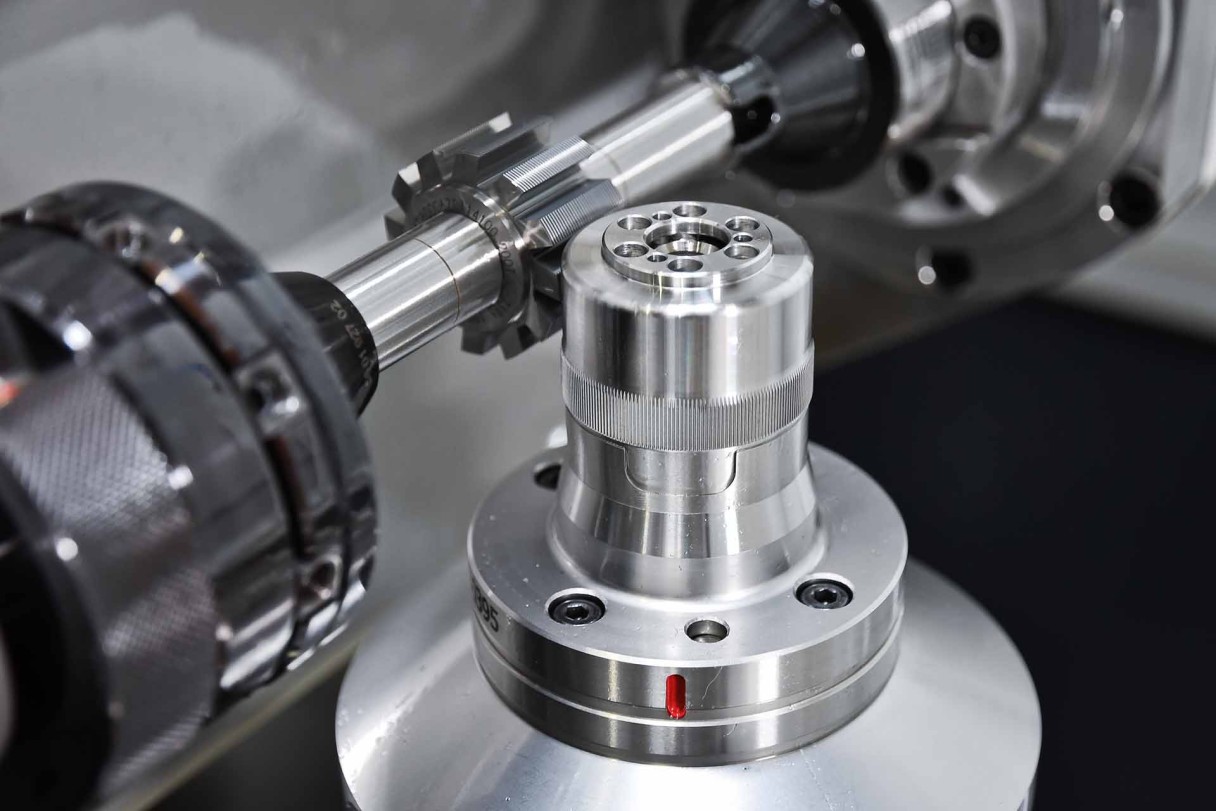
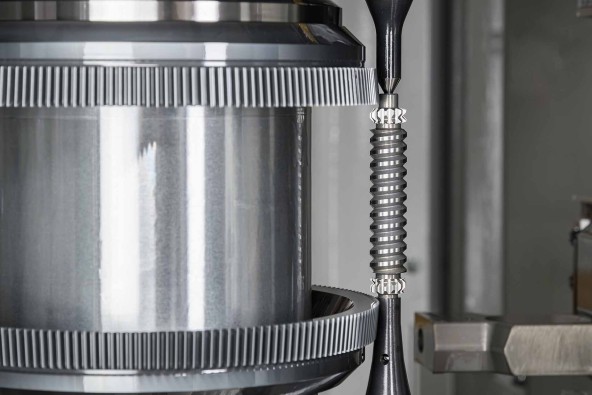
Winkel: We have mastered the core technologies – hobbing, shaping, skiving, and grinding – and combine them with comprehensive, one-stop solutions: tools, clamping devices, measuring technology, and automation. We have already delivered robotics applications worldwide – from cycloidal gear units to solutions based on Harmonic Drives, an area in which we are currently seeing growing demand.
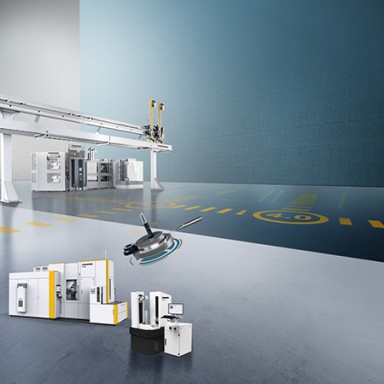
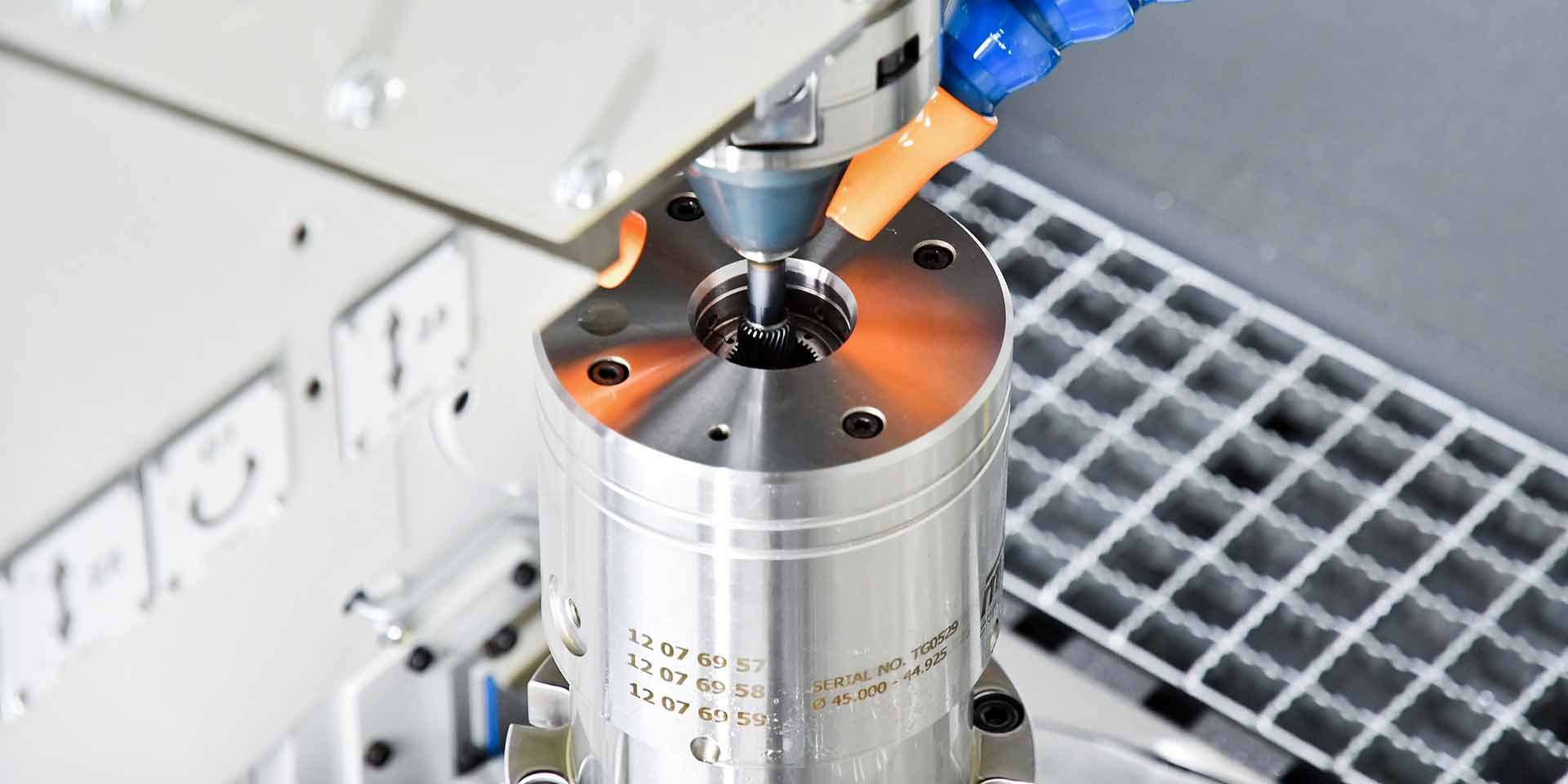
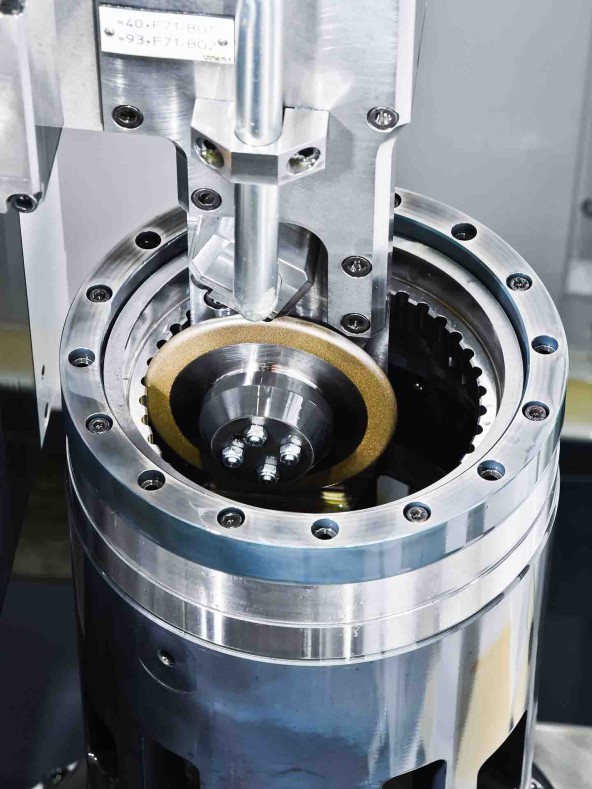
Schwarzmann: We supply the right gear cutting machines for end-to-end production solutions. This includes processes such as the high precision skiving of circular splines, the hobbing of flexsplines, the shaping of internal gears, and internal profile grinding using CBN tools. Our portfolio also includes measuring technology for very small modules, down to module 0.14 mm. An important aspect is the range of our machines: For example, a single platform can be used to manufacture gear components with diameters ranging from about 5 to 280 millimeters – from small precision parts to significantly larger workpieces.
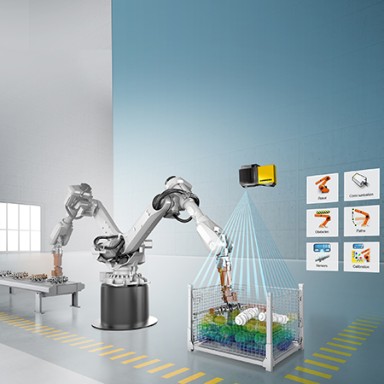
Müller: The clamping technology is also designed to meet these requirements and achieves accuracies at the very limits of what is measurable. The tools used are either developed in-house or are carefully selected and tailored to the specific application. Our portfolio is complemented by integrated automation solutions – ranging from workpiece handling to the integration of measuring stations. This results in manufacturing solutions designed to handle everything from prototyping to mass production.
Winkel: With our technological expertise, we are a leading supplier of robotic drives. Technically challenging tasks are part of our daily routine. Through its work on numerous projects, Liebherr-Verzahntechnik GmbH has developed solutions for requirements that were previously considered unfeasible. The point is not simply to implement specifications, but to critically examine them: Which features are actually needed, and how can they be implemented in a technically sound way? Only on this basis can reliable solutions be developed.
How do you view your role in relation to customers and users?
Schwarzmann: We see ourselves not only as a supplier of machinery and technology, but also as a development partner. In a dynamic field like robotics, where requirements are often not yet fully defined, it is not enough to rely on existing solutions. Many tasks don't emerge until the project is underway, or they change over time. That is why we engage with our clients early on, work with them to define their requirements, and evaluate different solutions – both technically and economically.
Winkel: This approach has a long tradition at Liebherr. In the past, we have frequently implemented solutions that were initially considered unfeasible. That is precisely why early communication is crucial. This also reflects the approach that has always defined the company: To continually develop innovative solutions and push the boundaries of what is possible.