



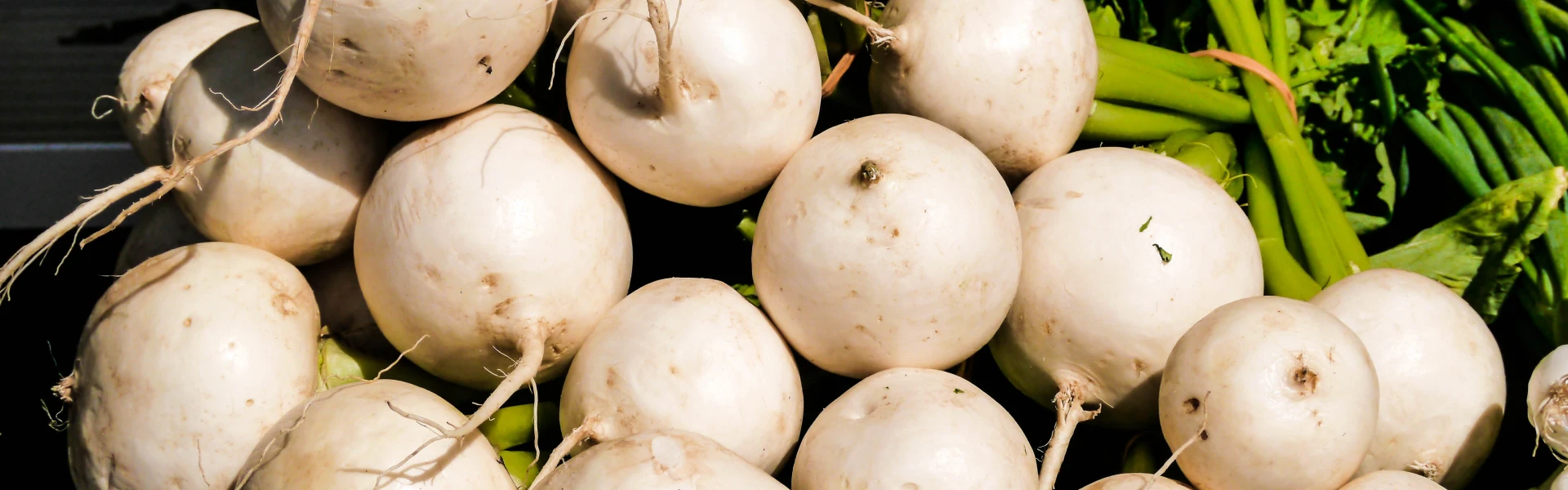
Turnip: preparation, nutritional values and storage tips
The turnip, also known by names such as navet and white turnip, may seem like an unspectacular vegetable to many, but there’s a real gem to discover in this tender root vegetable. As one of the oldest cultivated crops in Europe, the turnip was already a staple feature on the menu in ancient times. As the potato became more prevalent, this versatile vegetable was forgotten and disappeared from kitchens for a long time. Today, the turnip is making a comeback and is once again being cultivated widely in agriculture. This article highlights the turnip’s many different facets: from its culinary versatility, special taste, and outstanding nutritional values, to practical tips on how to store it.
Storage time*
| BioFresh Fruit & Vegetable safe just above 0 °C with high humidity | 80 days |
| EasyFresh safe 7 °C with air regulation plate | 50 days |
| Refrigerator compartment 7 °C | 40 days |
| Freezer compartment -18 °C | not recommended |
The key points
- Nutrients per 100 g: 26 kcal, 4.7 g carbohydrates, 0.2 g fat, 1 g protein, 3.5 g fibre
- Vitamins and minerals: rich in vitamin C, provitamin A, E, folic acid and B vitamins, as well as potassium, iron, zinc, and calcium
- Rich in fibre: promotes digestion, keeps you feeling full for a long time, easily digestible
- Leaves and skin edible: nutritious and healthy
- Flavor: mildly sweet, slightly spicy, reminiscent of black radish and radishes
How do you prepare turnip?
Turnip can be enjoyed in lots of different ways: it can be eaten raw, steamed, boiled, baked, and even caramelised. It tastes similar to radishes or black radish, but it doesn’t have their typical spiciness and offers a juicy consistency that is vaguely reminiscent of kohlrabi.
If you want to be really gentle in preparing this vegetable, you can steam it to preserve valuable nutrients. With its mildly sweet aroma, the turnip is also a wonderful addition to vegetable stir-fry dishes, casseroles, and gratins.
Whether it’s consumed raw or cooked, you can eat the skin. However, this has a slightly bitter flavor and is often removed. Finely sliced, the turnip reveals the full extent of its freshness and brilliance in salads or as a carpaccio.
Steamed or boiled, turnip is an ideal side to meat dishes and as an ingredient in soups and stews. But creative ideas, such as caramelised turnips, garnished with a hint of honey or maple syrup, make it a real treat for the taste buds.
It’s not just the tuber but also the leafy green tops of the turnip that provide great flavor. The fresh, tender leaves can be used raw in mixed salads or be cooked like spinach, e.g. steamed as a side dish or as a flavorsome addition to soups.
What makes the May turnip different from the autumn turnip?
May turnips and autumn turnips that are harvested in the autumn are closely related. Although they look similar, their main difference is the time of year they’re harvested and their taste profile. The May turnip has a diameter of around five centimetres and is very tender and mild, whereas the larger autumn turnip has a much spicier and more bitter taste and texture. However, both varieties offer a wide range of options and invite you to explore the imaginative cuisine you can create with vegetables.
What nutrients do turnips contain?
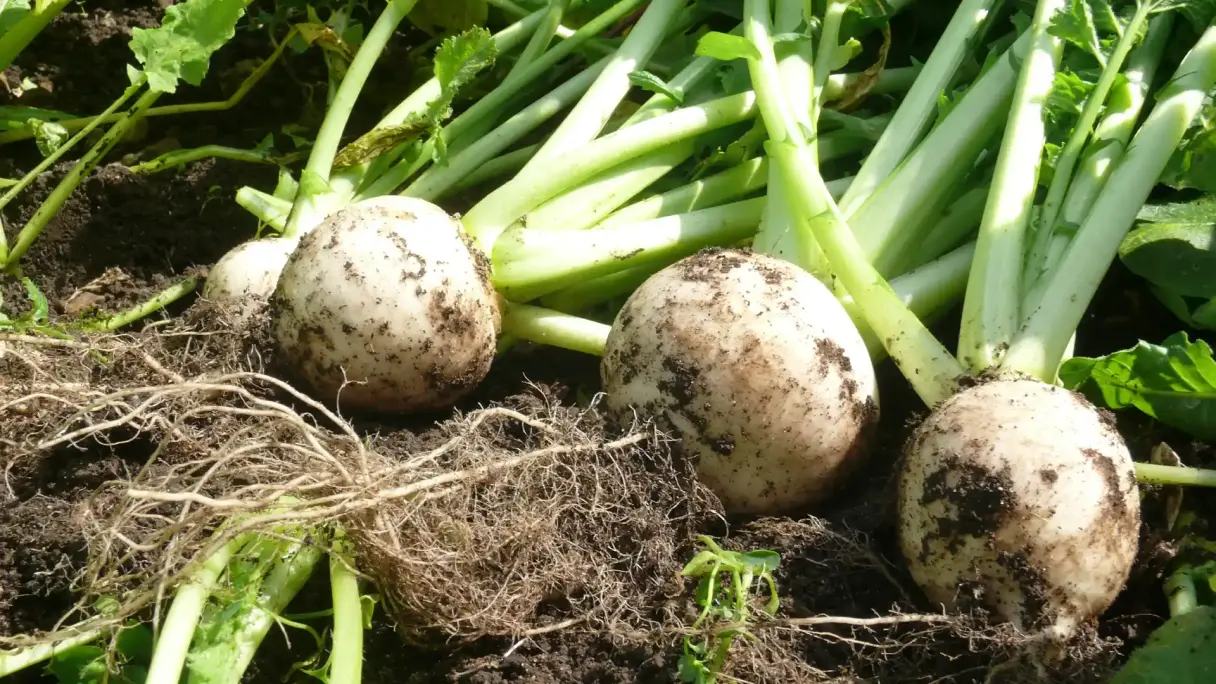
Turnips are one of the most nutritious and at the same time low-energy vegetables, and yet they’re only used in very few kitchens. With just 26 kilocalories per 100 grams and a water content of around 90 percent, they’re the perfect choice for anyone who wants to eat a healthy, light diet.
The white and juicy flesh of the turnip is a source of vital nutrients including potassium,iron,zinc, and folic acid. The leafy green tops are also full of vitamin C, provitamin A, and vitamin E. This blend of vitamins and minerals helps ensure normal nerve and muscle function, helps regulate blood pressure, and supports both skin and eye function.
In particular the mustard oils that the turnip contains make it a real all-rounder. They have an antibacterial, anti-inflammatory effect, and promote digestion, which is a real bonus for anyone who wants to ease the strain on their stomach.
Another advantage of this mild root vegetable is that it’s extremely versatile and is also suitable for a high-fibre diet. With a fullness effect that lasts much longer than it does with other easily digestible vegetables, turnips are a great addition even if you’re on a calorie-controlled diet.
| Energy | Water content | Carbohydrates | Fat | Protein | Fibre |
| 26 kcal | 90% | 4.7 g | 0.2 g | 1 g | 3.5 g |
| Vitamin | 100 g contains | Minerals | 100 g contains |
| Vitamin C | 13 mg | Potassium | 217 mg |
| Vitamin B1 | 30 μg | Calcium | 51 mg |
| Vitamin B2 | 38 µg | Magnesium | 12 mg |
| Niacin | 150 μg | Sodium | 28 mg |
| Vitamin B5 | 150 μg | Phosphorus | 30 mg |
| Vitamin B6 | 60 μg | Iron | 0.4 mg |
| Folic acid | 11 µg | ||
| Vitamin K | 5 μg |
What’s the best way to preserve the contents of the turnip?
To preserve the valuable contents of the turnip in the best way you can, the tender spring vegetable should be cooked as fresh as possible. After you buy it, it’s advised that you separate the stems and leaves from the tubers as otherwise they’ll draw moisture from the root and will shrivel up faster.
*All specifications given are to be considered as guideline values, and depend in each case on the type of food and on the proper storage without interruption of the cold chain from harvest/production through to the Liebherr appliance. Should food products have information about minimum shelf life, the date on the packaging always applies.
This text has been machine translated from English.