FlexChamfer 2.0
Liebherr-Verzahntechnik GmbH has further developed the FlexChamfer chamfering process specifically for greater user benefit, ease of use and flexibility. New software functions enable even complex chamfers to be calculated independently. A new interface allows switching between FlexChamfer and ChamferCut on one machine for the first time. Additional functions improve safety and efficiency in operation.
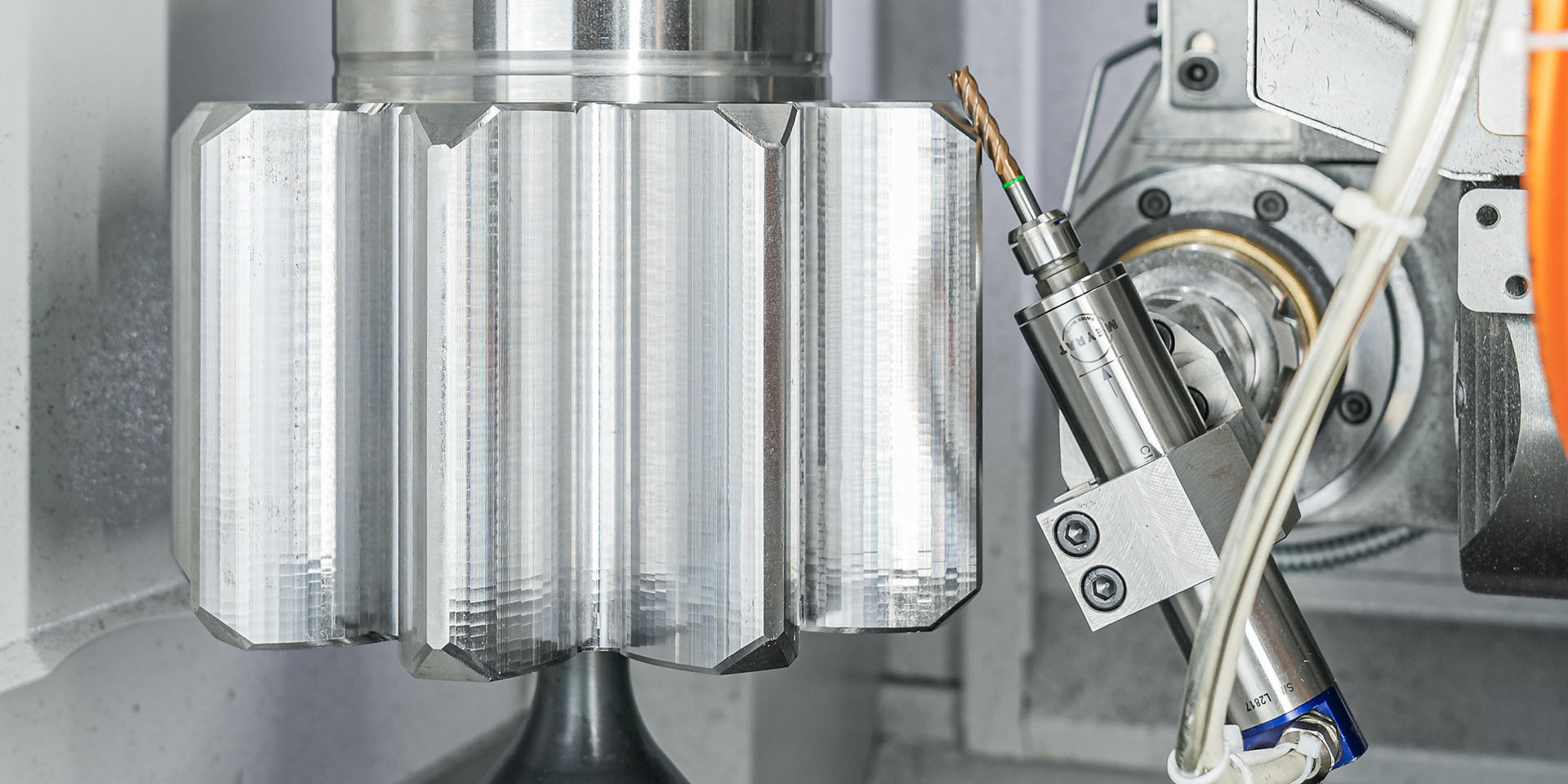
FlexChamfer is a CNC-based, flexible chamfering process with end mills that is particularly suitable for workpieces with collision contours or internal gears. Machining can take place parallel to the main machining process on an integrated chamfering device. Standard tools make the process cost-effective and eliminate waiting times for workpiece-specific specialized tools. It is suitable for prototypes and small-scale series, for example in contract gear cutting or in the aerospace industry, but also for me-dium and large quantities, for example in the commercial vehicle industry.
Programming complex chamfers independently
“Discussions with customers and users revealed the need to be able to independently define and calculate chamfers for both simple and more complex component geometries. That’s why we have specifically enhanced the software – for greater flexibility, easier operation and extended application options,” explains Dr. Oliver Winkel, head of application technology. Until now, an external calculation was required especially for programming complex chamfers. Now, even more complex geometries such as chamfers on large lead-in tapers can be programmed directly in the software. “We wanted to enable users to map such cases themselves,” says Oliver Winkel. If the machining result is not satisfactory in one cycle, it can be optimized by defining two separate machining areas by chamfering vertical and inclined surfaces independently of each other in two cycles.
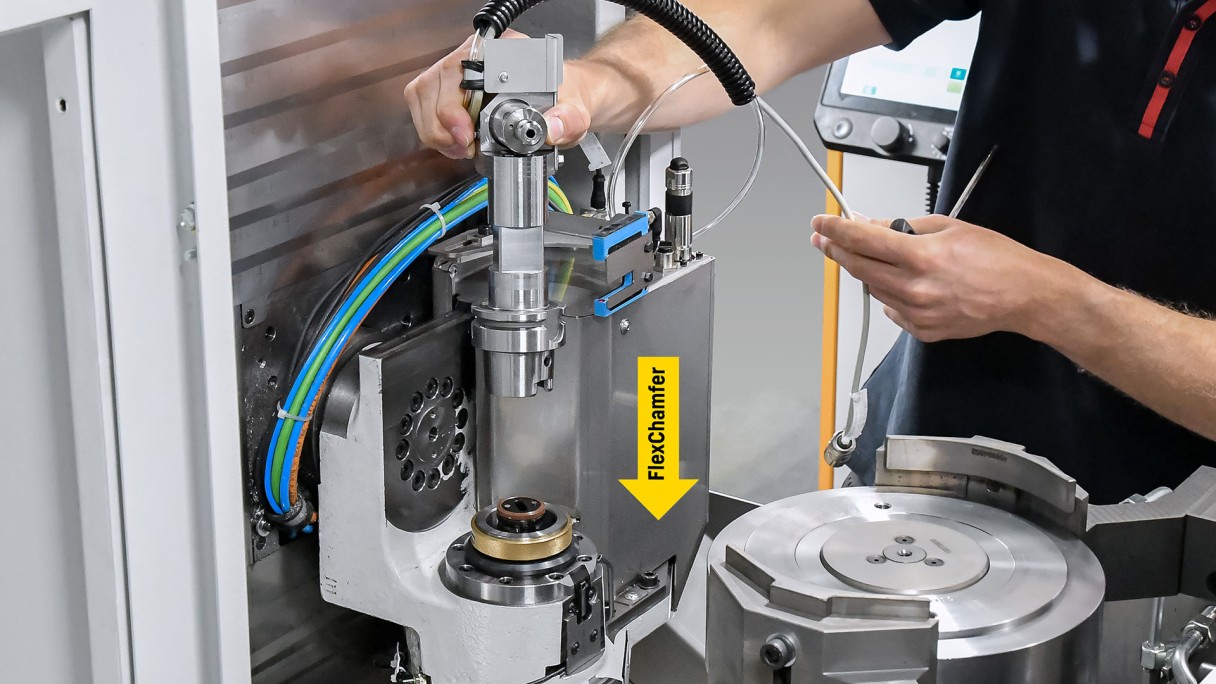
Tip changeover: One machine, two processes
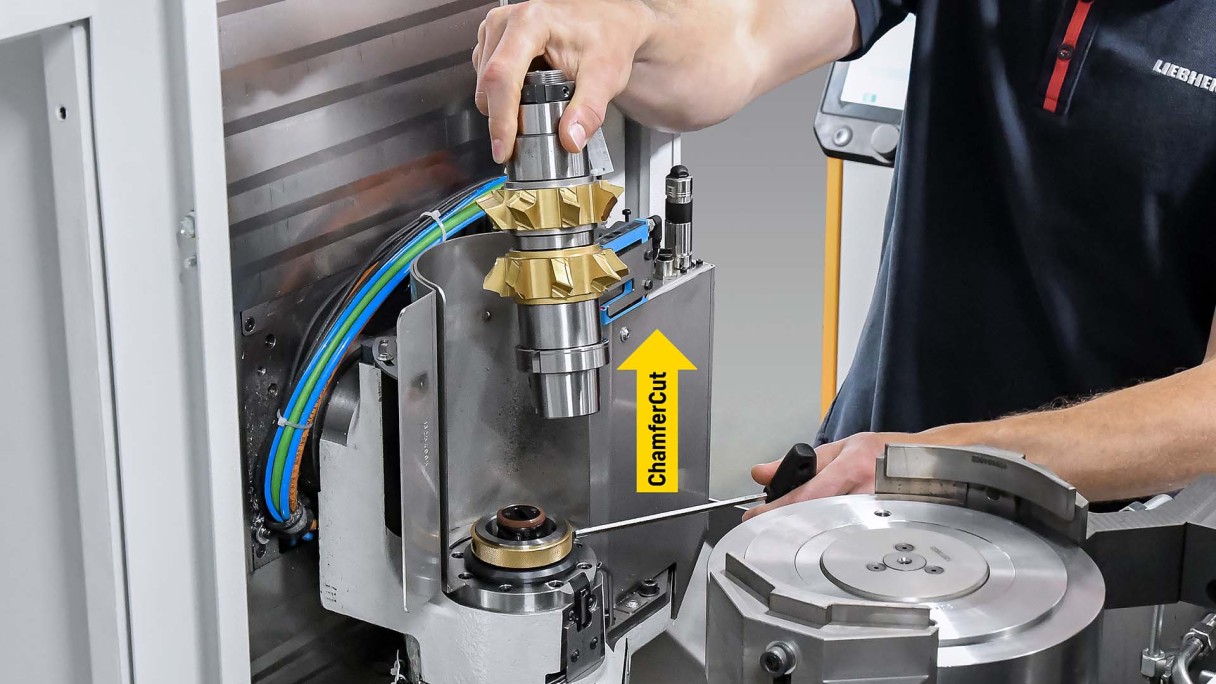
Another highlight is the integration of an improved inter-face that enables quick and easy changeover between FlexChamfer and ChamferCut technology. This means that the machine offers the option of using both processes right from the start. Thanks to standard power and compressed air connections, the chamfering unit is equipped for both technologies and conversion takes less than two minutes. The software then performs the switchover. This enables the economical machining of a wide range of batch sizes on one machine, increases flexibility and reduces investment costs. New machines are preconfigured accordingly, existing machines can be retrofitted.
Machine operation further simplified
Parallel to the functional expansion, the user guidance has also been further improved: “An enhanced plausibility check now provides specific information on the causes of implausible entries, instead of just issuing a warning like before,” explains Oliver Winkel. In Setup mode, a visual stop allows a check to take place with the machine door open. This allows the operating personnel to monitor new workpieces directly as they are fed in and detect any collisions, for example in the event of interfering contours, early.
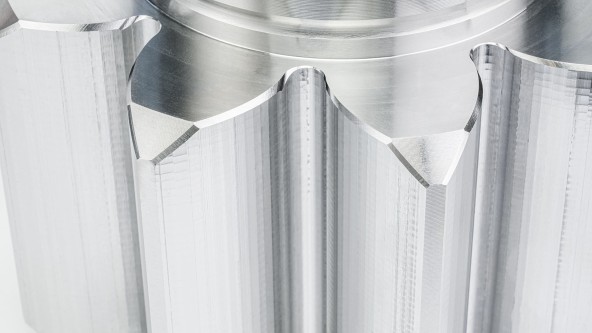
New software feature: Precise chamfering even when complex face edge geometries are involved
FlexChamfer even for large workpieces
A solution for chamfering larger workpieces on the machine is now also available for the first time: Thanks to new hob heads with an integrated, fold-out chamfering spindle, components with a diameter of up to six meters can now also be chamfered using FlexChamfer technology – not in parallel with the machining process, but highly precisely and in a single workpiece clamping. Manual deburring and chamfering is no longer necessary.
Successful in practice
Machines with the new FlexChamfer software are already being used by the first customers, including the Italian manufacturer of drive components OMSI Trasmissioni S.p.A. Managing director Renato Soncina explains: “We are already using Gratomat chamfering technology on our Liebherr machines. With FlexChamfer, we can now program the desired chamfer dimensions, enabling us to work with significantly greater flexibility and precision.”