
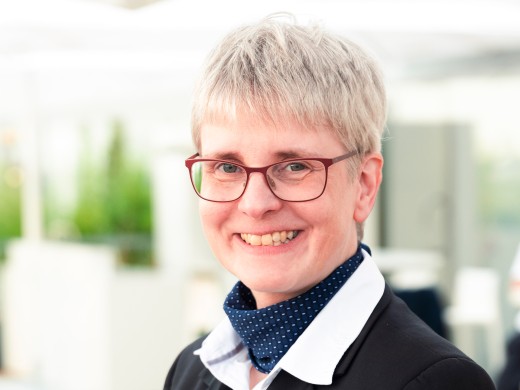
Ute Braam
Liebherr-Aerospace & Transportation SAS
Pfänderstraße 50-52
88161 Lindenberg
Germany
88161 Lindenberg
Germany
+49 8381 4644-03
News | 21.07.2025
The countless possibilities of artificial intelligence (AI) have become indispensable.
Nicolas Canouet, Head of the DataLab Center of Excellence and AI Coordinator at Liebherr-Aerospace & Transportation SAS, gives insights into how the division is bundling the possibilities of AI and how customers can benefit from it. Here is an excerpt from an interview:
N: The aerospace industry is currently facing numerous challenges, for example to increase the production rate, or the question of how we can make the industry more sustainable. We need to adapt to this business environment with agility in order to be reliable, resilient and perform well for the benefit of our customers. Against this background, AI is an essential technology that can help us to better overcome these challenges.
N: We leverage AI across three key areas: operational efficiency, new services and product innovation. In the area of operational efficiency, we use AI for industrial planning, as well as to optimize logistics chains and supplement knowledge management. This streamlines processes and improves decision-making.
In the second area of new services, AI contributes to diagnostic support and predictive maintenance. This means that maintenance or upcoming repairs can be identified at an early stage and carried out more effectively. This improves our service quality and minimizes aircraft downtime.
In the area of product innovation, we are working on embedding AI into our components as well as systems to create new functions.
Initially, we developed our expertise primarily through activities that are very closely linked to the product. These include, for example, predictive maintenance, AI technologies that could be directly embedded in the product or through techniques that support product design.
We are now focusing on integrating AI directly into the core of our internal processes in order to optimize industrial performance. For example, we are using AI to optimize new purchasing strategies or to plan workflows in production.
Ute Braam
Liebherr-Aerospace & Transportation SAS
+49 8381 4644-03