Katharina Bader
Liebherr-International AG
5415 Nussbaumen
Switzerland
+41 56 296 4092
Listicles | 2026. 05. 29.
Electric cars are mainstream. So why haven't we electrified the machines that build our world? The answer is more complex — and more interesting — than most people realise. Daniel Bachmann, Managing Director Liebherr Energy Solutions GmbH answered five questions that get to the heart of it.
Daniel Bachmann, Managing Director Liebherr Energy Solutions GmbH
"For years, the conversation has been focused on the machine itself — the drivetrain, the battery, the motor. And while that's important, it's not where the hardest problem lies. The harder question is: what does the machine plug into? Energy infrastructure that doesn't exist yet, job sites designed around diesel logic, operational complexity that no single component can solve. Zero emission isn't a product. It's an entire ecosystem — and that's what we need to start designing."

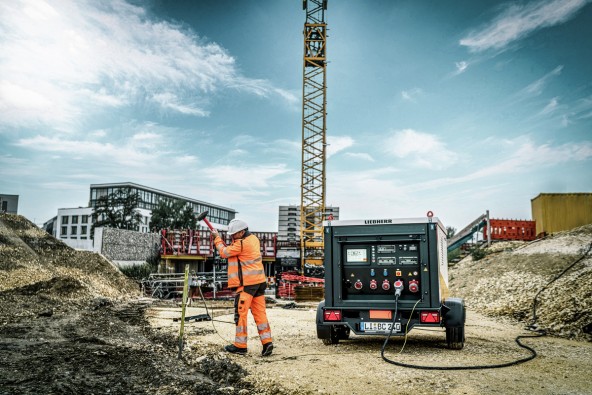
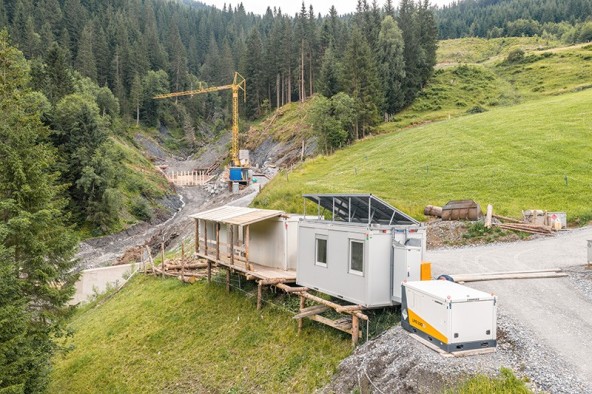
The job site as an energy system: the Liduro Power Port decouples energy demand from grid capacity – making electrification viable where the grid alone isn't enough.
"A complete rethink of how we look at energy on site. The job site itself needs to be treated as an energy system — with its own generation, storage, load management, and charging strategy. Stationary battery buffers, for example, can decouple energy demand from grid capacity, which means electrification becomes viable even where the grid alone isn't sufficient. It's a significant shift in thinking: from optimising the machine to designing the ecosystem around it. And that's where we see both the greatest challenge and the greatest opportunity."

The machine is only part of the answer. This construction site in the Austrian Alps runs on an integrated energy system — proof that the real solution lies in the ecosystem around the machine.
The boundary conditions are fundamentally different. Off-highway machines don't move around on fixed routes and can't easily navigate to the next High Power Charger. They work in mines, on remote construction sites, in ports at 3am — places where electrical infrastructure is limited, expensive to install, or simply absent. And the energy demands are in a completely different league. These machines need enormous amounts of power, dynamically, with peak loads that dwarf anything a passenger vehicle requires. Diesel handles this almost perfectly: high energy density, fast refuelling, logistics that work anywhere. Acknowledging that isn't defeatism — it's the starting point for honest engineering."

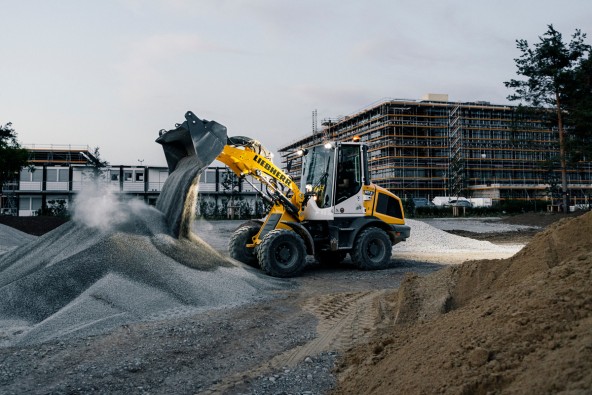
The right drive for the right application: the L 507 E shows where battery-electric already delivers today.
"No — and I think it's important to say that clearly. Different applications have fundamentally different requirements, and a one-size-fits-all approach would slow this transition down, not accelerate it. Small to medium-sized machines with defined operating cycles and access to charging infrastructure are strong candidates for battery-electric. But machines with extreme operating hours, high mobility demands, or no realistic charging window may be better served by hydrogen or hybrid concepts. What guides us at Liebherr is a system-driven approach: we look at the operational reality first, and let that determine the technology — not the other way around."
_w1920-(1)-web_w592.jpg)
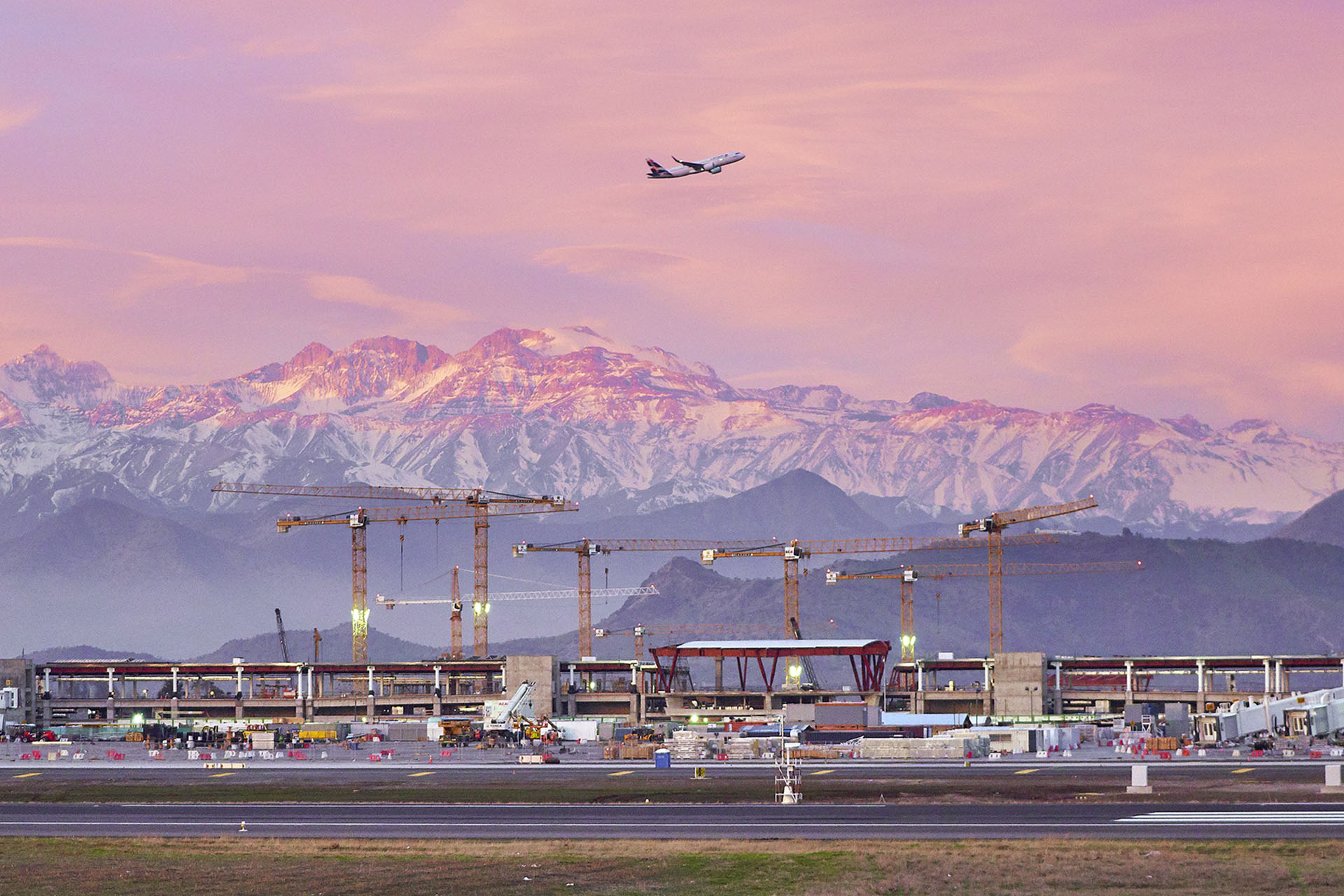
From machine to ecosystem: the Liduro Power Port, paired with Liebherr's Energy Planner software, brings holistic energy management to the job site.
"A much bigger role than most people expect — and one that often gets underestimated. Hardware engineers focus on the machine, infrastructure teams focus on the grid, and software — the layer that needs to hold everything together — tends to arrive too late in the conversation. Digital systems can simulate energy demand before a site even breaks ground, coordinate which machines charge when, and balance loads in real time to prevent the whole system from being overwhelmed. I sometimes describe it as air traffic control for electricity. Without it, a fleet of electric machines is just a collection of very expensive problems waiting to happen."

Katharina Bader
Liebherr-International AG
+41 56 296 4092