グループ

Listicles | 2026/03/30

Wheel loaders in focus: 5 benefits that autonomous systems will offer in wheel loader operations in the future

Autonomous driving systems such as ‘Liebherr Autonomous Operations’ have the potential to completely redefine construction sites and their operations. The prototype of an autonomous XPower wheel loader performs repetitive tasks independently, thereby reducing the workload on operating personnel and maintaining processes at a consistently high standard even over long periods of operation. Intelligent machine control allows resources to be utilised more precisely and operational processes to be optimised sustainably.

The following article highlights the benefits that the “Liebherr Autonomous Operations” system will offer operators in the future.
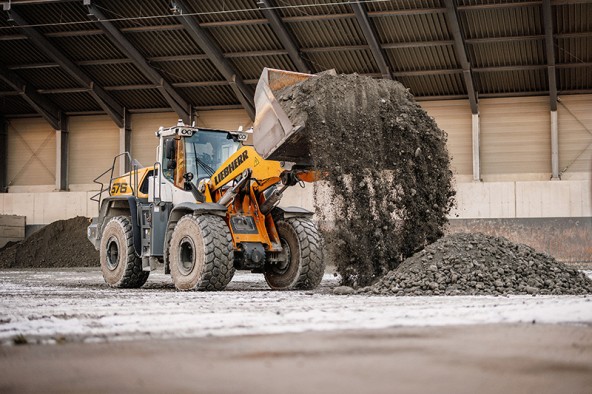
The autonomous wheel loader fills the bucket consistently – cycle after cycle.

1. Precision in every cycle: when every bucket is spot on

The autonomous wheel loader excels where loading cycles are constantly repeated. “Liebherr Autonomous Operations” automatically recognises the ideal approach to the piled material, positions the bucket precisely and fills it using a consistent strategy. Empty runs are minimised, and workflows are optimised.

The result:

  • productivity
  • lower operating costs

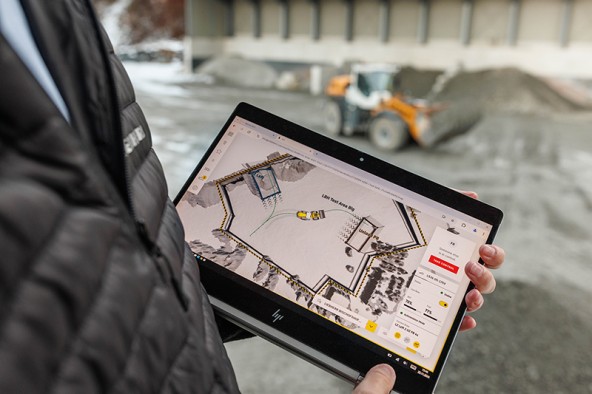
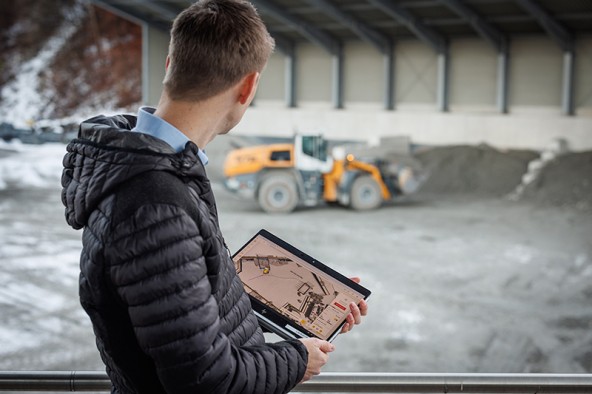
Intuitive and user-friendly: define work orders in the web interface and have them executed autonomously.

2. Simple operation: plan tasks instead of controlling them manually

With the web application “Autonomous Job Planner”, work orders can be created without any IT expertise. Loading points, routes and stockpiles are defined in a clear 3D environment.

Thanks to 3D environmental sensors, the autonomous system recognises its surroundings, plans the individual work cycle and continuously adapts it to changes – without complicated programming.

While the autonomous wheel loader handles monotonous tasks, employees can focus on more complex activities.

3. Freedom in everyday work: less routine, more responsibility

“Liebherr Autonomous Operations” carries out monotonous, repetitive and tiring tasks independently. This takes the strain off staff and creates space for activities that require human expertise. In this way, autonomy not only counteracts the shortage of skilled workers but also expands the scope for creativity in everyday work.

The autonomous system immediately recognises changing conditions and automatically adjusts its route.

4. Safety first: autonomy thinks for itself

Robust 3D scanners and sensors ensure safe navigation – even in complex or rapidly changing environments.

“Liebherr Autonomous Operations” detects obstacles in real time and reacts immediately. The autonomous system is always alert and constantly monitors itself. This reduces the risk of errors that might occur after hours of monotonous work.

The prototype ‘Liebherr Autonomous Operations’ is far more than just a driverless machine. The technology provides precise, reliable support, relieves the burden of repetitive tasks and enables a consistently predictable material flow. With the option to network several autonomous machines together, completely new possibilities will arise in the future – from swarm-intelligent processes to significantly more efficient, resource-saving procedures. Autonomy will open the door to the networked construction site.

The intelligent machine control system lowers fuel consumption and reduces wear and tear.

5. Minimising wear: transparency for better decisions

The autonomous wheel loader records all operating data: cycle times, material volume, energy consumption, stops and distances travelled.

The intelligent control system reduces fuel consumption, protects machine components and extends service life. This creates clear added value: less wear and tear, lower costs, greater planning reliability.

The prototype ‘Liebherr Autonomous Operations’ is far more than just a driverless machine. The technology provides precise, reliable support, relieves the burden of repetitive tasks and enables a consistently predictable material flow. With the option to network several autonomous machines together, completely new possibilities will arise in the future – from swarm-intelligent processes to significantly more efficient, resource-saving procedures. Autonomy will open the door to the networked construction site.