
Construction (hi)stories: overcoming ice, tight spaces and other extremes
Stormy winds, icy cold conditions, narrow tracks: extreme conditions prevail on many construction sites around the world. Nevertheless, projects need to be delivered efficiently and precisely whatever the terrain. This is where true partnership matters most. This is what makes Liebherr more than ‘just’ a supplier, staying by the customer’s side with advice and solutions. How does a team deliver major infrastructure projects under conditions that have previously stopped others in their tracks? To answer that question, let’s look at six extraordinary construction stories from the Liebherr world.
01
Ilulissat airport, Greenland: defying the cold
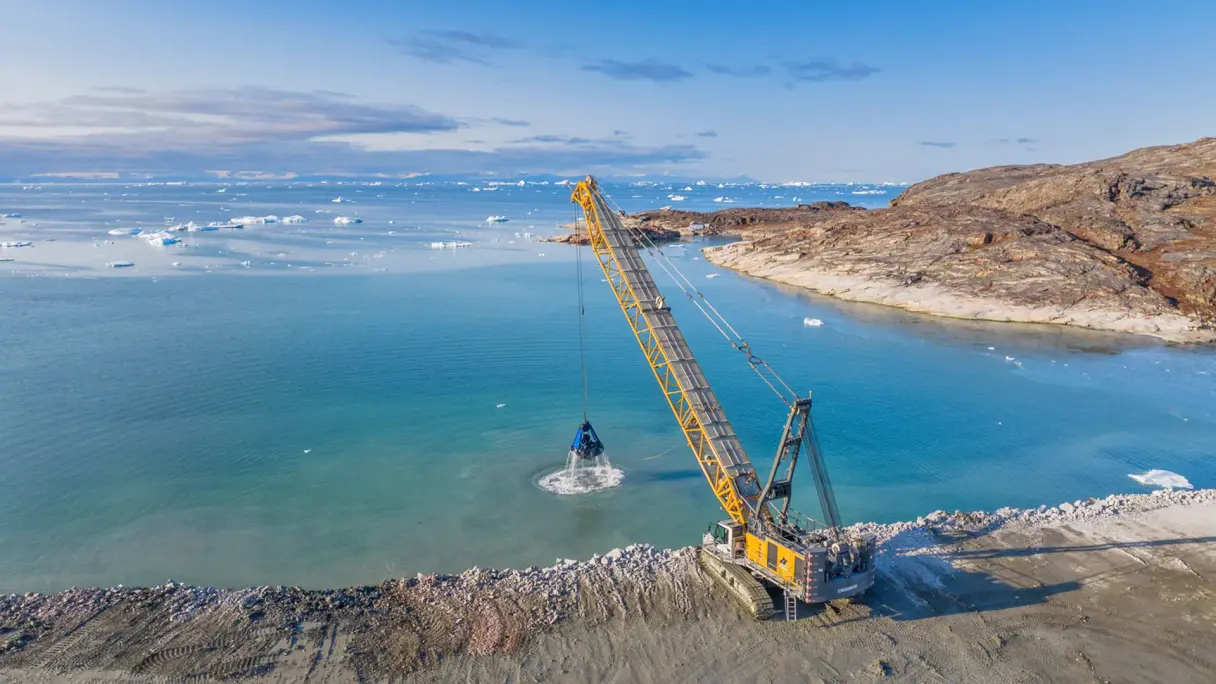
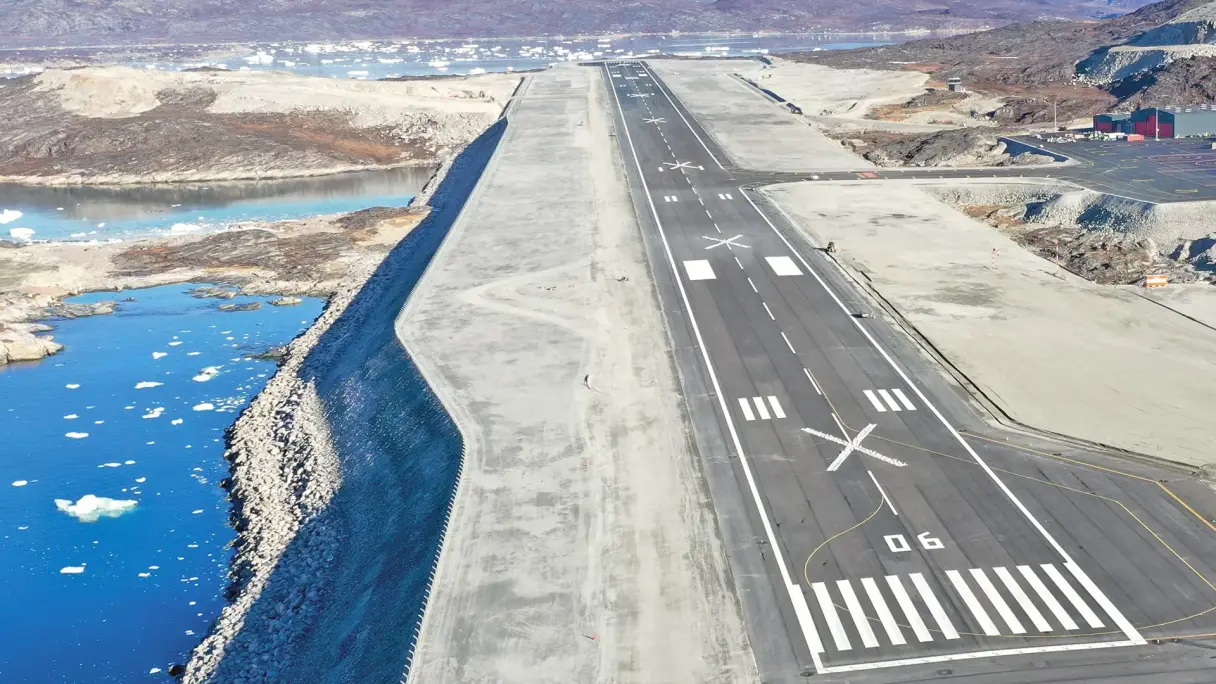
The Liebherr HS 8200 duty cycle crawler crane rose to the challenge set by the freezing temperatures, completing fundamental works for the new airport in Ilulissat (Greenland).
With the thermometer reading 8° C, you would barely believe it’s summer. But on the western coast of Greenland, that is the average summer temperature, whereas in winter the mercury dips as low as –35° C. For construction projects in this region, the temperatures are not the only challenge; the logistics are also far from straightforward. This was precisely the issue the coastal town of Ilulissat faced during its airport project: a ship bringing spare parts and equipment came only once a week. Furthermore, the construction of the new runway, part of which is built on sea, had to be completed before the ice reached the bays. To this end, the Liebherr HS 8200 duty cycle crawler crane started by removing a thick layer of clay sediment, excavating almost 1,000 m3 material per day. It was then fitted with a stone grab in order to place the stones required for coastal protection along the future runway. To ensure the machine could function reliably even in sub-zero temperatures, it was fitted with a cold package – this keeps operations running smoothly even in icy temperatures.
02
Fehmarnbelt Tunnel, Denmark: battling the wind
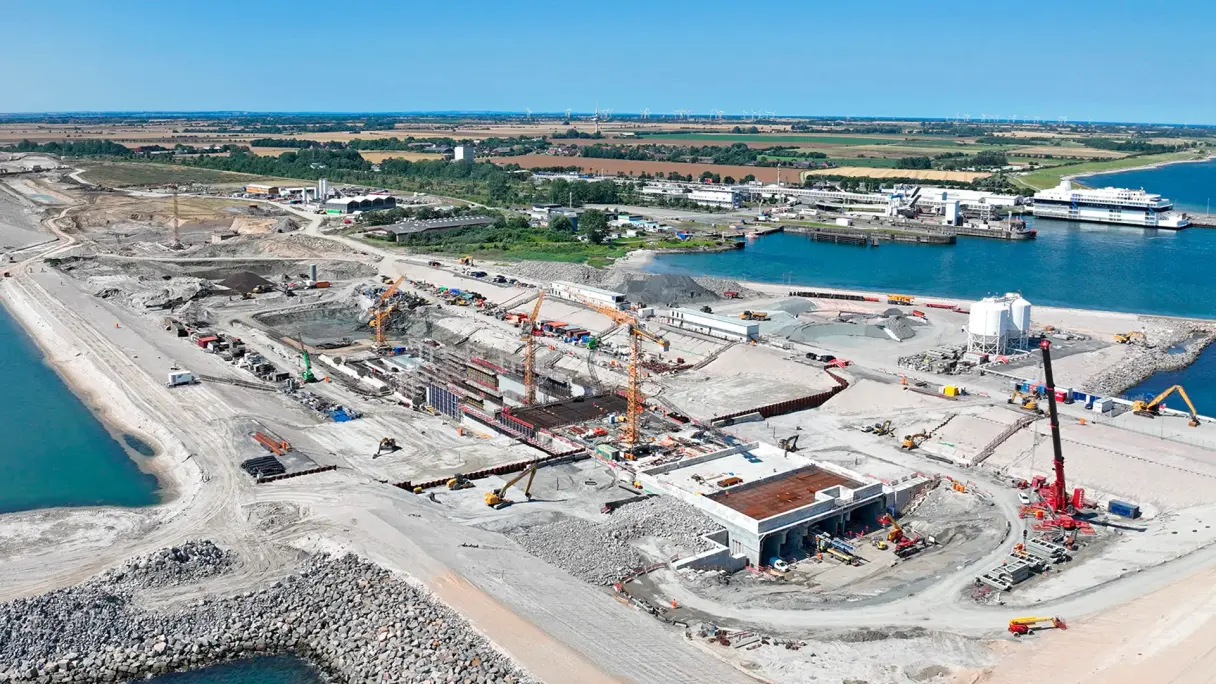
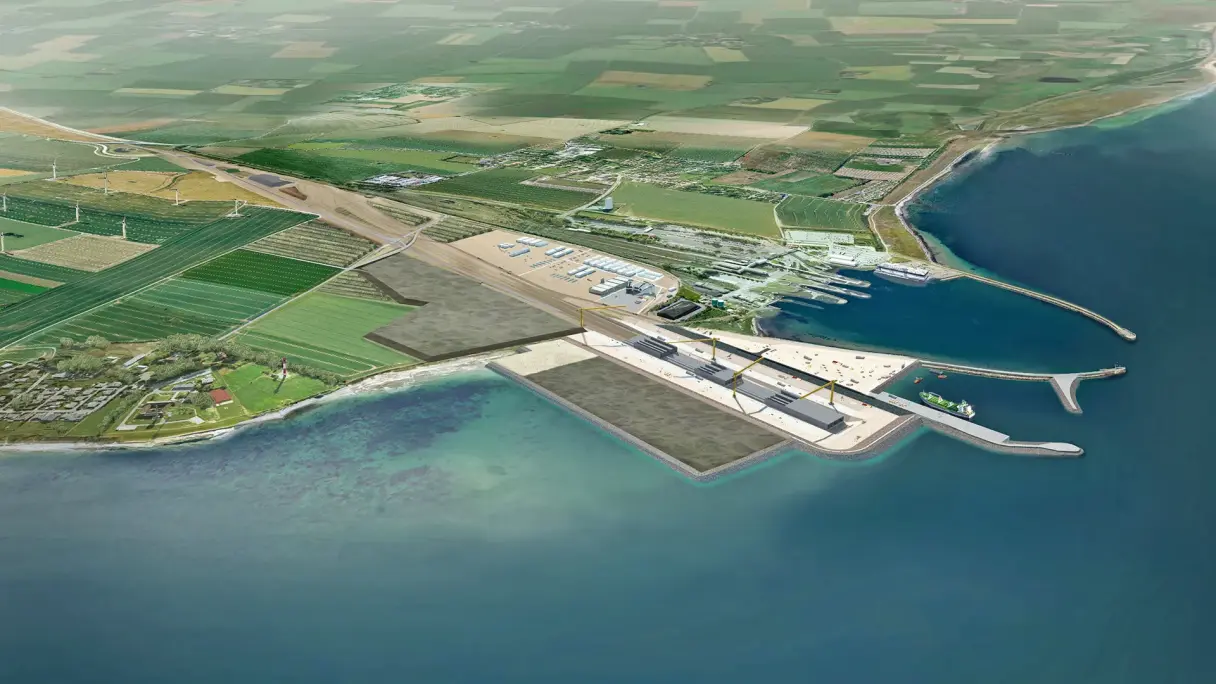
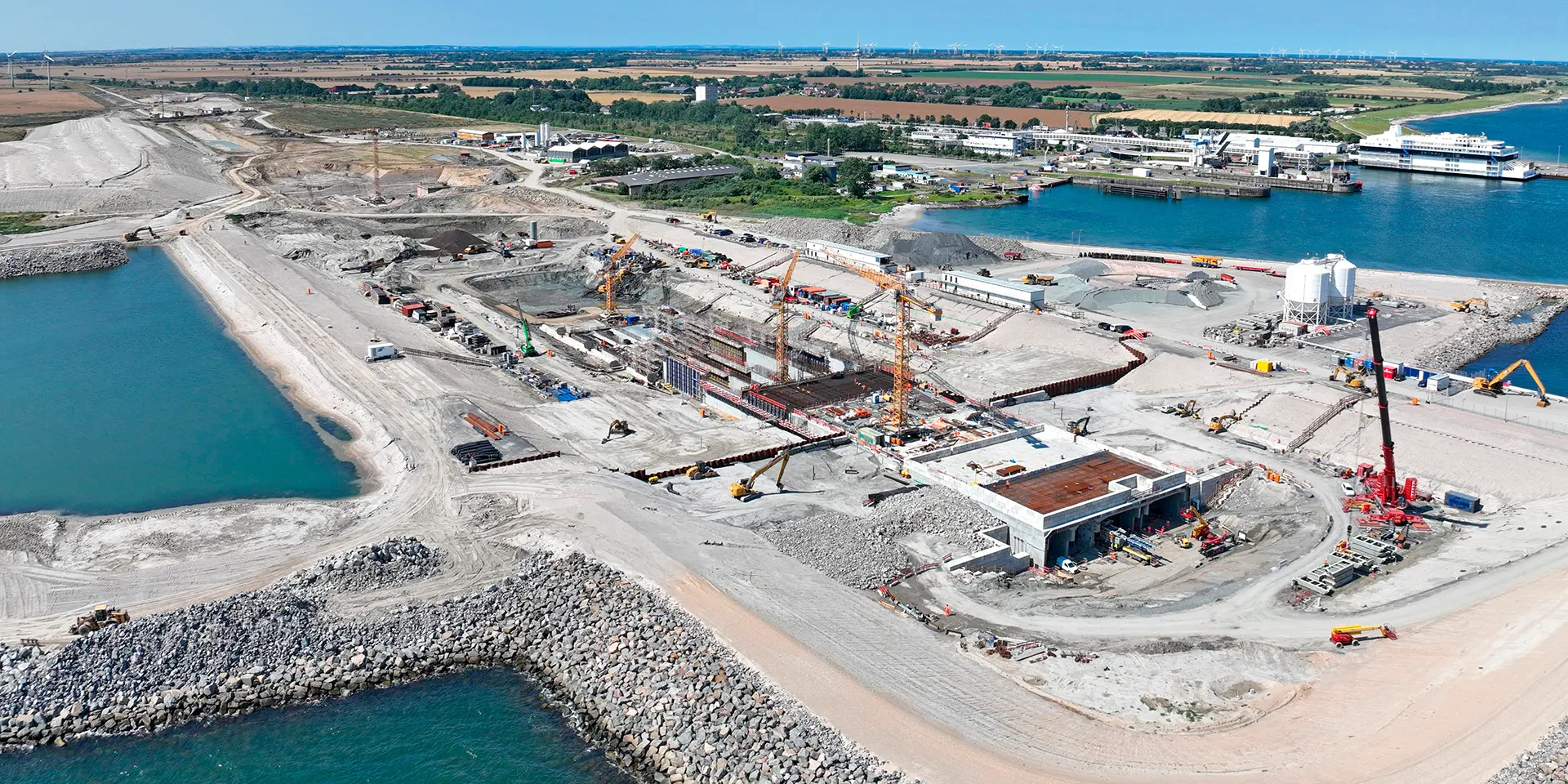
On the Danish side of the Fehmarnbelt Tunnel, numerous Liebherr tower cranes assisted with the construction of the entrance to the immersed tunnel.
Copyright for both images: Femern A/S
The Fehmarnbelt Tunnel, the world’s longest immersed tunnel at 18 km, is set to provide a future road and rail link between Denmark and Germany. How is an infrastructure project of this scale delivered? By involving numerous parties who work together in perfect harmony. Liebherr supplied a number of tower cranes, not least to assist with the production and transport of the 79 standard tunnel elements on the Danish side of the construction site. Each of these elements weighs roughly 73,000 t and measures 217 m in length. Many of the cranes are mounted on rails to ensure the elements can move along the vast production and assembly area without the need for time-consuming conversion work. This allows for extreme flexibility. However, it is not only the scale of the project that is exceptional, but also the weather on site. That is because the Baltic Sea brings with it strong winds. The Liebherr cranes are well-equipped to handle these conditions: sensors register the movements caused by the wind and counteract these. This ensures not only precision but also safety on the construction site.
03
Yusufeli Dam, Türkiye: finding a custom-fit solution
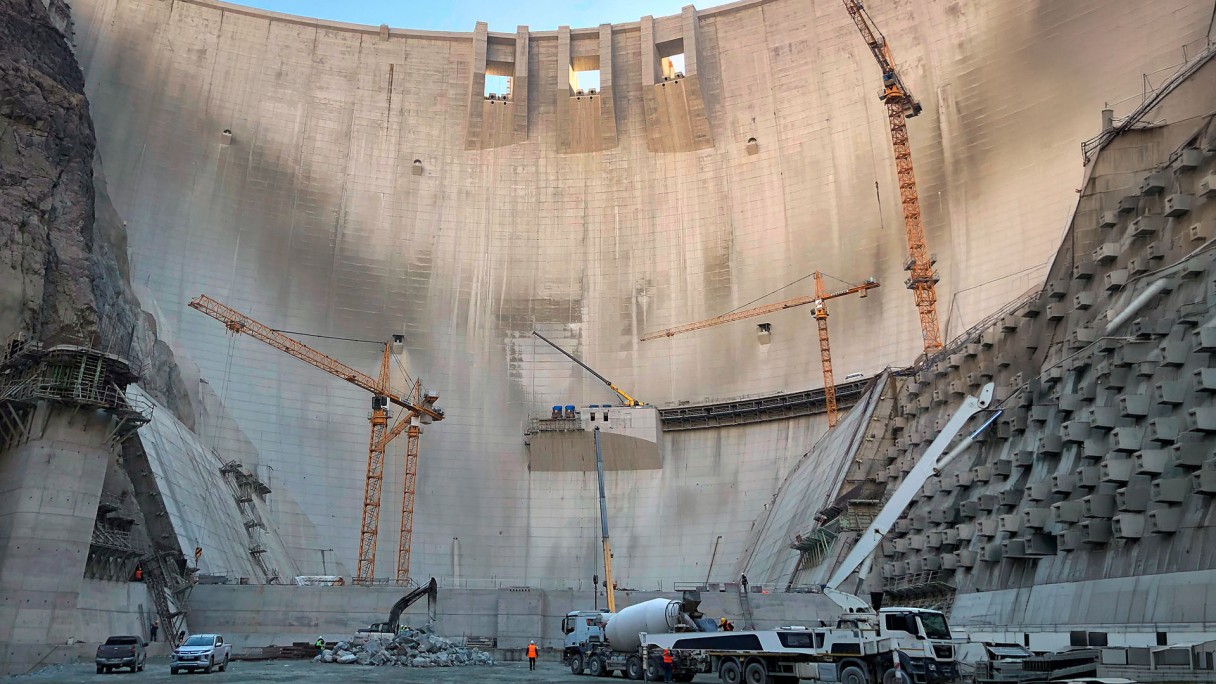
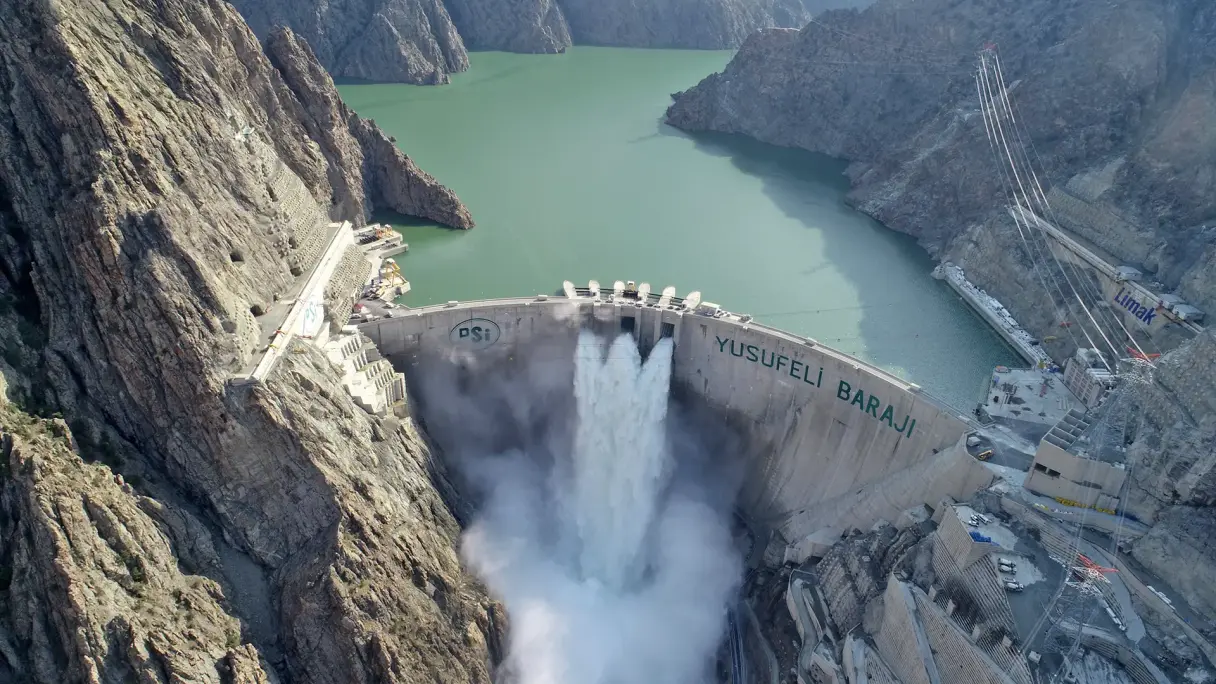
From an awkward construction site to a giant of engineering: the Yusufeli Dam provides electricity to homes in the surrounding regions in northern Türkiye.
39 tight and low tunnels had to be traversed to reach the construction site for the Yusufeli Dam in the north of Türkiye. Once there, teams were met by steep rock faces standing sentinel over the Çoruh river, as well as cramped conditions and seemingly impassable terrain. Up to 5,000 workers, all the machines and every last bit of material had to pass through the tunnels on a daily basis. It was a great help to the on-site logistics that the Liebherr machines involved in the construction of the dam could be transported on HGVs. Liebherr discussed with the customer which machines were most suitable for transportation, but was also up to the task of the challenging landscape. Ultimately, six tower cranes, one mobile crane, ten R 954 crawler excavators and one HS 8200 duty cycle crawler crane were manoeuvred onto site. The end result: one gigantic dam that – together with eight others – generates electricity for up to 650,000 homes.
04
Reservoir on the Stubai Glacier, Austria: taking the rough with the smooth
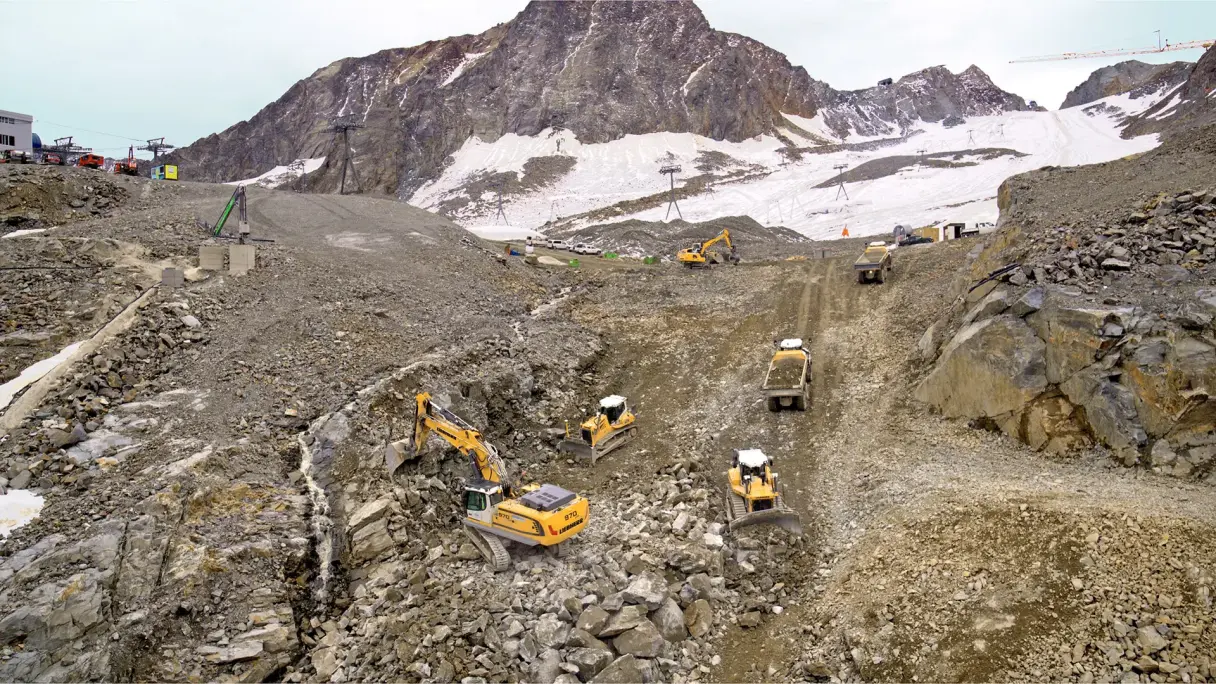
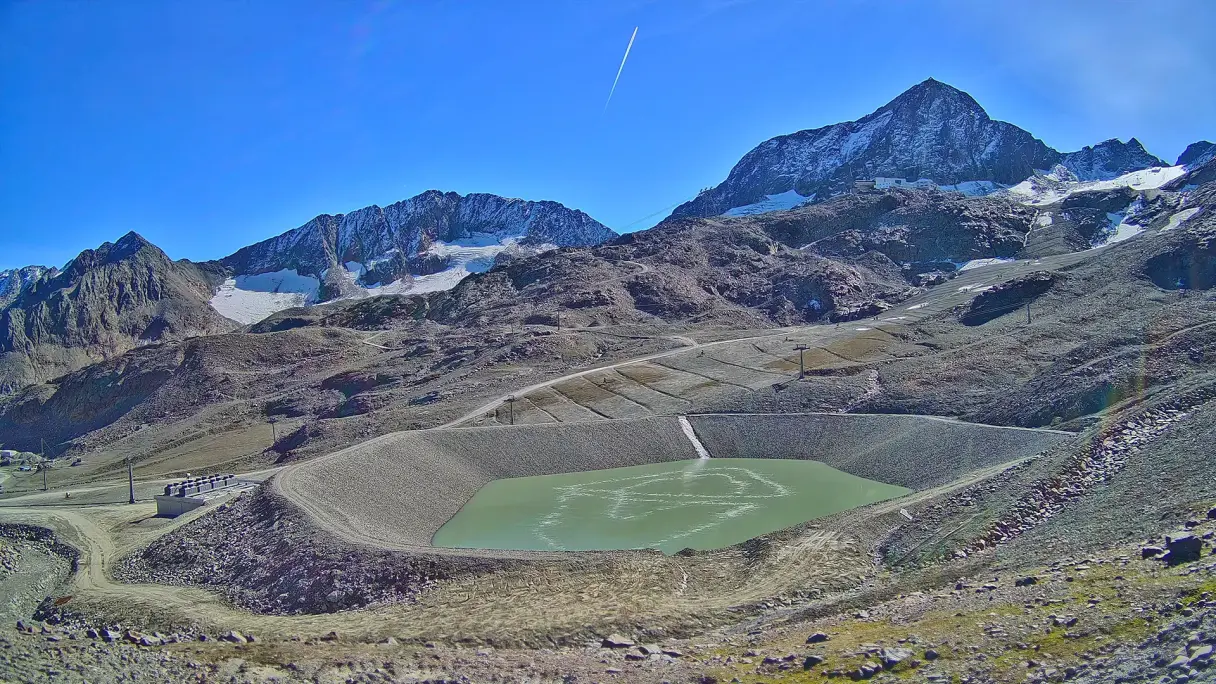
At an altitude of around 3,000 m and alongside other Liebherr construction machines, several articulated TA 230 dump trucks could be seen working to complete the new reservoir for the snow-making facility on the Stubai Glacier (Austria).
Six articulated TA 230 dump trucks and other Liebherr machines were involved in the works to upgrade a snow-making facility on the Stubai Glacier (Austria). The dump trucks transported excavated stone and gravel during construction of the 308,000 m3 reservoir designed to provide the water for making snow. Precisely the kind of work the TA 230 was built for, though in this case – almost 3,000 m above sea level and on challenging terrain – a huge undertaking. With their excellent climbing abilities and large bank angle, the TA 230 dump trucks were perfectly suited to the steep and uneven landscape. This is made possible by the interplay of balanced weight distribution, permanent 6x6 all-wheel drive and solid yet flexible axle suspension. It wasn’t only the machines that impressed, however – the close collaboration on site between Liebherr-Mietpartner GmbH (Liebherr rental fleet) and the customer was a match made in heaven. By using rental machines, the customer was able to fully utilise the capacities required for the project. As such, the reservoir construction was completed on budget and on schedule.
05
Princess Elisabeth Energy Island, Belgium: adapting to requirements
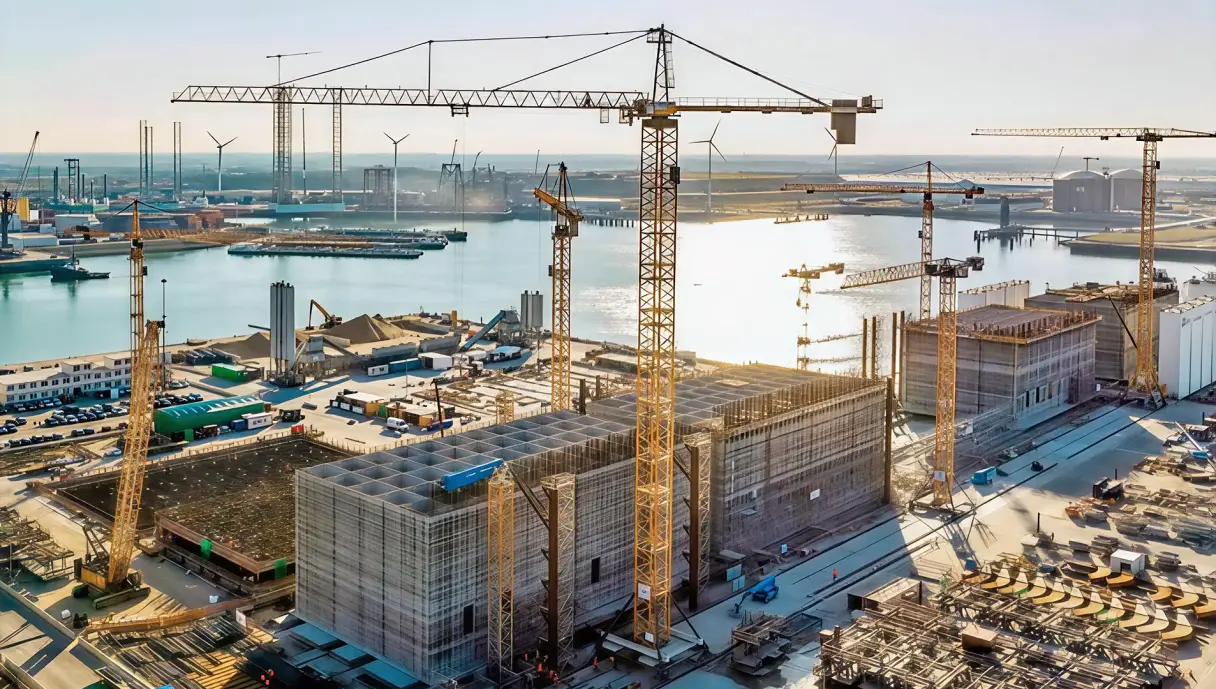
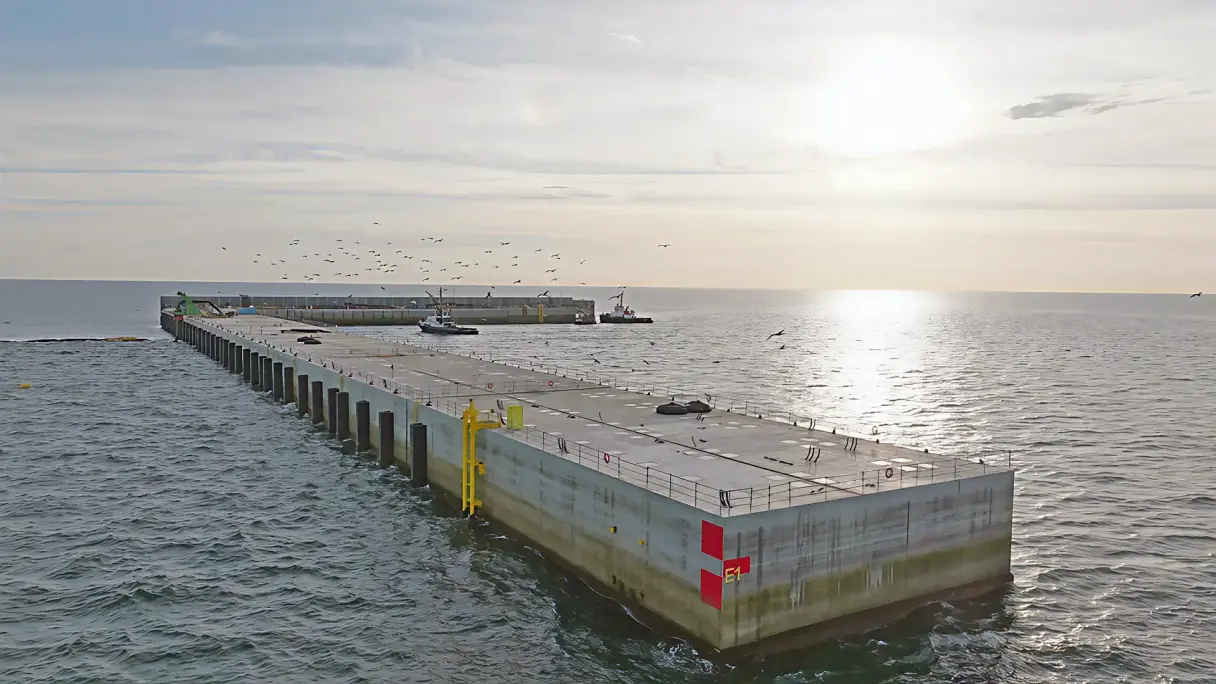
The enclosure of the ‘Princess Elisabeth Energy Island’ is made up of modular concrete elements in the sea, which were premanufactured on land with the help of Liebherr tower cranes.
Copyright for image on the left: Elia
‘Princess Elisabeth Energy Island’ – a man-made energy island 45 km off the coast of Belgium – is the only project of its kind anywhere in the world. Spanning more than six hectares, the island receives energy from wind turbines in the North Sea and distributes this to the surrounding countries. It also serves as a hub for existing energy networks. The outer enclosure of the island is made up of modular concrete elements that have been positioned in the sea. The component parts for these were constructed in advance in Vlissingen (Netherlands). The right cranes were needed to produce these safely and efficiently: high-top cranes such as the 1000 EC-H 50 with load capacities of up to 50 t provided the necessary power. A total of seven Liebherr cranes were commissioned for the project – their hook heights and jib lengths were adapted on-site to the exact requirements.
06
Serra Azul Dam, Brazil: minimising danger
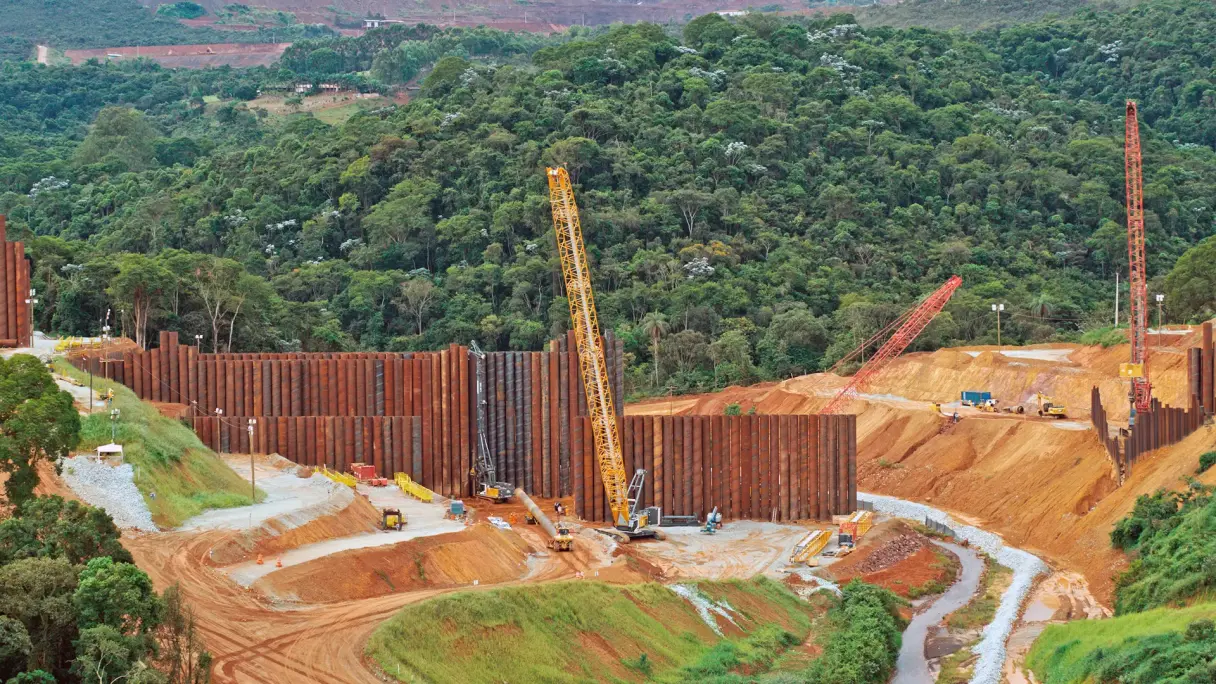
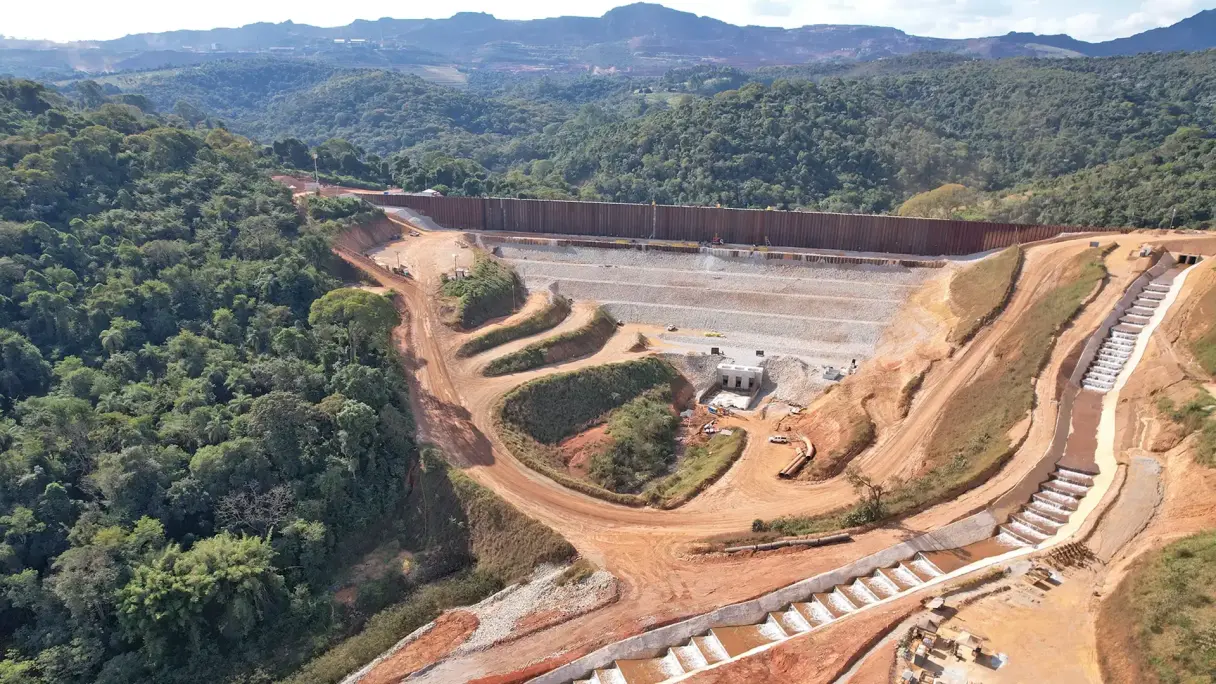
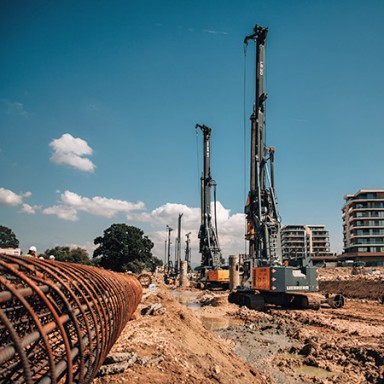
Drilling rigs and a crawler crane were heavily involved in the construction of a containment structure, thereby increasing safety for people and nature around the Serra Azul mine (Brazil).
Brazil, in the state of Minas Gerais: the Serra Azul mine produces over a million tonnes of concentrate and lump ore every year. This operation generated waste that is enclosed in so-called waste dams. There was one such dam at the Serra Azul mine, but it has been deactivated for a long time. To prevent the risk of the dam collapsing during the decommissioning process, a containment structure made up of 1,036 steel tubes was erected beneath it. The tubes measure 1.5 m in diameter, have a wall thickness of 19 or 25 mm and lengths up to 77 m, and weigh either 42 or 52 t. Getting these underground required specialist equipment. This is where Liebherr’s expertise came in: the LB 35 drilling rigs carried out the pre-drilling and an LR 1300 crawler crane lifted the tubes, lined them up and inserted them into the ground. All these tasks were undertaken within the dam’s self-rescue zone.