
Powering progress in Chile
We’re no strangers to trolley technology at Liebherr Mining. With fleets of Liebherr trolley trucks on three continents, we know our way around catenary lines. So when Collahuasi mine approached us to build Chile’s first fully operational trolley line, we were excited to put our expertise to the test.
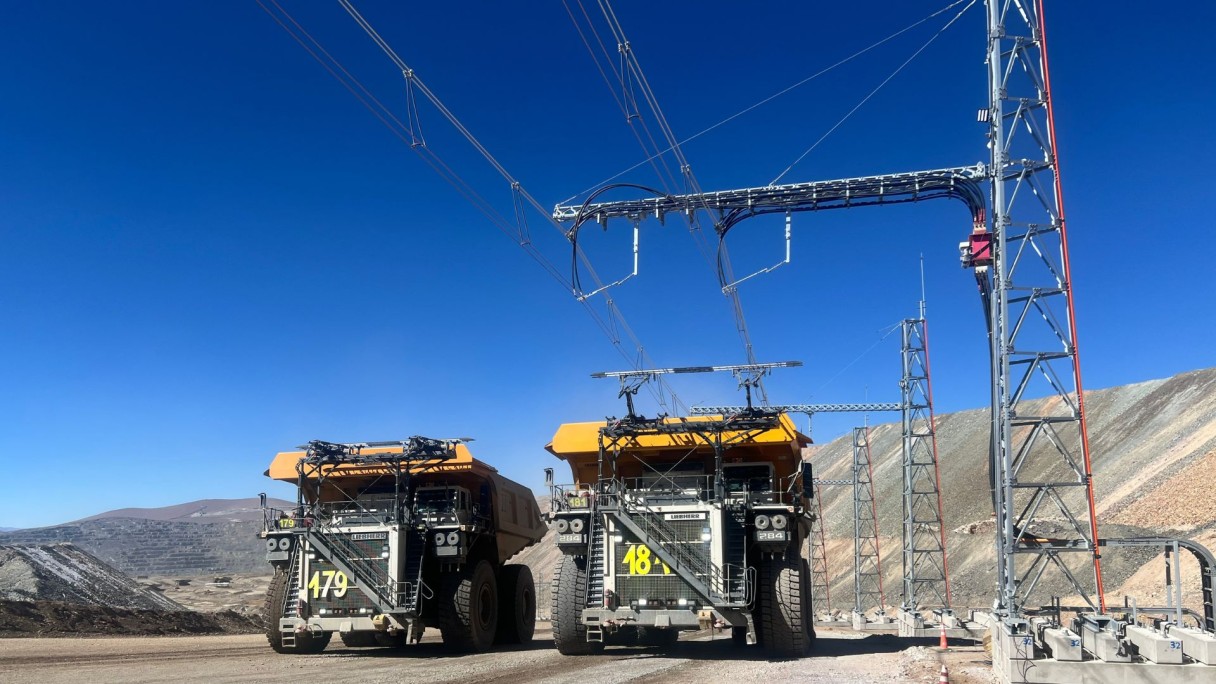
An initial fleet of four T 284 trucks will operate using the trolley system, to explore the benefits of trolley technology in the mine.
In the Tarapacá region of northern Chile, nestled in the centre of the Atacama Desert, is Collahuasi copper mine – one of the world’s largest producers of fine copper. The mine is a primary resource generator for its region as well as for Chile at large. And so, when Collahuasi proposed the idea of partnering with us on a pilot project to explore the benefits of trolley technology within the mine, we were excited to get started. Not only to support our customer, but also to flex our trolley expertise in commissioning the first fully operational trolley line in Chile.
‘Collahuasi mine has set an ambitious voluntary target of being carbon neutral in its Scope 1 and 2 emissions by 2040,’ says Richard Kraemer, haulage electrification solutions manager, Liebherr-Mining Equipment Newport News Co. ‘Partnering with Collahuasi and showing them the benefits of trolley we’ve seen on numerous sites all around the world, was a proud moment for us.’
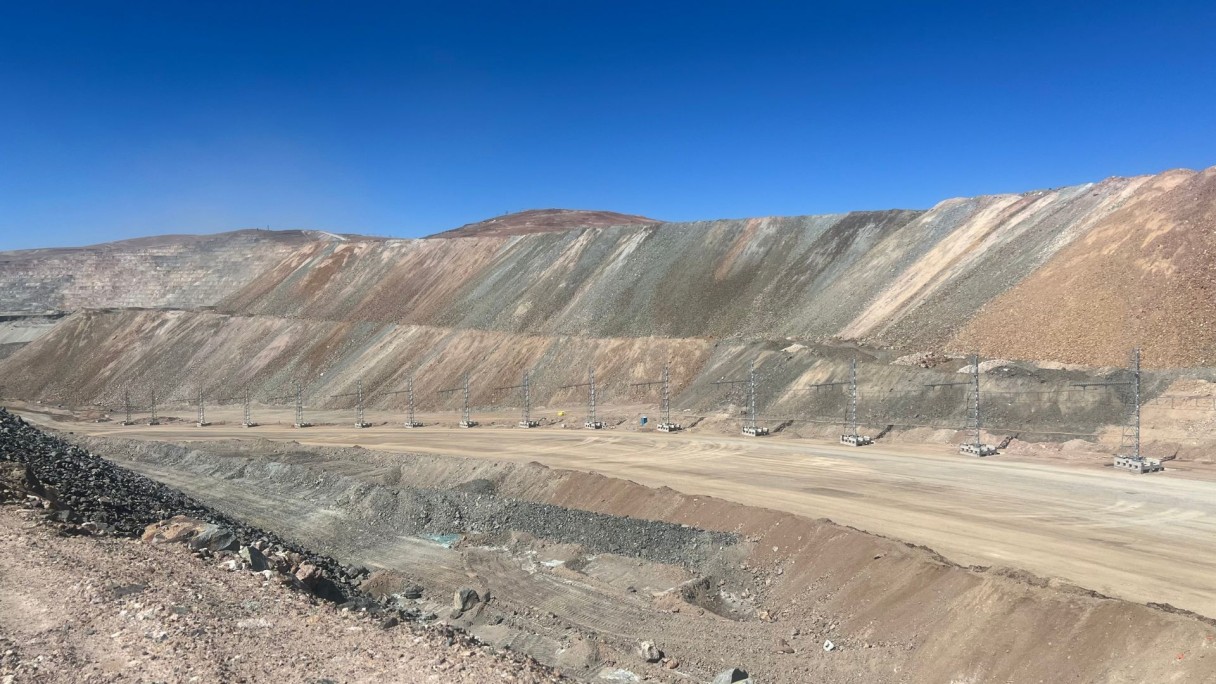
This is the first time that Liebherr Mining has provided a customer with a full trolley solution – the trucks, trolley line, engineering and component supply, training and support. As such, we needed to collaborate with, and draw on the expertise from, a number of different areas in order to supply Collahuasi with both the trolley-truck fleet and trolley infrastructure that would work best for them. Which, in the end, ended up being four of Collahuasi’s existing T 284 trucks retrofitted to become trolley compatible and a 1 km trolley line with two 5.5 MW transformers – a configuration that could support two loaded trucks connected to the line simultaneously while leaving the pit.
The initial design for the trolley line came from Collahuasi itself. The company was best placed to explain the unique environmental conditions at the site – including the combined challenges of extreme altitude, high winds and seismic activity – as well as the mine’s current and future production targets. It was then up to our application engineering team to calculate the potential benefits of the solution, using simulations that showed significant improvements in efficiency and fuel consumption. Liebherr Chile – our sales and service company on the ground – provided the extensive local market and product expertise necessary to substantiate application engineering’s findings. And the last piece of the puzzle was the specialised support from Liebherr Mining Equipment Newport News Co. – our truck production facility in the USA – and trusted third parties that made it possible to truly capture the potential of trolley technology in this environment.
Teamwork makes the dream work
Getting the trucks ready for trolley and building the trolley infrastructure were further exercises in incredible teamwork. Not only did these processes need to happen in tandem, but they required the coordination of a number of different teams that each had different responsibilities. The retrofitting process had to happen in and around Collahuasi’s usual operations to keep disruptions to a minimum. To accomplish this, it was decided that a staged approach would be best. The first stage was to modify the trucks’ superstructures by adjusting the handrails, moving the battery box and reinforcing specific areas like the radiator shroud. Once these modifications were complete, the trucks were able to resume their usual activities while progress on the trolley line was made.
We leveraged Liebherr’s global supply chain to find the most suitable components for building this trolley line to meet Collahuasi’s environmental and production requirements. Installing these components and building the trolley infrastructure was handled primarily by Collahuasi and its construction partners, with Liebherr personnel – as well as our trusted third-party partners – providing supervision and guidance throughout the process.
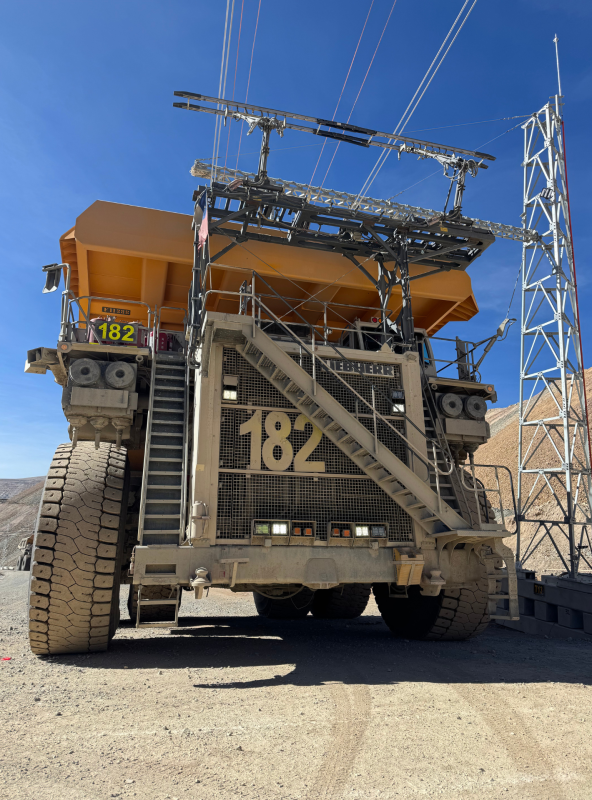
Once the trolley line was nearly finished, the second stage of the truck retrofit could begin. The Liebherr team installed the trolley connection hardware onto the trucks, which included the pantograph support structure, pantograph and trolley interface. The canopy of the dump body also needed to be shortened so it didn’t interfere with the pantograph.
While most of the retrofit process was fairly standard, there were some changes that needed to be made due to the extreme conditions these trucks would be working in.
‘Making these trucks compatible with the high altitudes at Collahuasi mainly meant changes to the drive system. The software installed onto each truck was specifically created for this use case to ensure smooth operations for the drivers in the cab,’ explains Kraemer.
Preparing people on site
Being a complete trolley solution provider means more than providing powerful trolley trucks and state-of-the-art trolley infrastructure. It means training onsite personnel so that they’re not only familiar with the equipment but can also use it to its maximum potential. For this particular project, we provided a mixture of theoretical and practical training for the different groups of onsite personnel that would be interacting with the trolley line and/or trolley trucks in some way: mining instructors, loading equipment operators and the truck operators who would be working under the trolley line.
‘It’s not just the truck operators who need to know how to work with the trolley system. Anyone operating loading equipment like electric shovels or front-end loaders need to know the proper way to load trucks equipped with pantographs. And mining instructors also need to know how the trolley system works overall in order to adjust their mine plans accordingly,’ says Kraemer.
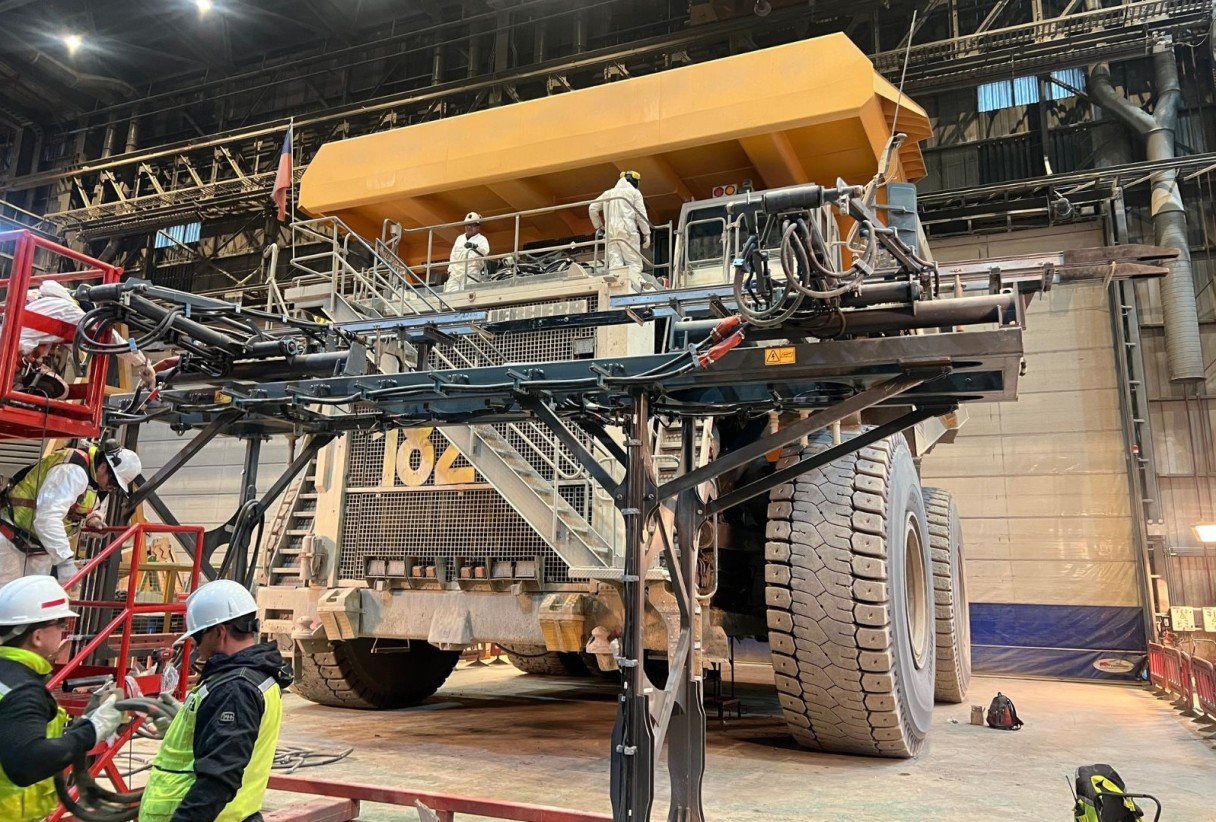
Liebherr Chile retrofitting the pantograph support structure, pantograph and trolley interface on the T 284 truck.
Keeping the project on track
Our support of Collahuasi personnel, its trucks and its trolley line didn’t stop when the trolley trucks started their first shift back in July. Once a month, starting after that initial commissioning, Liebherr Chile personnel have been observing, monitoring and validating good operational practices at Collahuasi to ensure everything is working as it should. These checks will continue monthly for a six-month period and then, after that, the checks will move to every two months – or as Collahuasi requires.
Beyond training, we also wanted to be sure that Collahuasi has the resources it needs to support its people and its new trolley project should unexpected challenges arise. And so, for the first 12 months, Liebherr Chile will stock critical components for the line in a warehouse at the mine. Collahuasi will also receive remote service for the trolley line’s substation during the same period.
As this is the first fully operational trolley line in Chile, we wanted to give this project the best possible chances of success. Not only to support our customer in reaching their decarbonisation targets but also to highlight the results that can be achieved with this technology,’ says Kraemer.
Collahuasi’s trolley trucks are also being taken care of. Well before the beginning of this trolley project, Liebherr Chile had been supporting Collahuasi’s fleet of Liebherr machines under a comprehensive MARC, also known as a maintenance and repair contract. These contracts consolidate all of the services needed to bring out the best in our machines. Now that four of Collahuasi’s T 284s are trolley compatible, Liebherr Chile is working with the customer to include the trolley hardware installed on these trucks into the scope of the MARC to ensure these machines continue to give their best in the challenging conditions on site.
Hard work pays off
Collahuasi has been seeing some promising results since the trolley solution’s commissioning.
‘The trucks under trolley have been reaching loaded uphill speeds of 25 km/h – more than double the speed of their diesel counterparts,’ enthuses Kraemer. ‘And on top of this, we have seen preliminary data that suggests the fuel that would usually be burned along this section of haul road has been dramatically reduced.’
Given that this project was a pilot program for Collahuasi, so the company could evaluate the effects of trolley on its operations and potentially expand the project to other sections of the site, this is a fantastic outcome. The fact that these results also happened to be achieved by the first ever functional trolley line in Chile speaks volumes about the incredible power of trolley technology as a pathway to decarbonisation.
However, none of these impressive discoveries would have been possible without the hard work of all of the different people involved.
‘This project was accomplished through communication and teamwork,’ says Kraemer. ‘People played the biggest role in its success.’
How do trolley lines work anyway?
Trolley systems are a form of dynamic charging that allows diesel-electric mining trucks to use electricity as a power source while travelling, rather than its usual power source – usually a diesel combustion engine. Trucks working under trolley connect to their mine site’s electricity grid via a pantograph or connection bar, depending on the type of trolley system being used. For maximum benefit, trolley lines are usually installed on uphill sections of haul road where the most fuel and/or energy is being consumed. Mines with trolley lines installed often see significant increases to speed on grade and reductions in greenhouse gas emissions. In fact, some sites are even able to reduce the size of their truck fleet due to the gains in productivity achieved by the trolley line.