
Gear technology and automation systems

Flexible robot cells

From machine to part nest loading, Liebherr utilizes the full potential of your production with the help of robots

Liebherr automation for flexible production

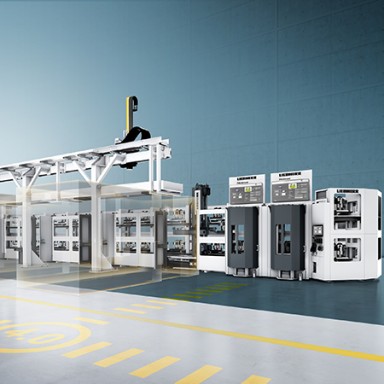
Automation is only suitable for large batches is a well-known myth but it only applies to production in rigid sequences. Flexible manufacturing systems with robot cells, on the other hand, can handle multiple part variants in different batch sizes. This makes them ideal for the production of small or medium-sized batches and enables alternative manufacturing concepts. In matrix production, processing steps are divided among manufacturing islands and are no longer tied to a fixed cycle. Production is more flexible and can compensate for fluctuations using buffer storage. This minimizes standstill times and maximizes productivity.
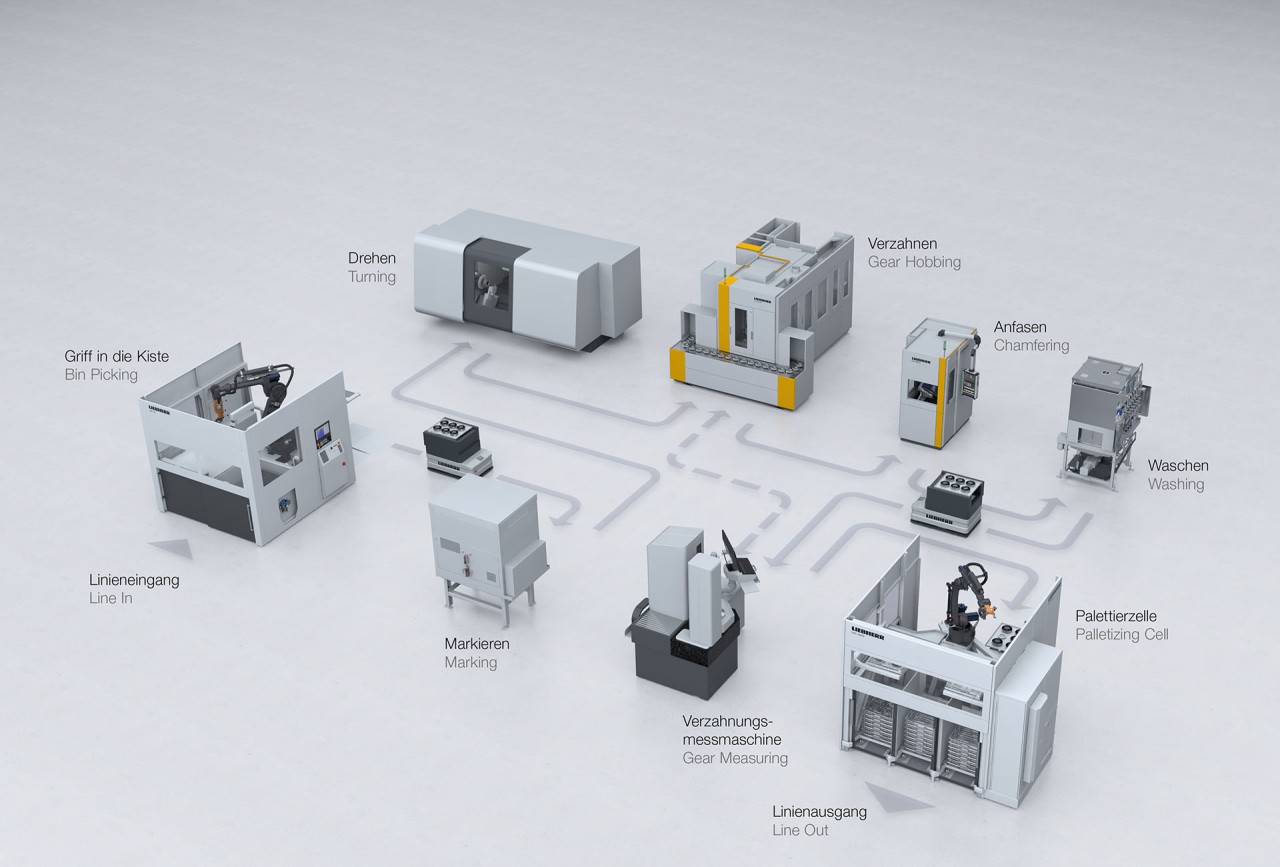
Flexible cells for flexible applications
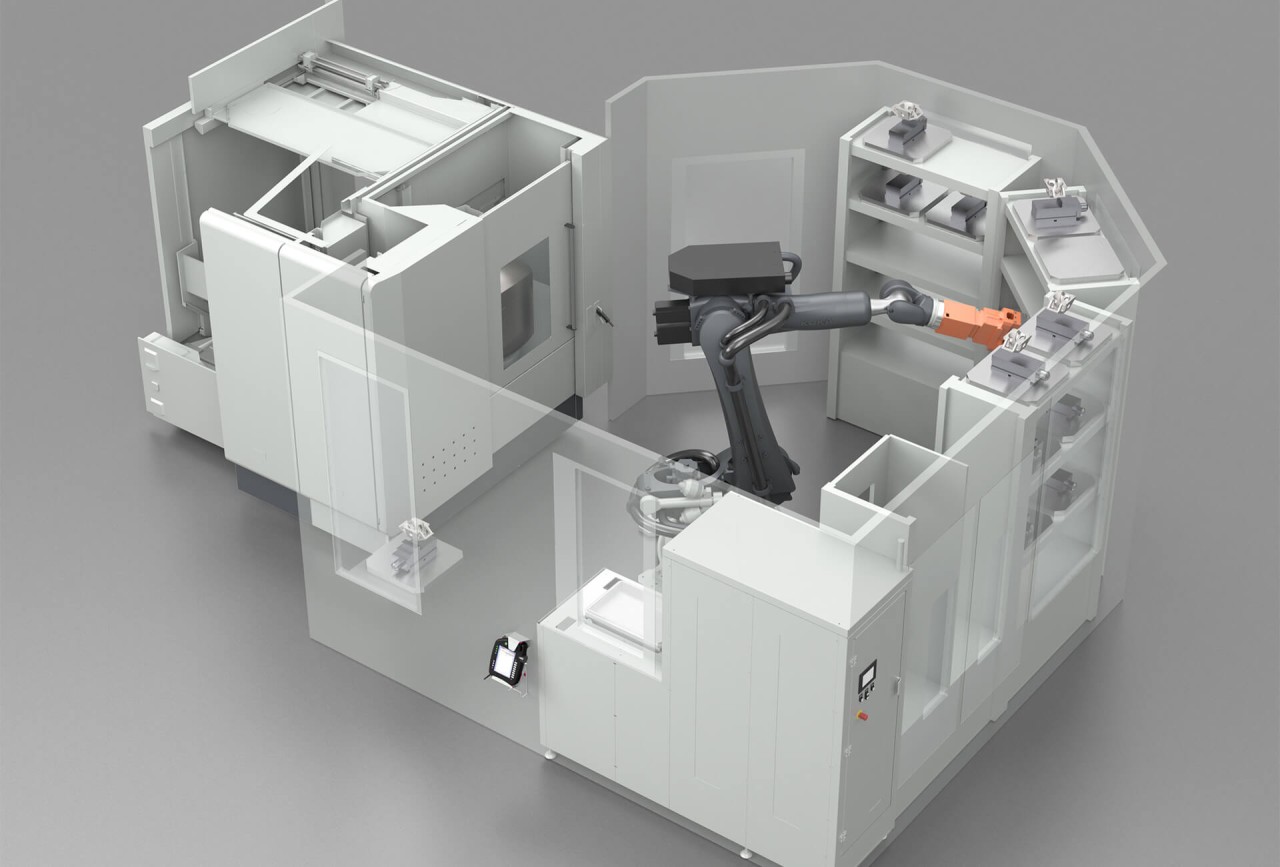
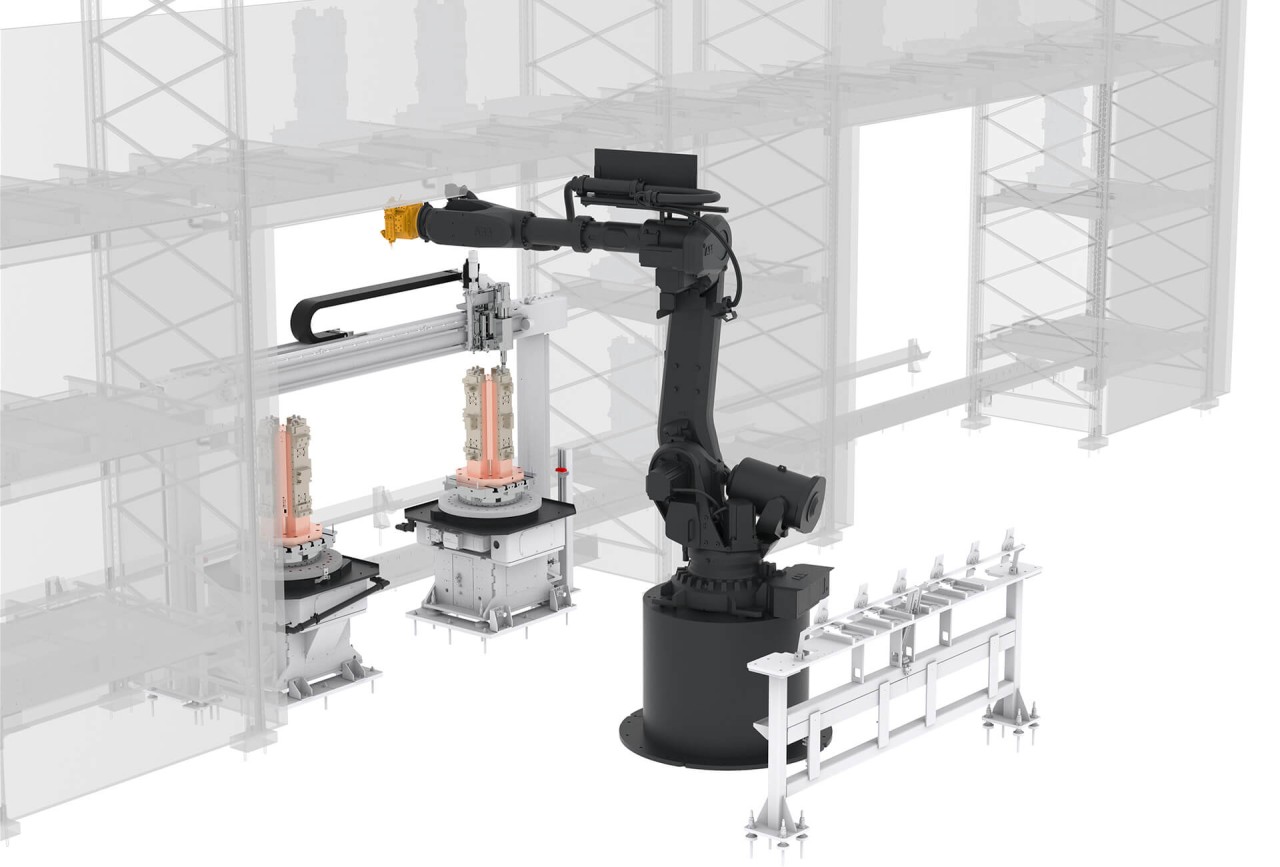
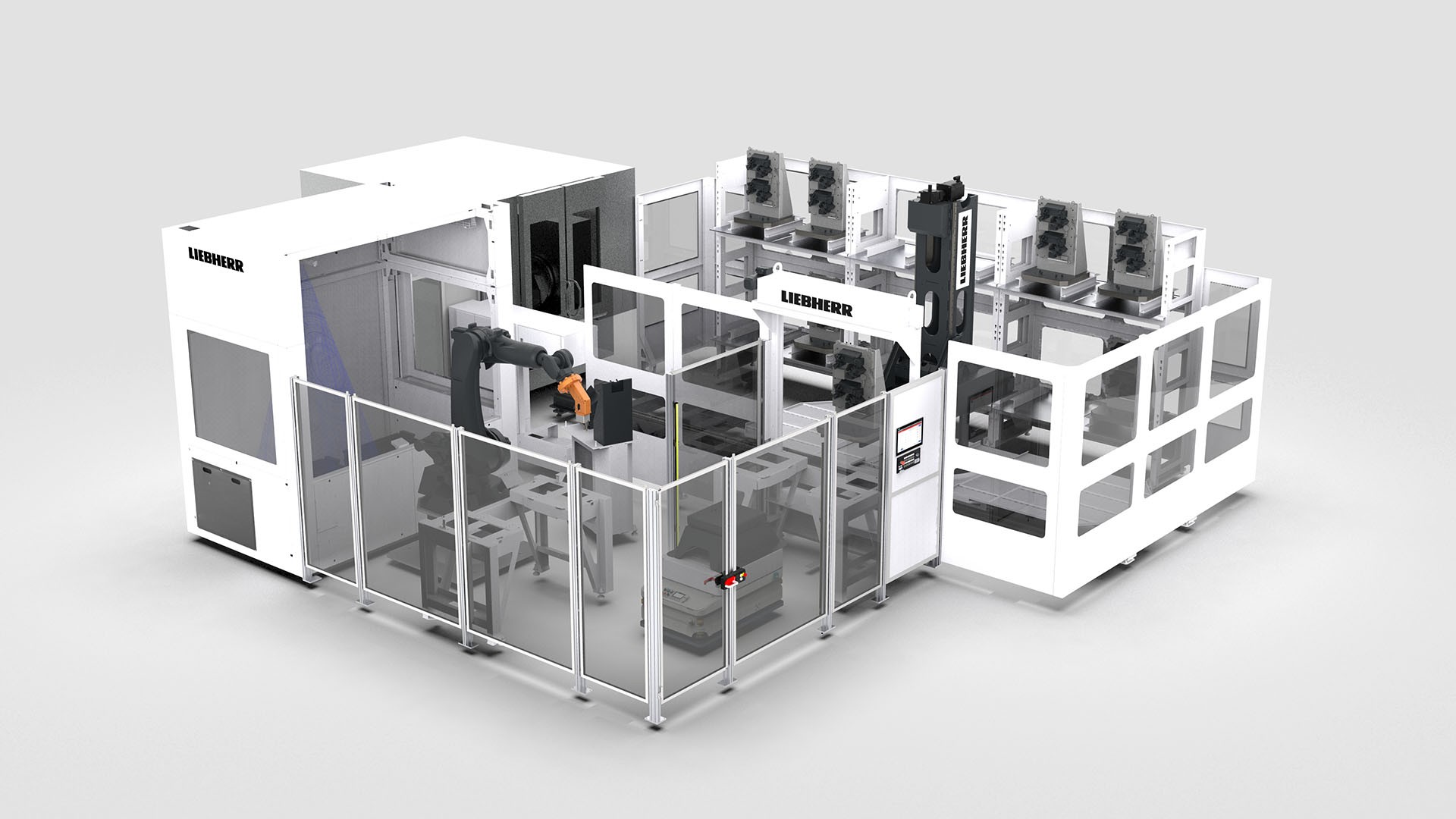
Robot applications impress with their versatility. Liebherr uses the entire bandwidth to implement pick-and-place tasks, bin picking or machine loading. Whether sorting or stacking, picking or storing, we will find the right solution for your automation project. In addition to individual cells, our strength lies primarily in systems thinking. We combine self-sufficient cells into a functional overall system, for example by using automated guided vehicles (AGVs) for automatic material transport between the cells.

Application: Increasing machine uptimes

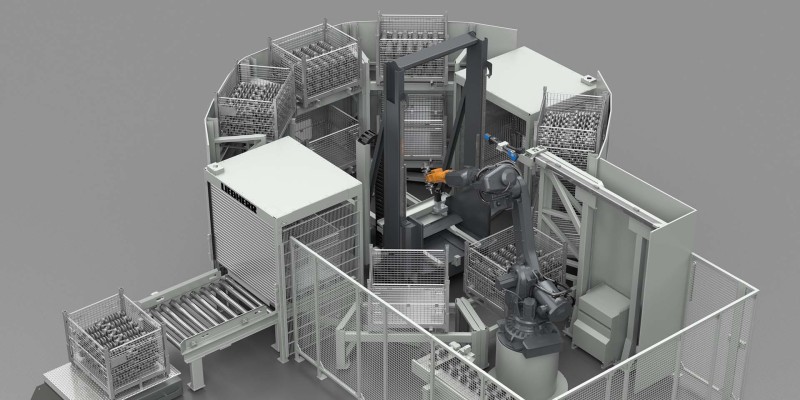
Automatic loading of machines is a classic automation task for robots. Parts can be fed by conveyor belt, in boxes or wire mesh bins. The robot separates the parts and positions them in the machine's clamping fixture. In this way, machining centers, lathes, gear cutting, grinding or rotary transfer machines can be automated and their productivity increased.

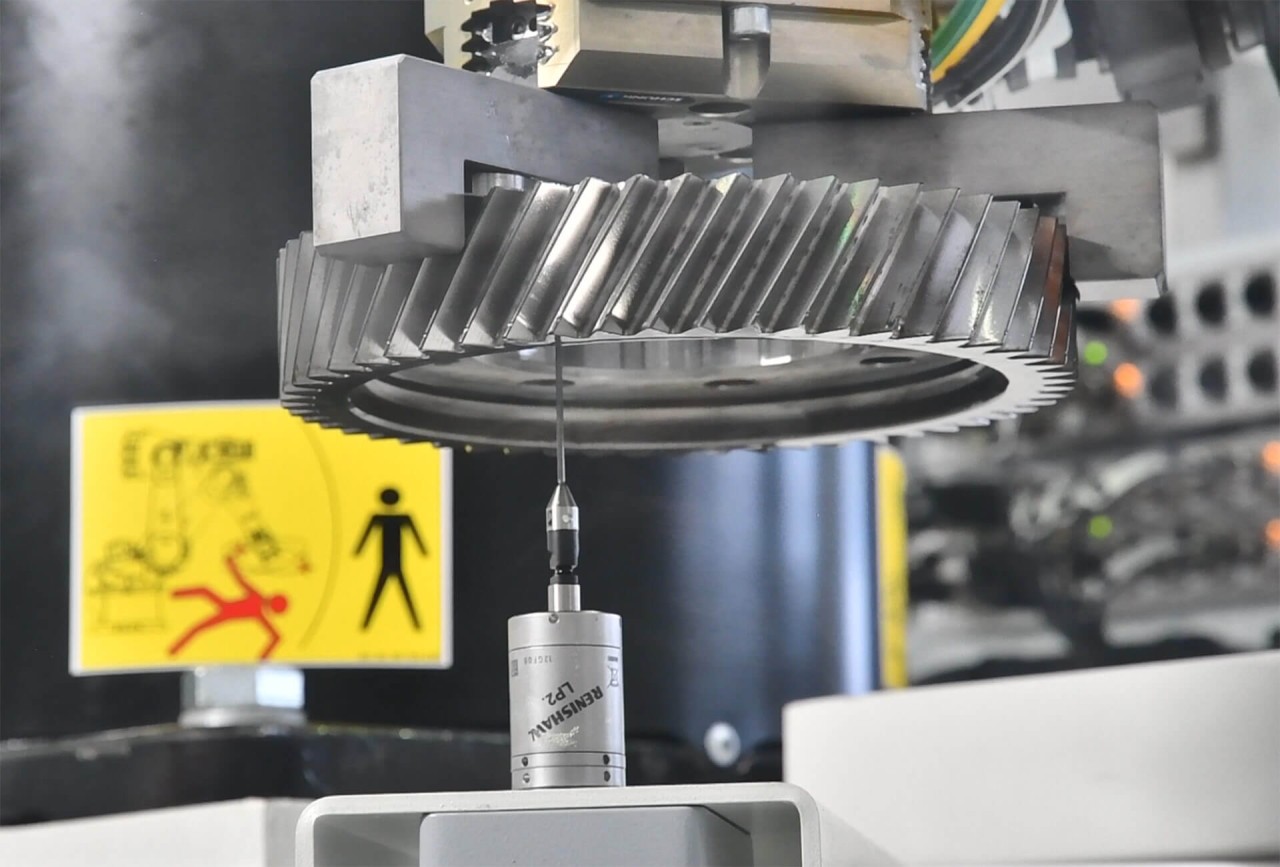
Additional functions can be integrated in a small space: parts can be identified, cleaned after machining, measured and discharged as random samples, for example.

Application: Automated setup

When machines are not directly loaded and setup is to be done outside the work area, operators are usually used to manually load clamping fixtures. This step can also be automated. Workpieces are provided by a feed module, monitored by a vision system if necessary, and correctly oriented and placed on the clamping fixture by the robot. Automatic clamping is mechanical through the use of an automatic screwing unit above the clamping towers. Alternatively, clamping can be hydraulic or pneumatic.

Application: Further increasing the degree of automation

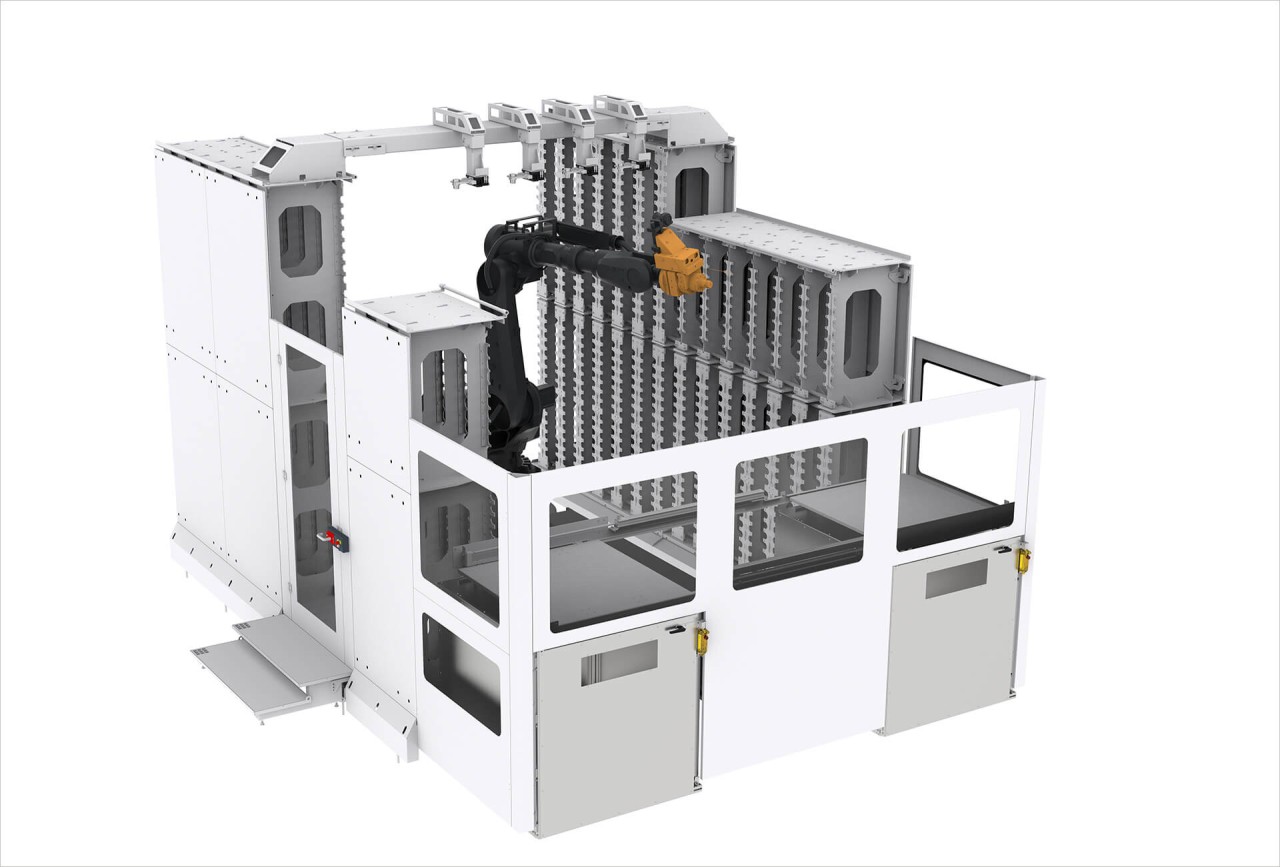
Liebherr can do more than just workpiece handling. We also automate tool management with a Tool Handling System (THS). Tools are handled in a central storage by a robot and distributed to the machines by a distribution system.

This has several advantages:

  • Smaller machine magazines, lower investment
  • Cost saving due to central availability of special and sister tools
  • Higher degree of automation, lower manpower requirement
  • Productivity increase
01/04

Practical insight: automated gear manufacturing
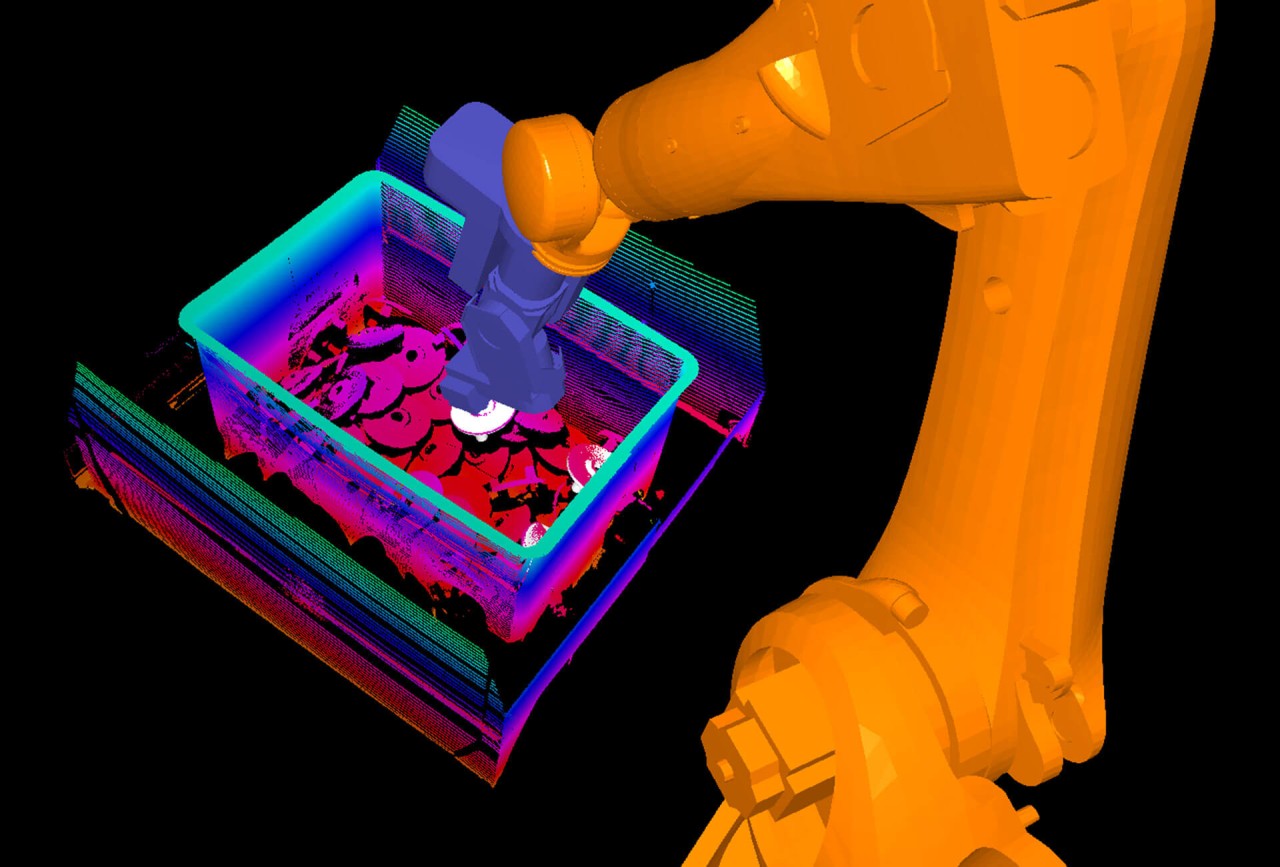
Vision systems: an eye for detail
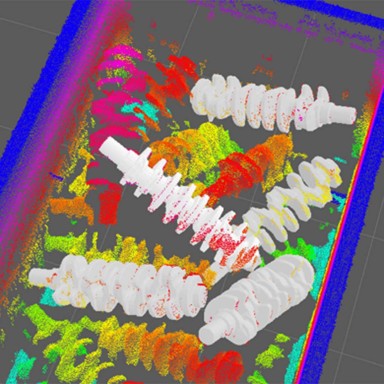
When parts are not always in the same transfer position, vision systems come into play. Whether in 2D for in-plane applications to 3D for random bin picking we integrate the right system. Liebherr not only takes care of the selection, validation, implementation and commissioning of a suitable vision system for you, but also offers its own software and enables customer trials in its own Tech Center.

The right grip for your robot cell

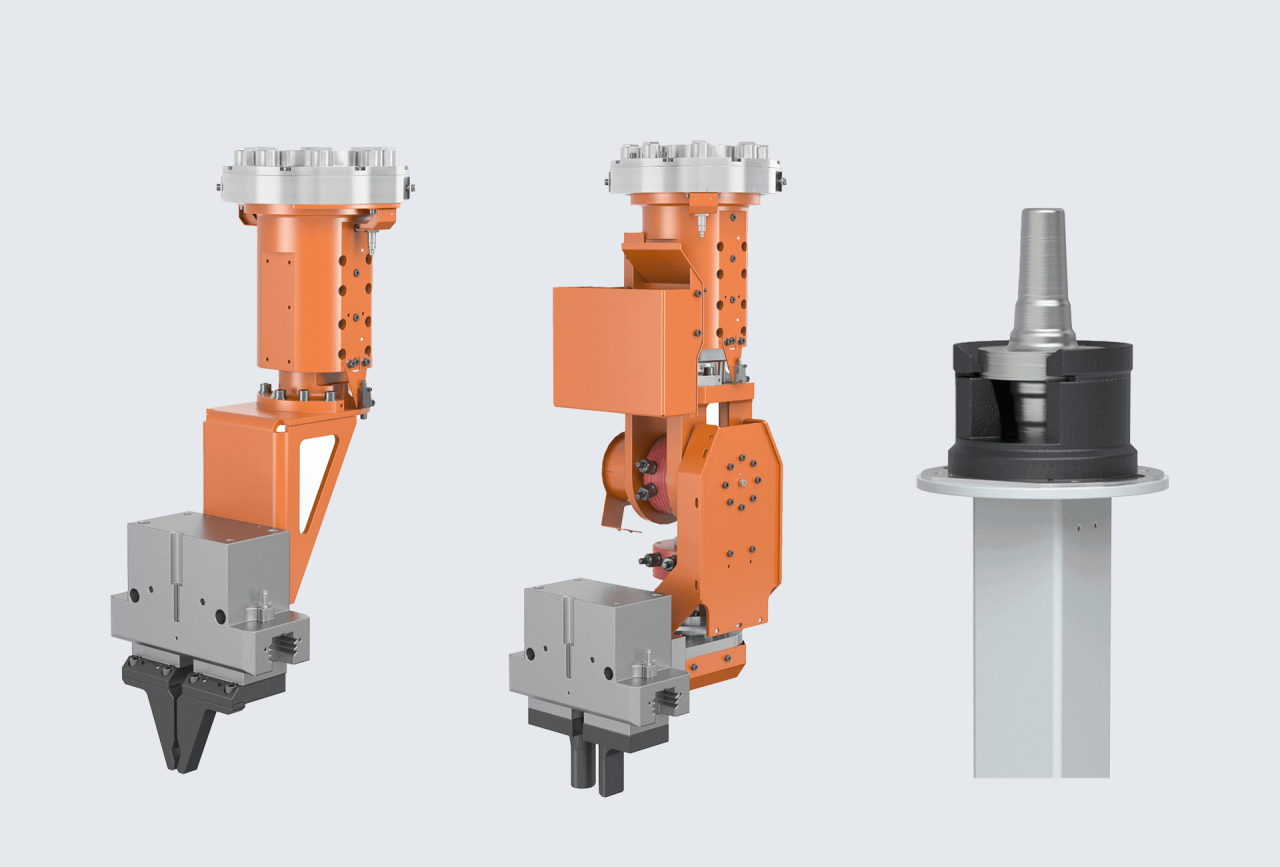
Gripping technology can be a major challenge and a key success factor in ensuring that parts can be removed safely and from any initial position. Our flexible gripper modular system in sizes up to 5kg, 20kg or up to 40kg can be extended by additional compensator units and a 7th and 8th axis, thus offering maximum flexibility. This allows us to reach every last corner of your workpiece carriers. If workpieces have to be turned, additional positioning devices are used for re-gripping. No matter how you turn it: Liebherr makes it possible.

Cell with brains/software competence

When rigidly programmed motion sequences are not sufficient, for example in the case of several machines working in parallel, we make the cell smart. To do this, we work with status-dependent, modular programming and can manage priorities. If the complexity increases further, we can implement full cell control. We also realize customer-specific control requirements for parts tracking such as FIFO and one-piece flow strategies or implement tracking of NOK parts and random samples.

Automation beyond pick-and-place

In addition to transport from A to B, we integrate numerous additional functions into robot cells. Parts can be cleaned, measured and discharged as random samples after machining. In the same way, identification features such as QR codes or RFID chips can be applied and read. Inspection tasks such as hardness testing or geometry control can be added. For example, we integrated a vision system for a customer to visually compare whether the required processing features, such as bores, are present in the workpiece and derive from this whether the process has been carried out correctly. A small inspection function that can prevent major handling problems later on.

01/04

Focus on problem-solving

We are enablers. Do you have a problem? We develop a solution.

With decades of experience, we have already implemented a wide variety of cell concepts. This is why we are able to respond to your requests in a particularly flexible and competent manner. An example of this is the following project, in which we combined a bin-picking application with a workpiece storage unit for the line entry of a crank shaft line.

Knowing beforehand how it will work afterwards

When it comes to automation projects, a certain amount of uncertainty is often involved. Are you implementing a particular cell concept for the first time? Do you lack experience in the application field? Do you have very tight cycle time requirements?

We can eliminate your project's uncertainties in advance with expert advice and comprehensive simulation offerings and know that it will work. We test reach and collisions, loads and gripping situations for every project. Decades of experience and testing capabilities at our customer center round off our portfolio.
Systematic automation solutions

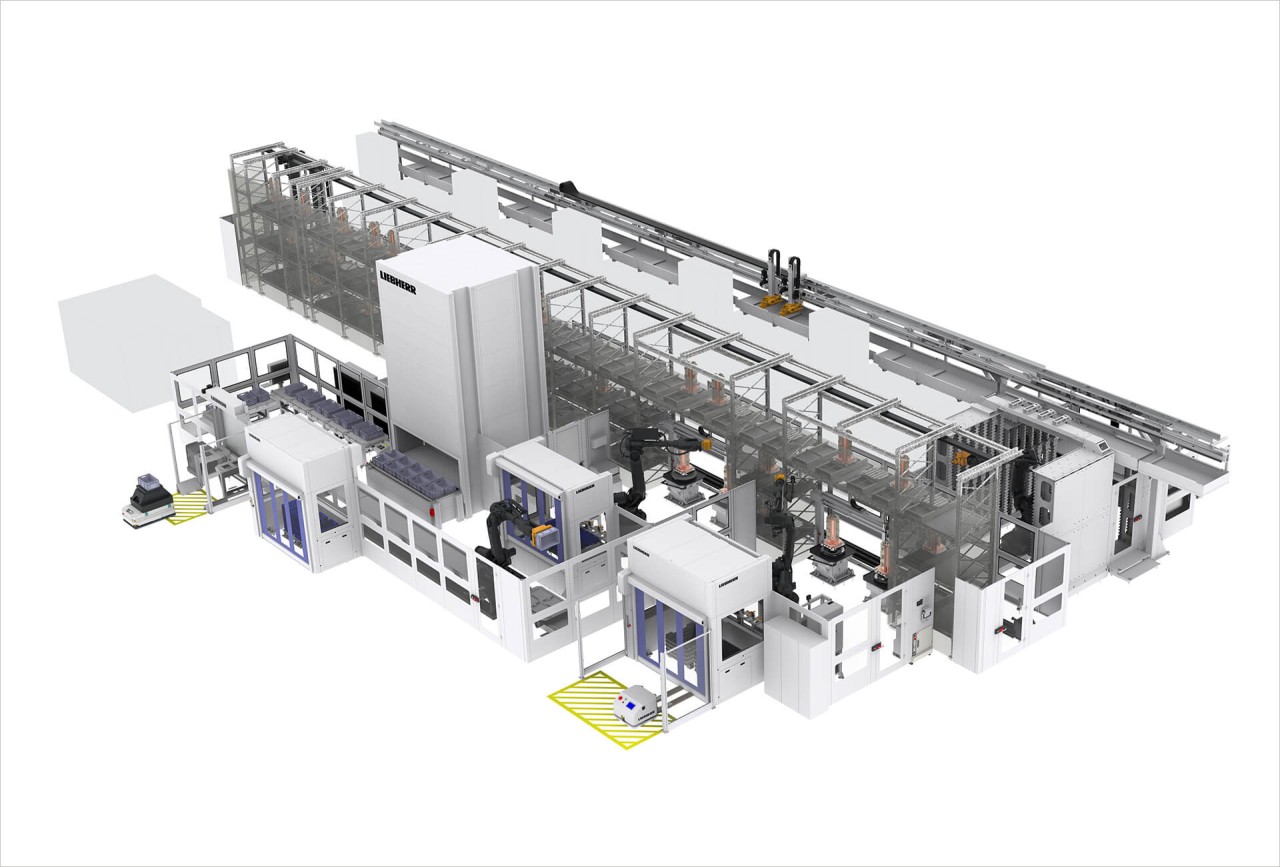
Our special strength: the excellent system and solution competence from Liebherr. We combine a range of products with our many years of experience to produce the right solution for you. This expands your capabilities and allows us to design the perfect flexible manufacturing system for your production.

Your contact for Flexible Robot Cells

We will be happy to answer your questions about Flexible Robot Cells.

Jürgen Groß

Sales Director Cells & Flexible Manufacturing Systems, Automation Systems, E-Mobility

Liebherr-Verzahntechnik GmbH
Kaufbeurer Straße 141
87437 Kempten
Deutschland

Tel.: +49 170 950 09 89
E-Mail

More information about flexible cells

Read exciting articles from our customer brochure
You might also be interested in

Downloads

For more information on gear technology and automation systems, please refer to our numerous brochures. Download now!

Pallet handling systems

Discover the diversity of our pallet handling systems, which offer the ideal solution for automating machining centers.

Quality and sustainability

Protecting people and the environment is firmly rooted in our company guidelines. Find out more.