Earthmoving

Assistance Systems Crawler Dozers

Digitalisation, Assistance Systems & Machine Control

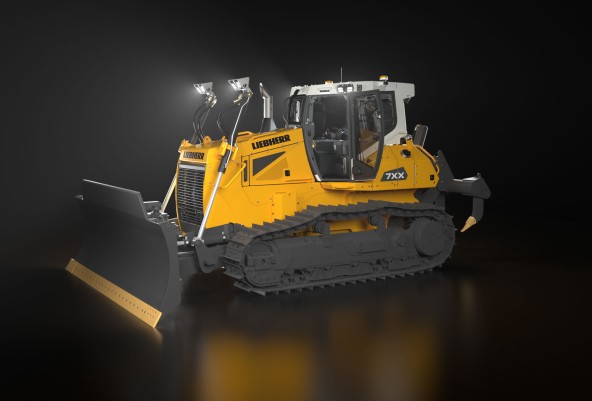
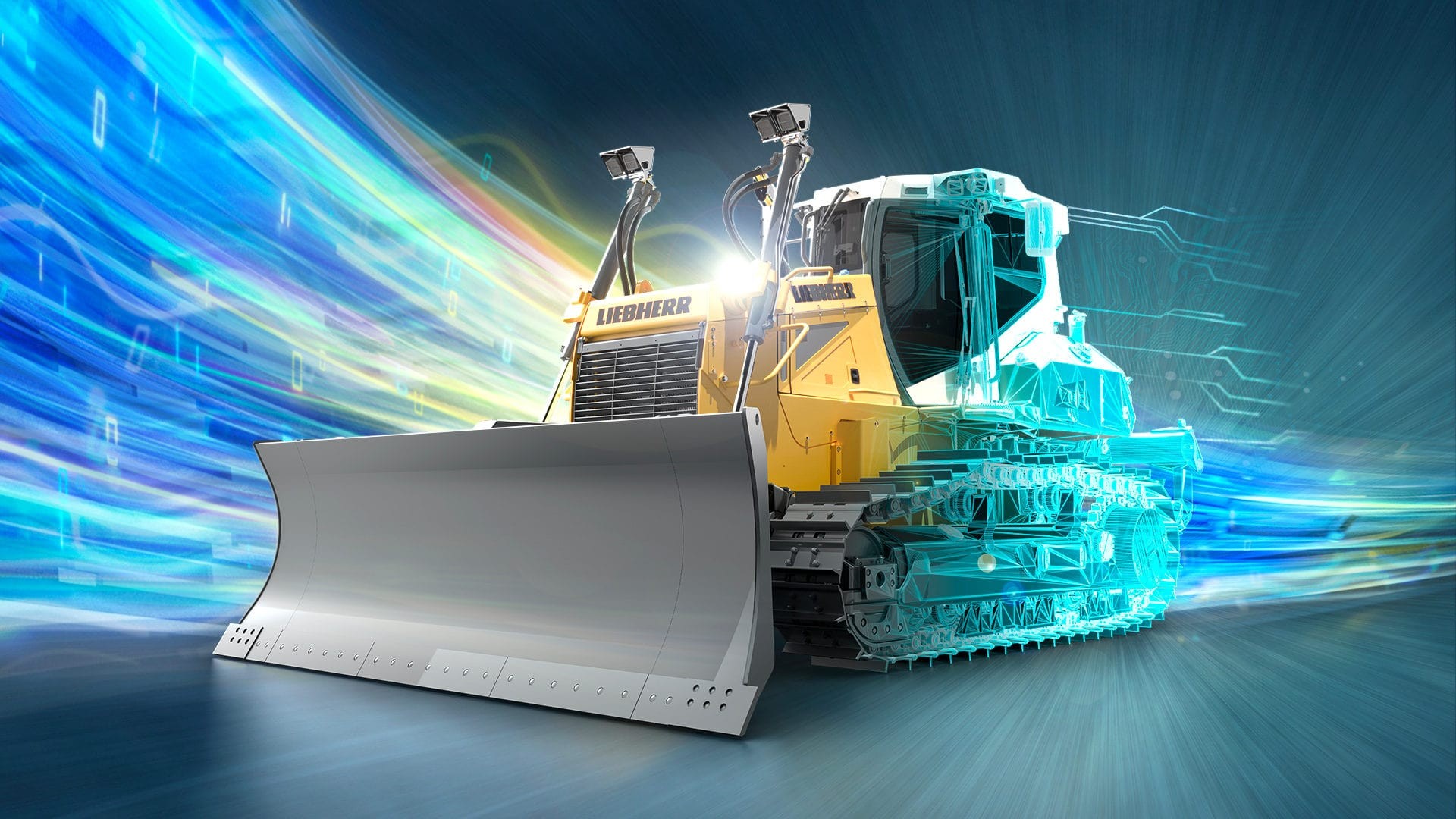
Liebherr driver assistance systems - increased performance through efficient crawler dozer blade control

In the face of the constantly increasing pressures on time and costs, construction machines have to meet the highest demands, both in terms of speed and precision in operati-on, in order to win through. For this very reason, automatic machine control and operator assistance systems are being used ever more extensively to increase the productivity of operator and machine.

These make use of digitised planning data to automatically control the machine equipment when removing or laying down material. With the assistance of the latest technology, it is possible to produce complex surface areas and exact grading both quickly and precisely.

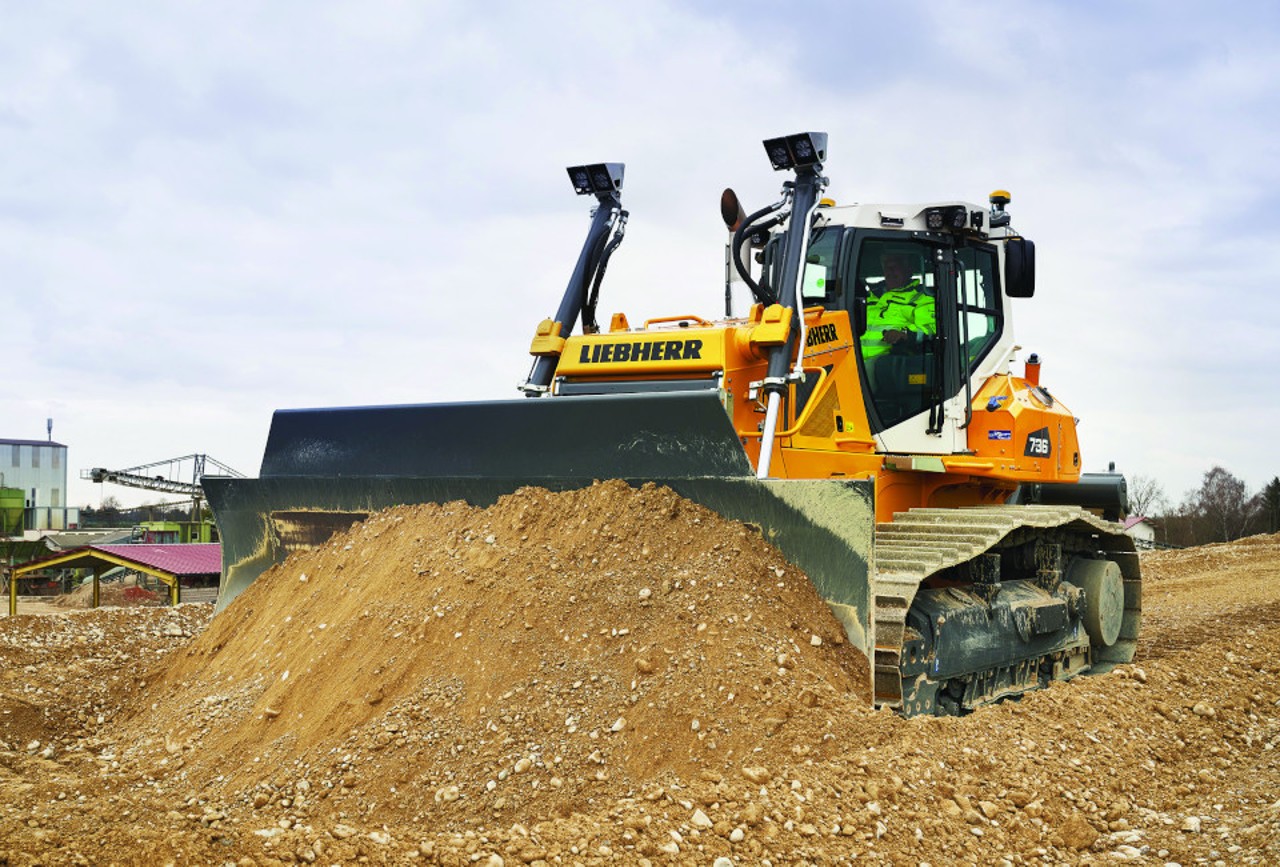
Because of their innovative drive systems, Liebherr crawler dozers are ideally suited to the application of automatic con-trols. The hydrostatic drive ensures smooth propulsion, free from gear changes and jerky movements. Optimum grading properties are ensured due to the long running gear and the perfect match of front equipment to the operating hydraulics and the base machine. The low centre of gravity enables safe operation even on steep slopes and steeply inclined terrain.
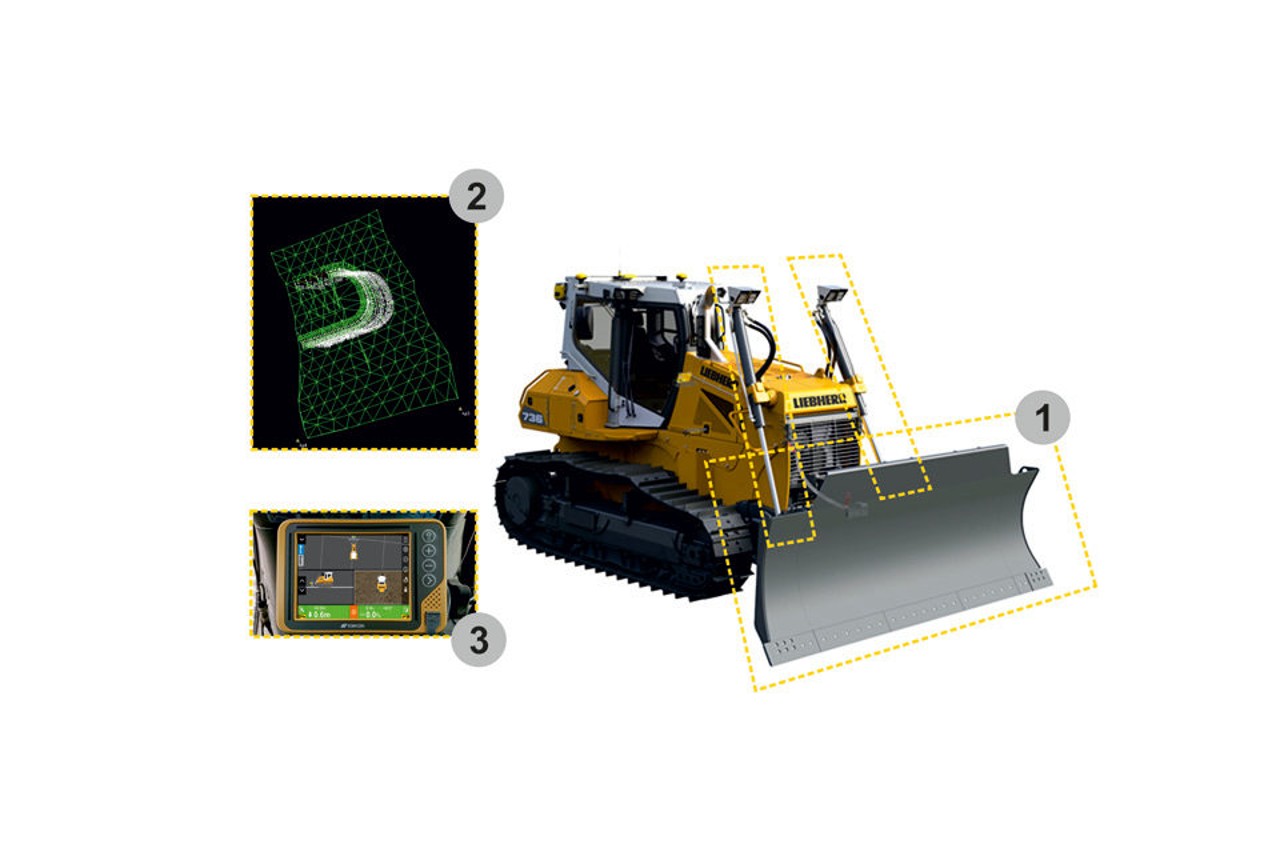
How driver assistance systems work
1) Continuous detection of the blade position: The integrated sensors continuously determine the current position of the blade.

2) Comparison of blade position with planning data: The target surface is specified digitally (terrain model) or via laser beams. A control unit compares the actual and target values and transfers control instructions to the crawler dozer operating hydraulics.

3) Active guidance of the blade: The lifting height and tilt of the blade are automatically monitored and controlled, thus enabling complex 2D and 3D terrain models to be modelled directly.

Advantages of using driver assistance systems

  • There is a significant reduction in the use of pegs and guide wires as well as personnel costs.
  • There is no loss of time due to control measurements or time-consuming rework.
  • The resultant fewer machine passes mean less wear and tear and less fuel consumption.
  • Precise laying down of material ensures economical material use.
  • Machine efficiency is increased and projects are processed faster.
01/02

The right control technology for every application

The new assistance systems in generation 8 crawler dozers include three levels of driver support: Free Grade for active blade stabilisation during fine grading; Definition Grade for automatic blade positioning when creating simple 2D surfaces, 3D Grade from Topcon as optional GNSS machine control for modelling complex terrain forms. In addition, the option is available to order factory installed ready-kits, which allow a range of machine control systems from Trimble and Leica to be retrofitted in the field.
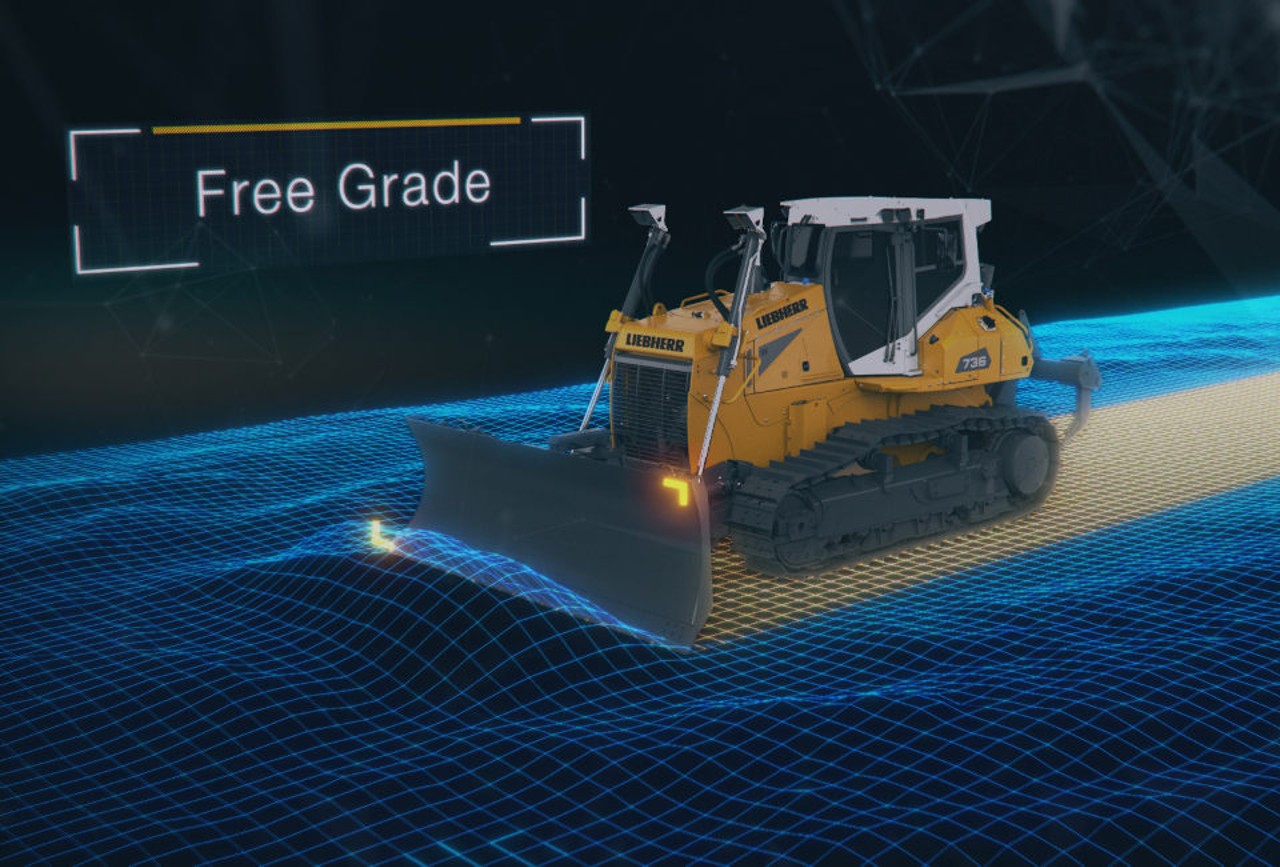
Free Grade

  • Active blade stabilisation (pitch and roll)
  • Simplified creation of level surfaces, ramps, dams and fine grading
  • Increased productivity with simultaneous time saving
  • Improved quality with less experienced operators and less stress for experienced operators
  • Greater safety on the construction site as more attention is given to what is going on around the machine
  • Fallback solution in place of laser or GPS systems

Applications:

  • Creation of flat surfaces
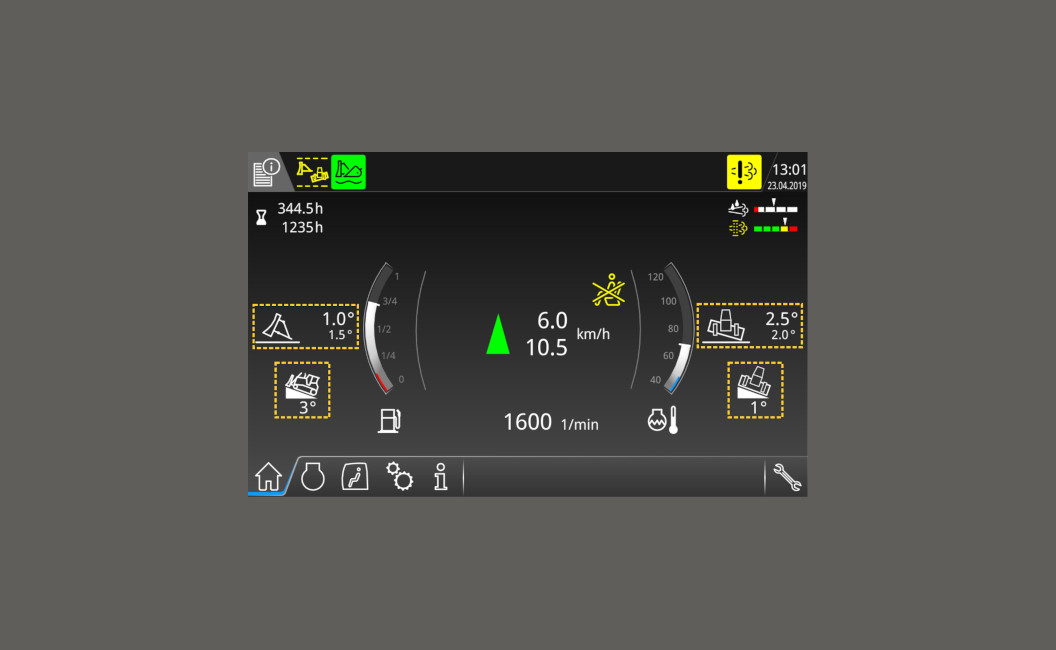
  • Graphical display of the blade and track position

Free Grade functionality

The basic functionality is provided by the continuous display of the current blade inclination and the spatial position of the dozer. Typically, two sensors (IMUs) are installed. This allows capture of the blade position in terms of height and inclination.

The Liebherr control unit is located in the cab, within the new intuitive touch display, and thus within easy reach and sight of the operator. It processes the signals and keeps the blade stable. As a result, undulations during fine grading can be prevented.

01/02

Definition Grade

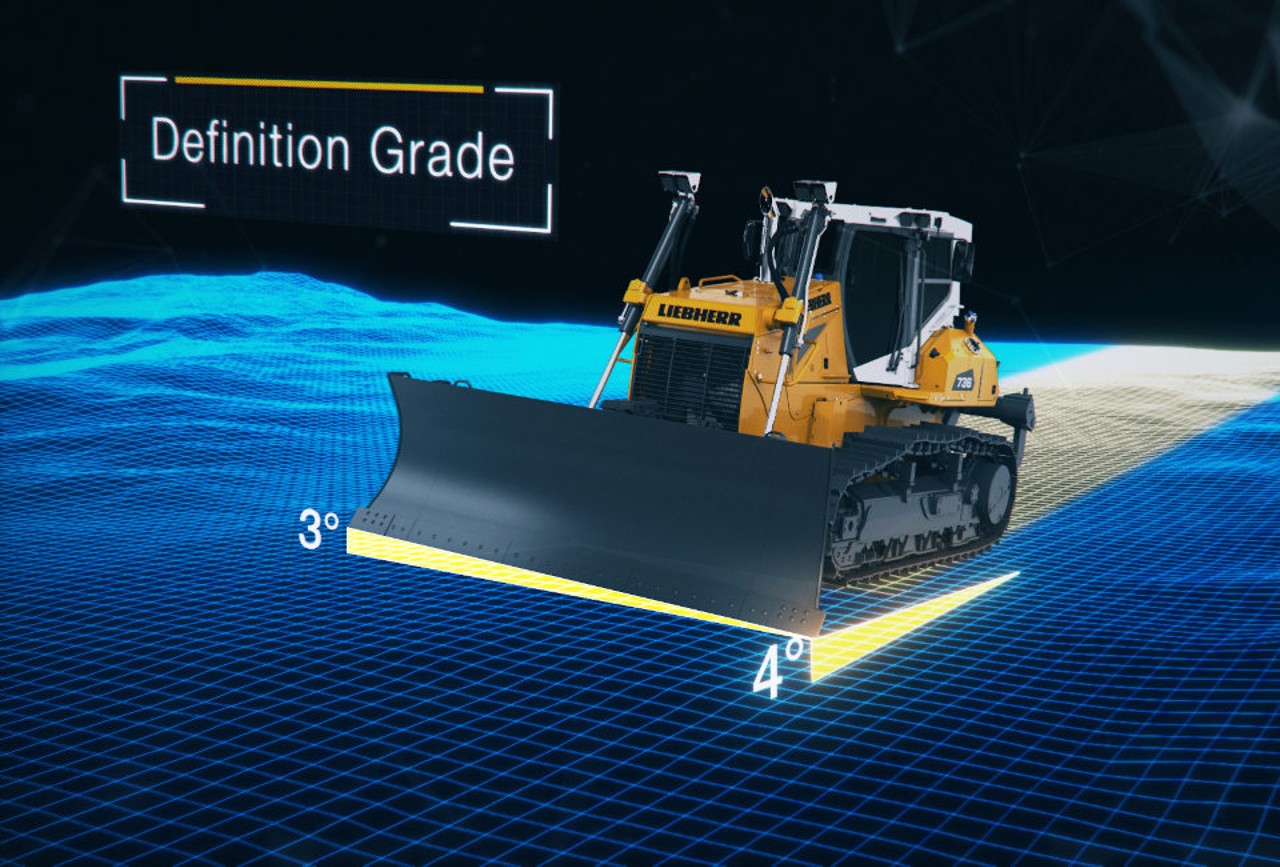
  • Automatic blade position control at a specified target angle for modelling simple 2D surfaces
  • Cost savings as there is no need for additional equipment
  • Operation is independent of local conditions
  • Increased productivity with simultaneous time saving
  • Greater safety on the construction site as more attention is given to what is going on around the machine

Applications:

  • Creation of horizontal or inclined planes
  • Suitable for small to medium-sized construction sites
  • Used for landscaping sports fields, constructing roads and car parks and constructing industrial and commercial facilities and halls, etc.

Definition Grade functionality

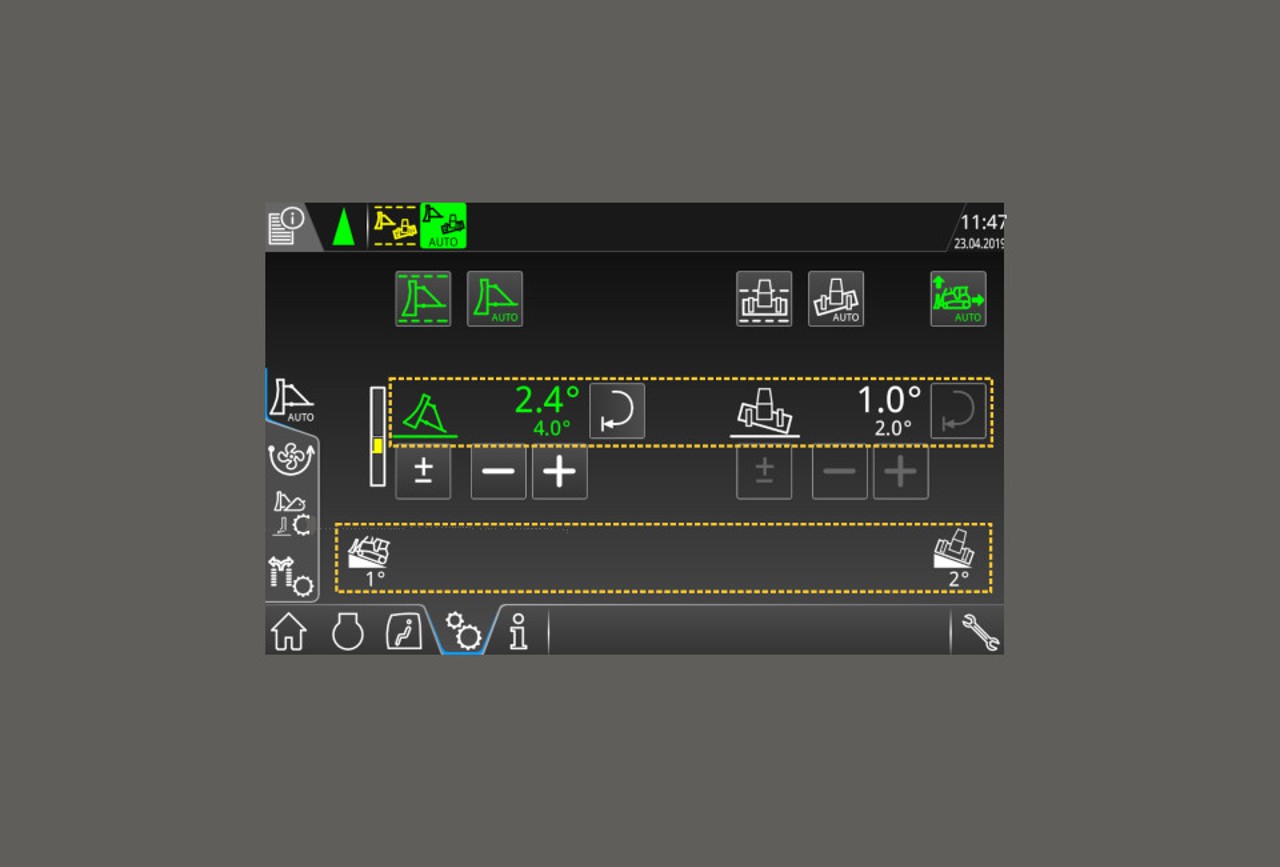
Typically, two sensors (IMUs) are installed. This allows capture of the blade position in terms of height and inclination. The Liebherr control unit is located in the cab, within the new intuitive touch display, and thus within easy reach and sight of the operator. It computes the signals and automatically controls the lift and tilt of the blade using the operating hydraulics.

The operator only needs to steer the dozer in automatic mode, when moving forwards and backwards, while the machine control automatically guides the blade. As a result, a grade is created corresponding to the desired target inclination.

01/02

3D Grade

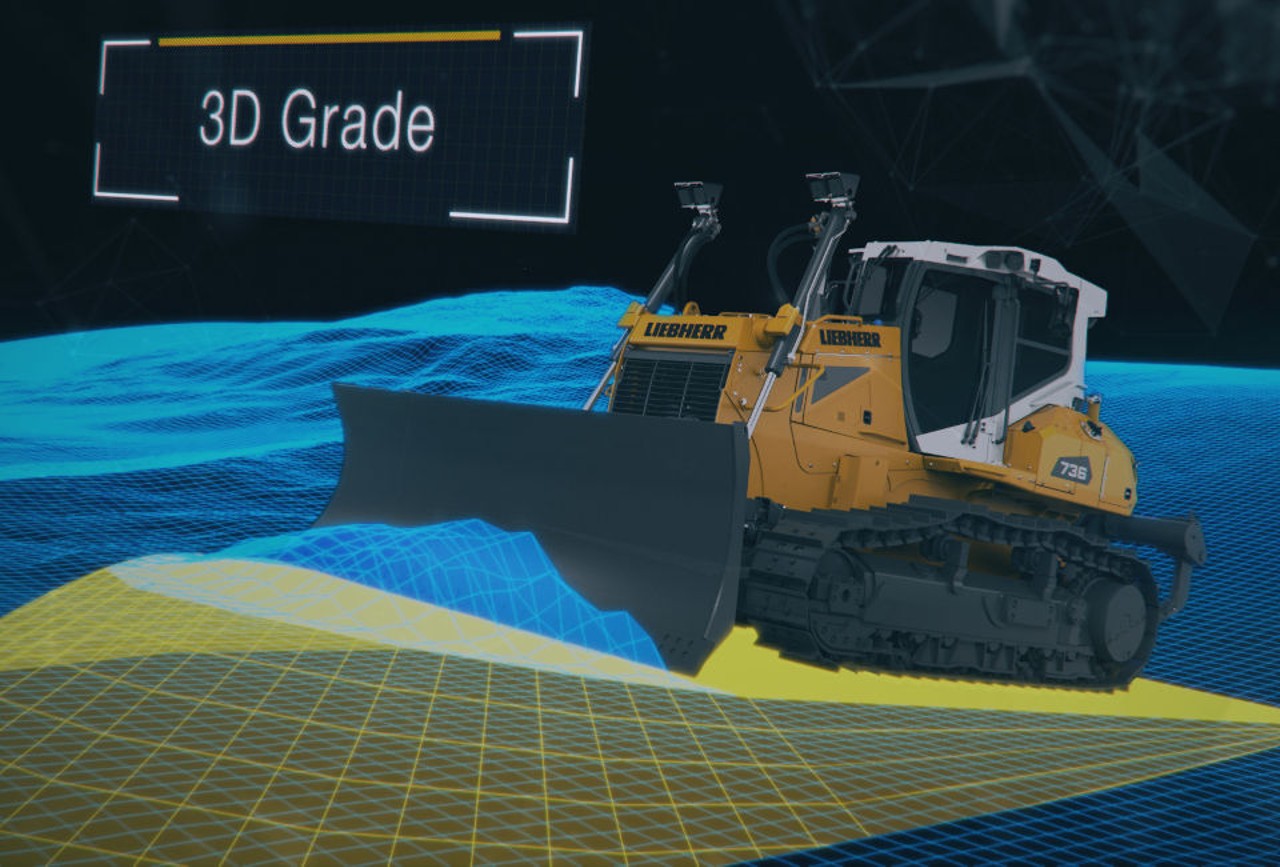
  • Factory fitted, roof mounted grading system (Topcon)
  • Automated 6-way blade control
  • Modelling of complex 3D site models
  • Exact positioning of the blade relative to a target profile (terrain model)
  • Theft protection, no assembling or dismantling of the mast
  • Available pre-calibrated ex-factory
  • Support and service through your local Liebherr sales partner
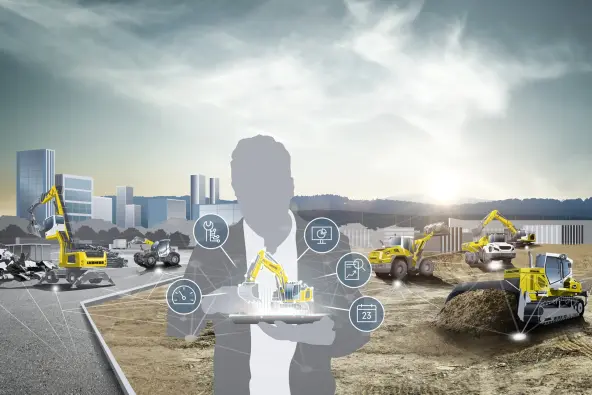
  • Smart: Full integration into Construction Site 4.0

Applications:

  • Creating large grades and complex three-dimensional surfaces.
  • Suitable for medium to very large construction sites.
  • Used for road and railway construction, landscaping golf courses, constructing large industrial facilities, and in earthworks and landfill construction, etc.

3D Grade functionality

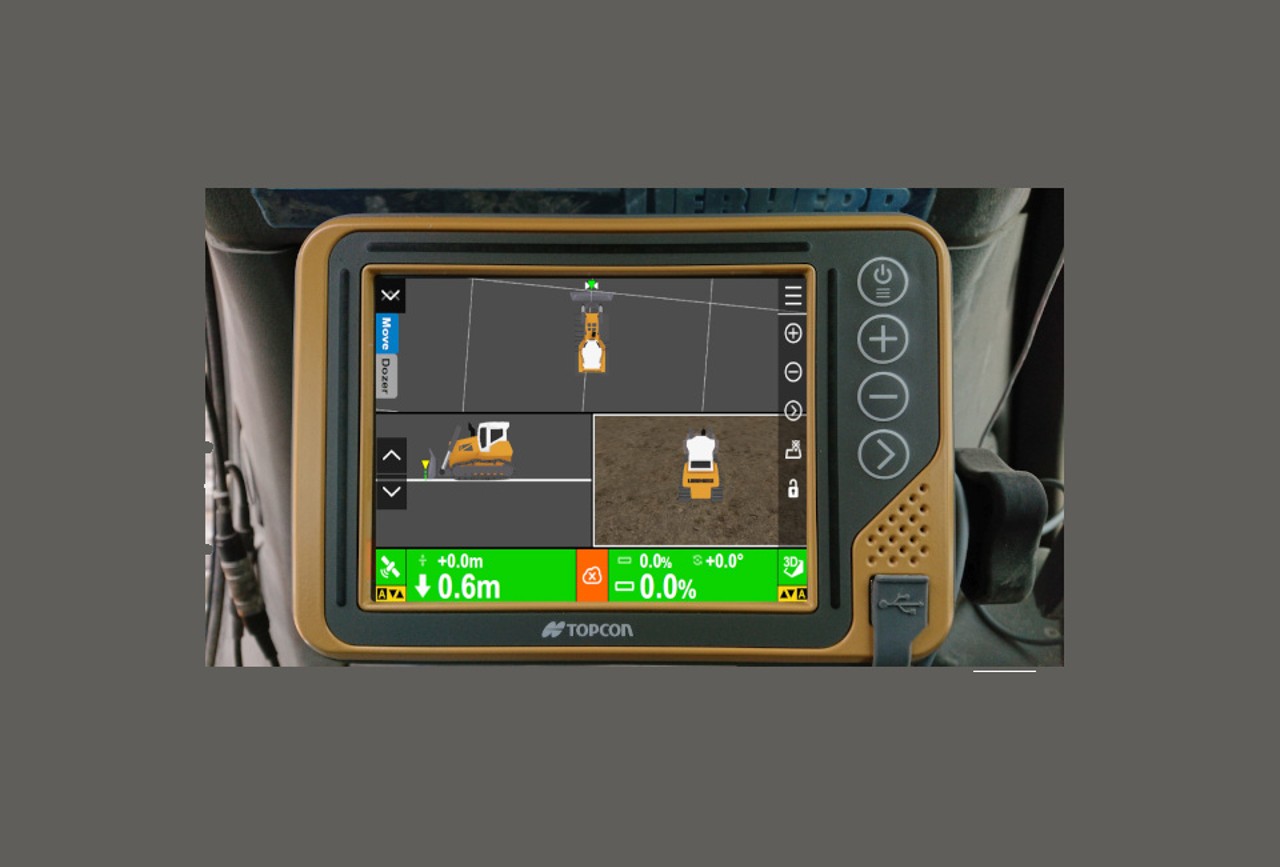
The antennas mounted on the cabin roof receive signals from several GPS or GLONASS1 satellites and therefore determine the position of the blade. A base station is necessary to achieve the required accuracy. Its position is precisely measured and calibrated when setting up the construction site. Increasingly, companies are also using correction data from regional providers, which can be called up via GSM or the Internet. Measurement data of the desired terrain profile are made available in standardised formats and are transferred to the control unit.

The control unit processes the signals from GPS receivers, tilt sensors and base stations and compares them with the stored default values from the site model. It controls the lift and tilt of the blade automatically through the operating hydraulics. This creates a profile that corresponds to the specified terrain data.

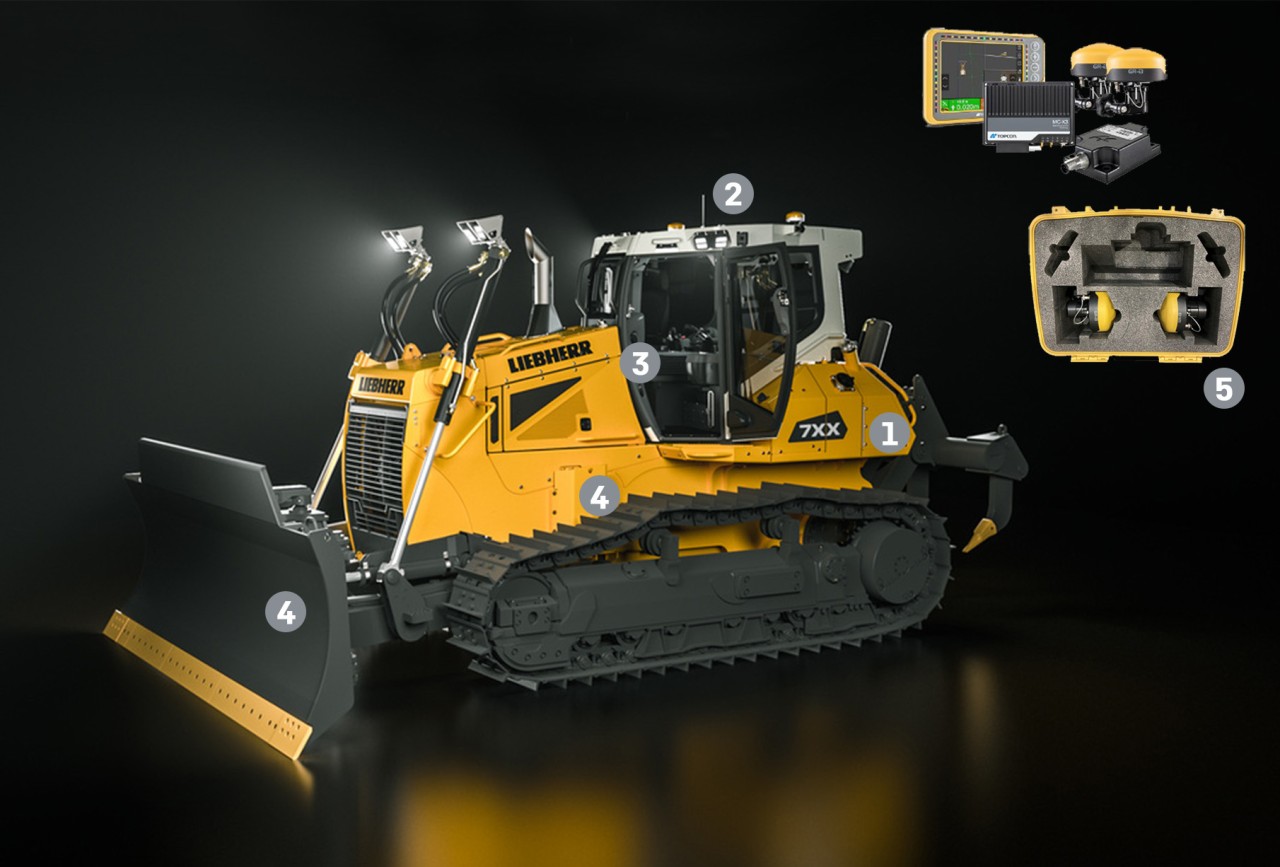
3D Grade Topcon Components

1) Communication unit and CPU (MC-X3):

  • for data transmission and for determining correction data via the Internet and radio
  • for processing all data of all components and for continuous calculation of blade position

2) Two GNSS receivers (GR-i3F): to receive all satellite systems and to precisely position the dozer and the blade

3) Intuitive display (GX-55/75): to display and control all key parameters

4) Two sensors on the blade and one sensor on the chassis (TS-i4 IMU): for measuring acceleration and angles of movement and for maintaining the blade in the target position

5) Transport case: serves to protect the GNSS antennas and GX55/75 display (can be ordered as an option)

01/03

Contact us!

Find your Liebherr contact partner