Opportunities without borders – international apprenticeships and training as a solution to the shortage of skilled labour
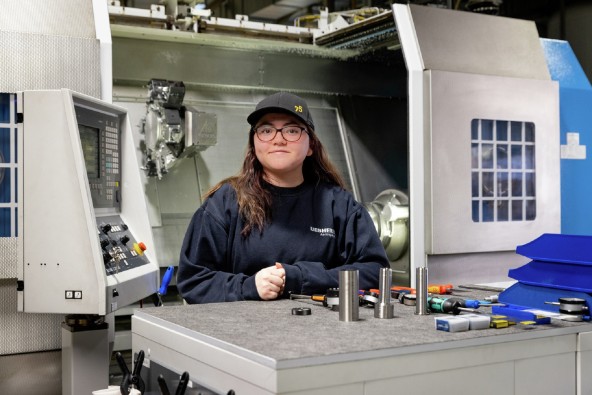
It’s six in the morning and the early shift at Liebherr Aerospace in Lindenberg (Germany) is just starting. A young woman is walking through the production halls where a variety of aerospace components are manufactured. Even though the sun is yet to rise, she waves cheerfully to her colleagues. Upon reaching a large CNC turning and milling machine – her workstation for the day – she puts on her gloves and safety goggles and skilfully retools the machine. Victoria Santacruz has arrived – at her workstation, at Liebherr and in Germany. And she has demonstrated courage and determination along the way.
The path that led to Liebherr
In her final year at school in Ecuador, Victoria came across the PAM programme, which is run by the Deutsche Gesellschaft für Internationale Zusammenarbeit (GIZ) GmbH, or 'German Society for International Cooperation'. PAM – or to give it its long name, ‘Partnerships for Development-oriented Vocational Training and Labour Migration’ – is a programme that connects talented young people with German companies in urgent need of apprentices and skilled workers. Liebherr is involved in the programme and has already had many positive experiences through it. Tanja Stadler, former head of the Lindenberg Education Centre, sees it as the perfect way to fill job vacancies. ‘Giving young, dedicated people the opportunity of a solid apprenticeship and then employing them as skilled workers benefits both sides.’ The aerospace and transportation systems product segment is not immune to the shortage of skilled workers, and finding apprentices and skilled workers can be a challenge. ‘Even if some of the apprentices from the PAM programme leave us again after a few years, we know that they are returning to their home countries as well-trained people who can put their new skills to use there.’
Foreign candidates and local candidates face a similar application process. ‘Having looked through the CVs, we invited some candidates to an online interview. Anyone who has successfully completed the programme already has a good understanding of German. So, as is the case for all the other applicants, we’re looking for technical and personal suitability at this stage,’ explains Tanja Stadler. The only thing we skip is the on-site practical test.
Even if some of the apprentices from the PAM programme leave us again after a few years, we know that they are returning to their home countries as well-trained people who can put their new skills to use there.
The PAM programme
Since 2019, the PAM programme from the Deutsche Gesellschaft für Internationale Zusammenarbeit (GIZ) GmbH has been promoting fair and safe vocational training and labour migration that benefits all sides: Germany, the cooperating countries and the apprentices and skilled workers themselves. PAM is also known as the ‘Partnerships for Development-oriented Vocational Training and Labour Migration’. The GIZ runs the programme in Vietnam, Jordan and Ecuador on behalf of the German Federal Ministry for Economic Cooperation and Development (BMZ).
Minor dialect hurdles and lots of support
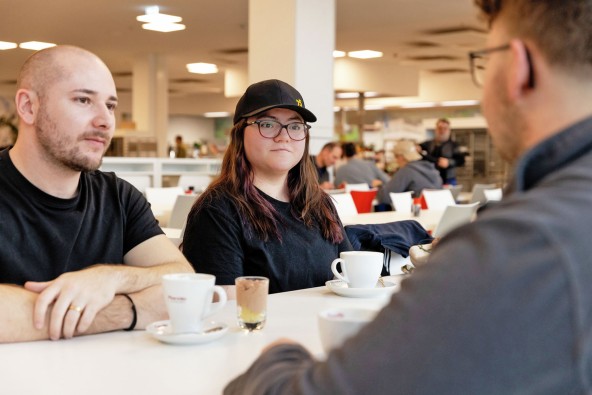
It was not by chance that Victoria Santacruz applied specifically to Liebherr. ‘I already knew about Liebherr. The company is known worldwide and is even represented in several countries in South America,’ said the 21 year old. And she knew even more about the job of an industrial mechanic. Her father is a mechanic and has his own workshop where Victoria was able to gain some initial experience in the field. The only thing she wasn’t sure about, was what to expect in Germany. Much as the PAM programme prepares the future apprentices and skilled workers well – they learn the language, cultural differences and are given support when applying for their visas – it wasn’t until Victoria Santacruz had actually arrived in Lindenberg that she learned about the idiosyncrasies of the region. ‘For example, people greet each other here by saying “Servus”. I’d never heard that before.’ But despite having to overcome the minor hurdle of the Allgäu dialect, she was welcomed with open arms right from the beginning. Culinary differences are a hot topic during breaks. In the company restaurant, Victoria Santacruz has not only discovered Käsespätzle – her new favourite German food – but has also told her colleagues all about the delicious food from home. Her favourite is Encebollado – a popular Ecuadorian fish soup. Even beyond break times, the ‘PAM apprentices’ get a lot of support from Liebherr. ‘Of course, a bit more support than usual was needed at the beginning. We helped them to handle important official matters, set up bank accounts and take out mobile phone contracts. But they have all settled in very quickly, were open-minded and asked the right questions,’ said Tanja Stadler.
A successful outcome
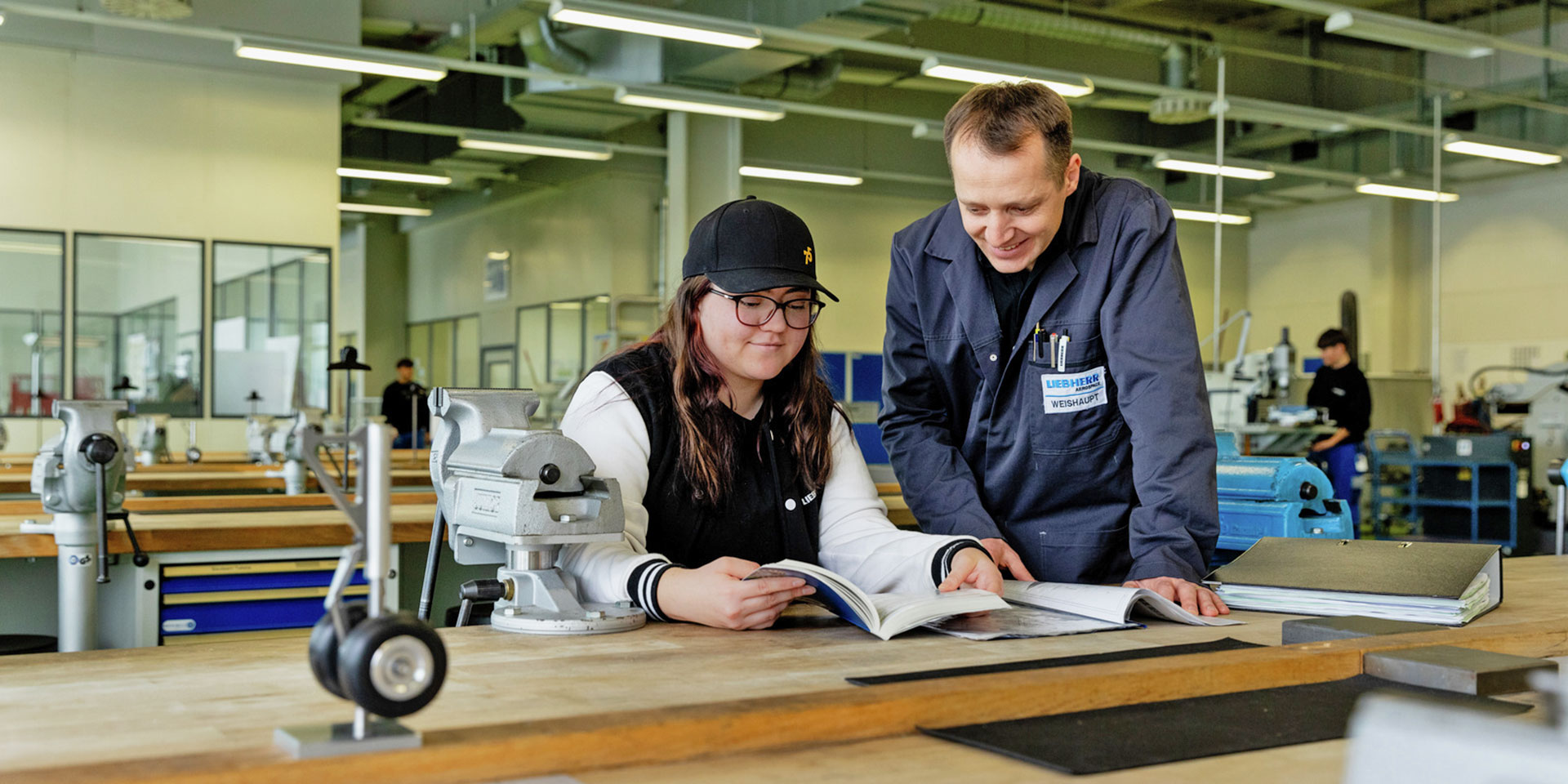
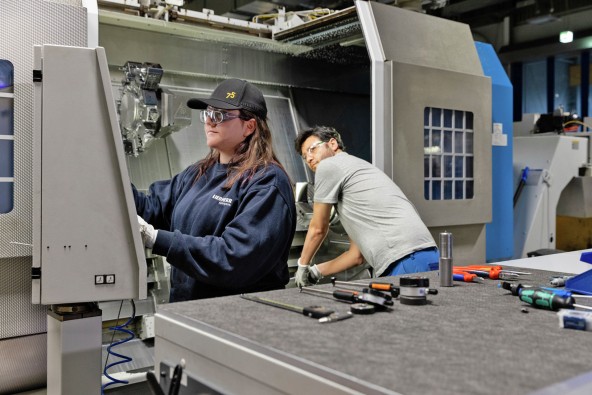
Over the last few years, Victoria Santacruz’s training at Liebherr-Aerospace Lindenberg GmbH has turned her into a true expert in component production. She has learned to complete turning, milling and assembly tasks and is able to maintain and commission entire production plants – making her a real production all-rounder. And the cherry on the top of this cultural exchange success story? Anyone who achieves a certain average grade at the vocational school and makes an impression in their training company has the option of reducing their training period and therefore accepting a permanent position sooner. ‘Victoria performed amazingly well and with eagerness throughout her training and she deserves the reduction in her training period,’ said her trainer, Stefan Weishaupt. Victoria Santacruz, who enjoys reading and crocheting in her free time, and has now also discovered a love of hiking, will be staying with the Liebherr team in Lindenberg. ‘I’m looking forward to my time after the training. I really enjoy working on the machines. I like working with the different materials and I especially enjoy programming the machines.’ Thanks to her courage and curiosity, Victoria Santacruz can look forward to an exciting future and is proof that it is always worth challenging yourself to push past your limits.
Nine quick-fire questions for Victoria Santacruz
1. What is indispensable in your workplace?
There are so many important things – my PPE (personal protective equipment), my notebook and of course the radio.
2. Favourite dish in the company restaurant?
In the mornings, there’s always a type of sandwich called ‘Seelen’ in the company restaurant – I really like that.
3. How would other people describe you?
Cheerful but quiet, curious and friendly.
4. What are your personal goals for the next few years?
I want to gradually become a better version of myself, discover new hobbies, learn languages, get to know new people and so on.
5. Hobbies?
I like to read, crochet and have also started hiking.
6. What was your dream job as a kid?
I’ve always wanted to become an engineer – someone who designs and develops things that help society to progress.
7. Sweet or savoury?
Sweet.
8. Coffee or tea?
I used to be a big tea drinker, but since I’ve been in Germany, I’ve started to love coffee.
9. Sea or mountains?
Both! The mountains for every day, but the sea for holidays.