

Made with Liebherr
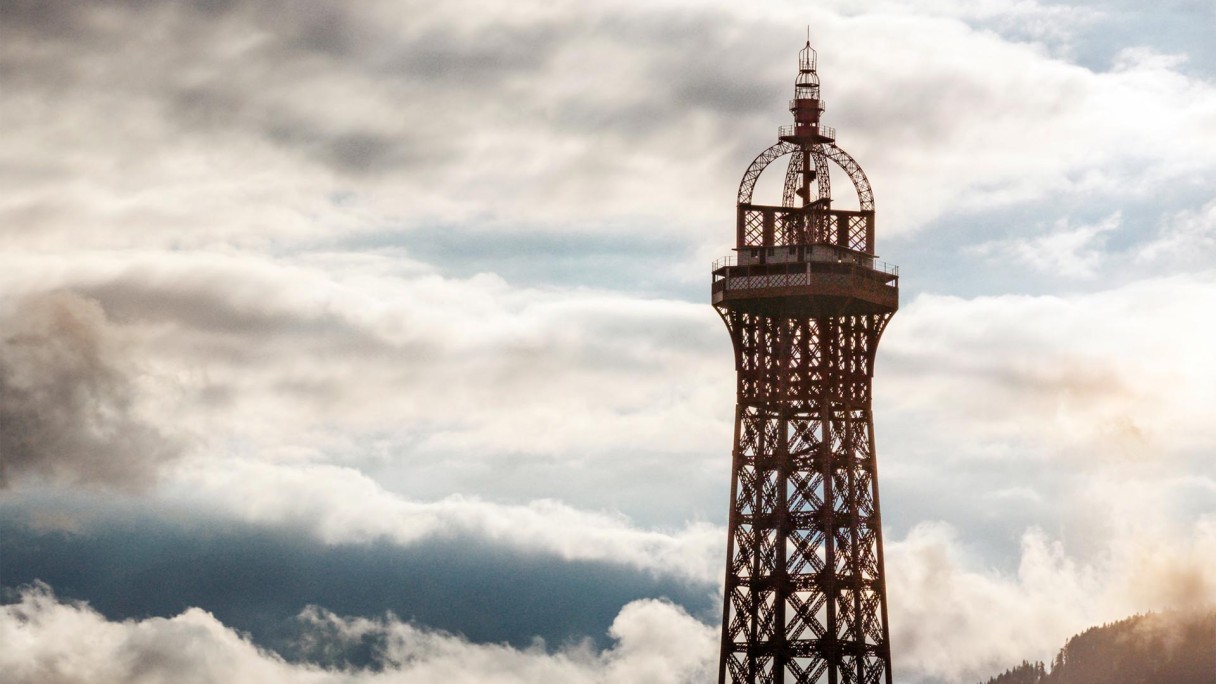
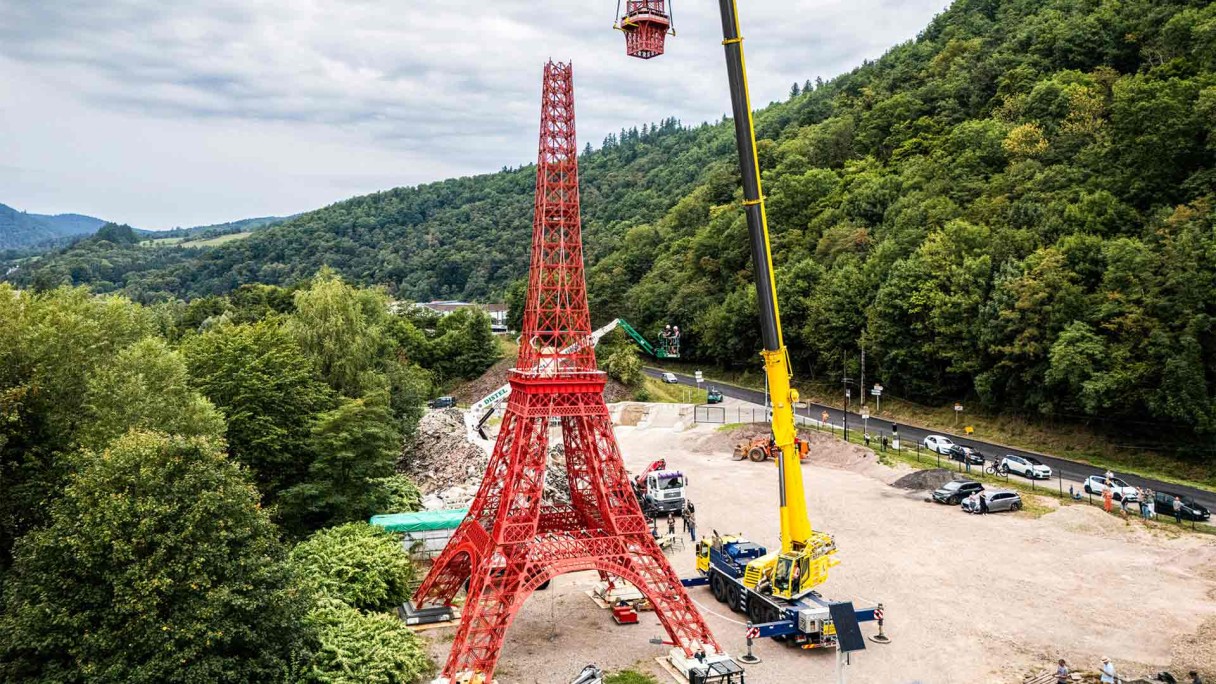
A little bit of Paris has been recreated by a sprightly Frenchman in his hometown, far from the capital. In Sainte-Marie-aux-Mines, a tranquil little town in the Vosges Mountains, an unusual structure for this region has recently been erected: a 30-metre-high replica of the Eiffel Tower – on an exact 1:10 scale. The tower is modelled on the appearance of the original in Paris at its opening ceremony for the World Exhibition in 1889 – history in miniature. The impressive monument was erected by a 78-yearold pensioner. And by a Liebherr mobile crane from the French company Mediaco.
Eiffel’s legacy in a large small format
Anyone who scrolls through the impressively long list of Eiffel Tower replicas worldwide on Wikipedia will quickly realise that not all replicas are too faithful to the original on the Seine. Many of the copies are – let’s say – inspired rather than true to scale.
Not so with the miniature tower by Jean-Claude Fassler from Sainte-Marie-aux-Mines, a small town in the Vosges. For the 78-year-old retired metalworker, precision was the top priority in realising his lifelong dream. He spent eight years tinkering with his own Eiffel Tower on a scale of 1:10, based on copies of the original plans from Gustave Eiffel’s office. He was supported by his grandson Kilian. The two used the machines from the family-owned metal construction company, which Fassler founded 50 years ago and has long since passed on to the next generation. An impressive miniature landmark was created piece by piece from tens of thousands of individual parts. Last August, the moment finally came: a Liebherr mobile crane hoisted the pre-assembled elements into place. Since then, a small, 30-metre-tall Eiffel Tower has been soaring into the sky in the Vosges.
Fassler remained faithful to the very last details of the original plans. Even the colour scheme corresponds to the historical model: the “Venice red”, with which the original tower was painted for the opening ceremony in 1889, adorns the miniature version. Fassler says he even thought about Gustave Eiffel’s private retreat on the third floor – the small flat 285 metres above the ground where the engineer once received important guests in Paris.
An extraordinary project – meticulously planned, masterfully executed and undoubtedly worthy of joining the ranks of official Eiffel Tower copies. What Jean-Claude Fassler has created is more than a mere replica. It is a successful homage to the art of engineering – and to the art of metal construction itself.
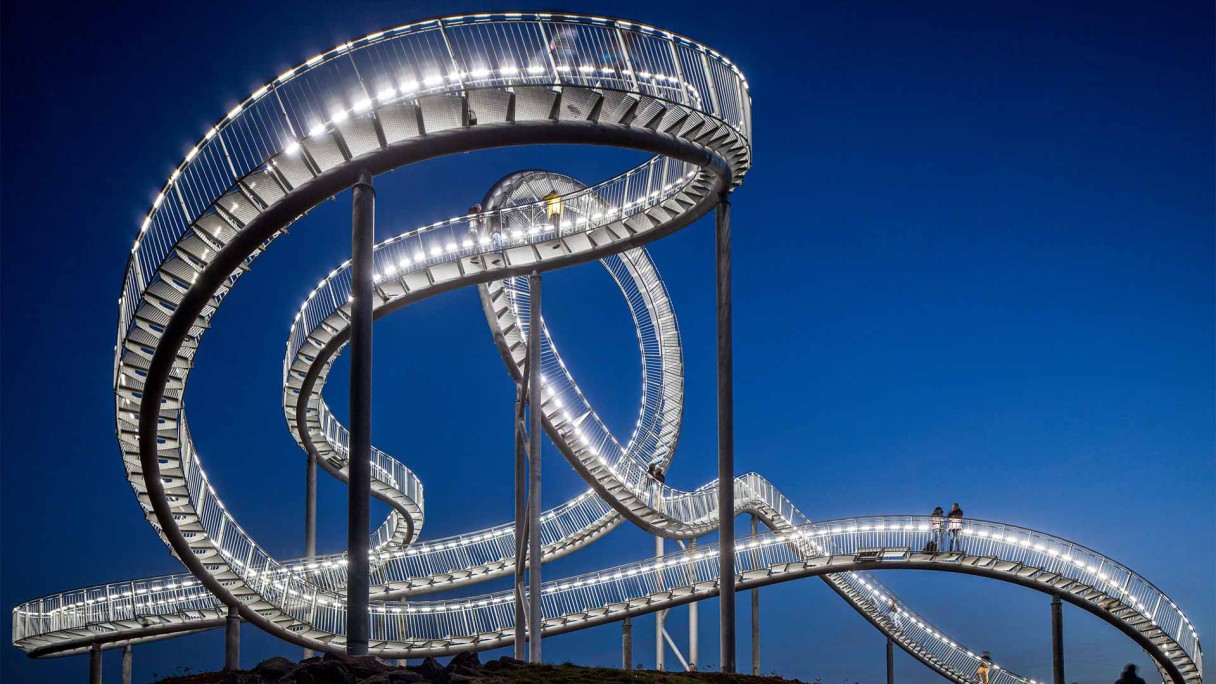
Stairway to Heaven
Admittedly, the steps of the walk-in sculpture “Tiger & Turtle” on a hill on the southern outskirts of Duisburg (Germany) do not quite reach the sky. Especially as the playful loop that crowns the construction cannot be entered for safety reasons. A Liebherr mobile crane was used 15 years ago to assemble the galvanised steel work of art, which is reminiscent of a roller coaster.
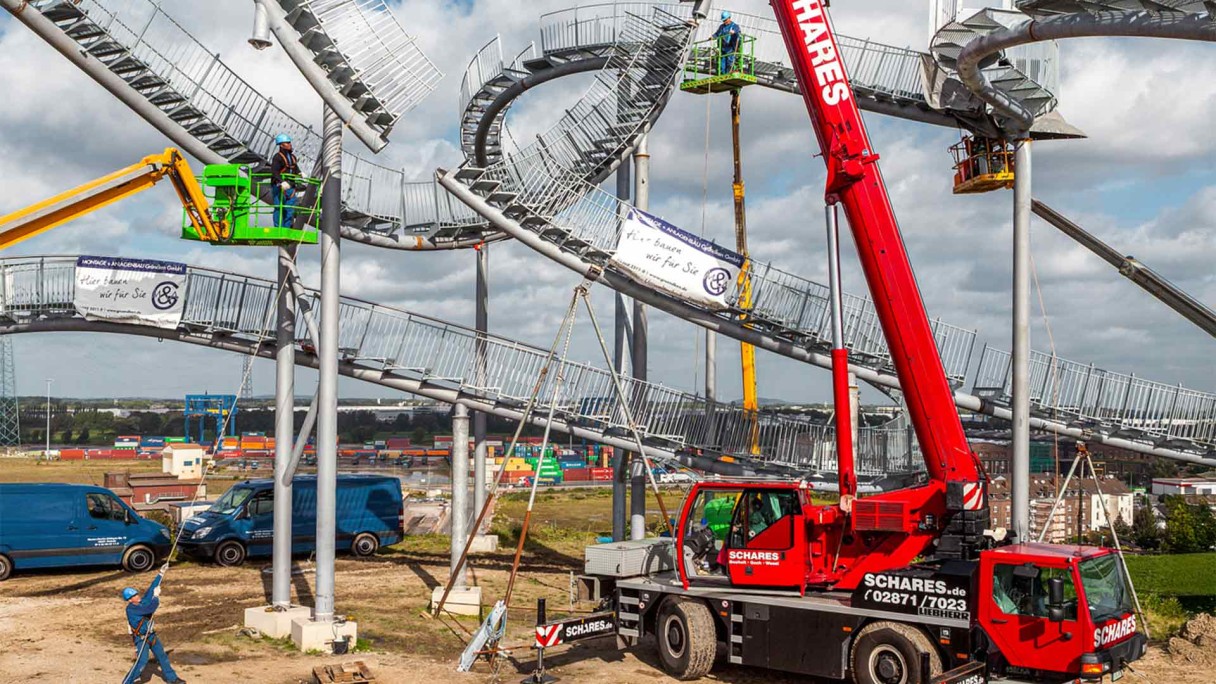
Elegant landmark with roller coaster vibes
The curvy sculpture with the full name “Tiger & Turtle – Magic Mountain”, which makes you a little dizzy just looking at it, was erected in 2011 on the slag heap of a former zinc smelter on the outskirts of Duisburg. The dynamic stair loops, designed by Heike Mutter and Ulrich Genth, have long been a popular viewpoint and a much-visited landmark of the city on the western edge of the Ruhr region. The galvanised steel used is a reference to the 200-year history of the local coal and steel industry.
Crane hire company Autokrane Schares, based in Bocholt, was commissioned with the crane work for the assembly of the unusual installation. It took a full eight weeks to assemble the individual components on the hill. In autumn 2011, a Liebherr LTM 1040-2.1 mobile crane finally completed the 20-metre-high sculpture by installing the looping.
The artist duo took their inspiration for the name from the tiger-like speed of a roller coaster ride on the one hand and the leisurely ascent of the spiral-shaped structure on the other, which tends to happen at a turtle’s pace. Incidentally, the artwork is open at all times and, with the exception of the spectacular-looking loop, is accessible over a length of 200 metres. Even at night. So if you would like to take a short tour on this decelerated rollercoaster, simply enter “Duisburg, Ehinger Straße” into the satnav. We wonder whether the street name is named after our mobile crane that comes from Ehingen. Who knows?

Say “Howdy” to Big Tex
Big Tex, the iconic cowboy figure of the Texas State Fair in Dallas, has been a widely visible landmark of the folk festival for decades. With its 17-metre-high steel structure, it welcomes millions of visitors to the exhibition grounds every year with “Howdy, folks!”. The figure has been modernised several times over the years and reflects the changing nature of the event as well as the pride of the state. For 63 years, the Davis Crane Group has been in charge of its annual setup and dismantling.
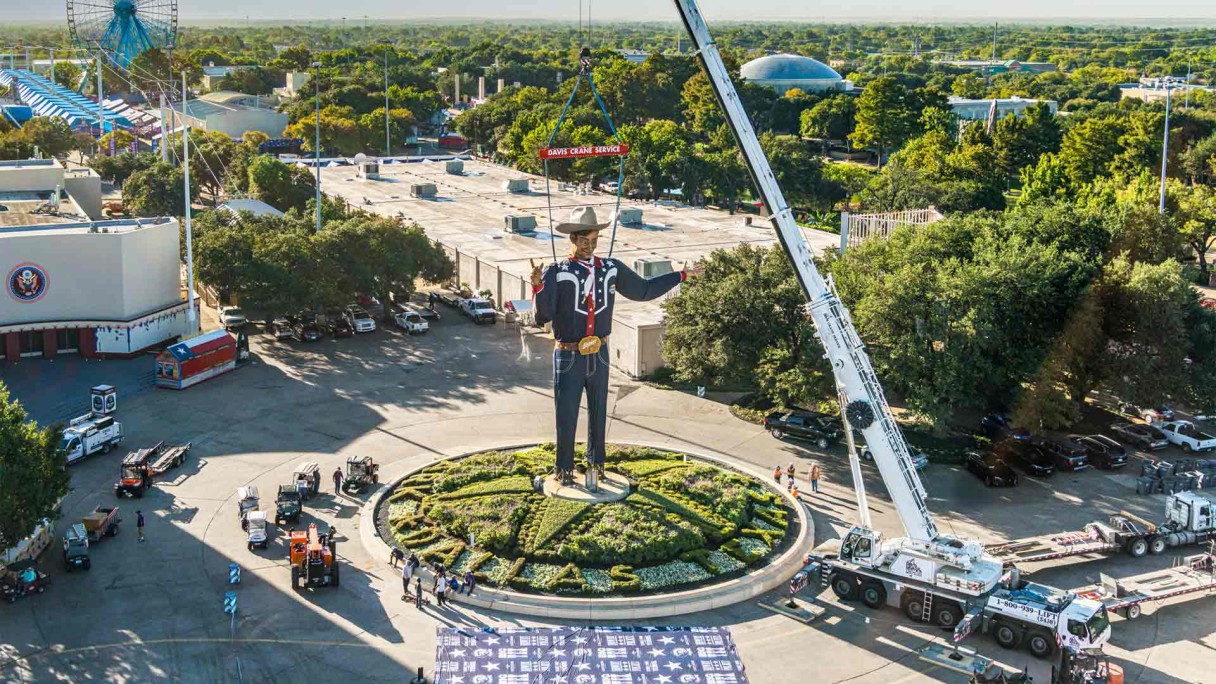
Big Tex – the landmark of the Texas State Fair
Big Tex is the iconic cowboy figure of the Texas State Fair in Dallas and has been a symbol of Texan hospitality for decades. With its imposing height of around 17 metres, it welcomes millions of visitors to the show grounds every year for 24 days in autumn. The figure wears a traditional cowboy hat, jeans and boots – a true ambassador of the “Lone Star State”. Big Tex was originally introduced as an advertising figure in 1952 and quickly became a favourite with the public. His distinctive face and deep voice shouting “Howdy, folks!” are legendary.
Following a fire in 2012, Big Tex was completely rebuilt and now looks more modern than ever. For many Texans, a visit to Big Tex is a must, because it embodies pride and tradition. If you visit the State Fair, you can’t miss this giant – a selfie with him is simply a must.
Since the company formation in 1963, the Davis Crane Group has been responsible for erecting and dismantling the 11.3-tonne cowboy figure, using Liebherr mobile cranes of various types.