

Liebherr-Aerospace & Transportation SAS
Pfänderstraße 50-52
88161 Lindenberg
Germany
+49 8381 4644-03
News | 17/03/2026
Liebherr-Aerospace Lindenberg GmbH is pleased to be program partner of two pioneering research projects within the German aviation research program LuFo VII (LuFo = Luftfahrtforschungsprogramm) funded by the Federal Ministry for Economic Affairs and Energy (BMWE): FAUST and TiReGo. The program aims to pursue sustainable goals in line with the German government's aviation strategy. The funding measures are designed to improve the technological basis and economic and technical situation of the aviation industry and air transport. The focus is on strengthening innovation and expertise in research, development and production in Germany. In partnership with leading companies and research organizations, Liebherr-Aerospace is driving the development of new technologies to make air travel more sustainable, efficient, and competitive. The projects FAUST and TiReGo are focussing on future hydraulic systems for more sustainable aviation and making production of titanium structural components significantly more sustainable.
In the current generation of passenger aircraft flying worldwide, hydraulic systems are operated with large, engine-dependent aggregates (engine driven pumps). Furthermore, there is currently no substitute for the hydraulic fluid that offers better environmental compatibility while maintaining the same performance. The implementation of future aircraft architectures with the expected new propulsion technologies will require a decoupling of the propulsion system from the hydraulic system architecture. In addition, the available installation spaces for the aggregates are becoming smaller, which necessitates corresponding solutions. The increasing demands for the operating fluids used will make the use of today's hydraulic fluids increasingly difficult.
The project FAUST aims to significantly reduce the climate impact of the next generation of short- and medium-haul aircraft through innovations in hydraulics. The consortium partners Airbus (project lead), HYDAC, Liebherr-Aerospace, Technische Universität Dresden, Technische Universität Hamburg, NYCO (Advisory Function) will develop solutions for component miniaturization to enable their installation in various spaces (e.g. highly swept wings). Central to this is establishing the prerequisites for high-efficiency power packs (HePP), which decouple the generation of hydraulic energy from the engine (eliminating engine driven pumps). This improves engine efficiency and reduces the integration and testing effort for the systems. Additionally, environmentally harmful materials will be replaced. A new, more environmentally friendly hydraulic fluid will be investigated, and alternatives to lead-containing alloys will be developed to comply with future regulations. All measures contribute to a more sustainable aviation sector.
The project is structured into three main work packages (WPs). WP 1 (electro-hydraulic systems) focuses on developing a product line solution for hydraulic power packs. Requirements are defined, system solutions for large (HePP) and miniaturized (miniHePP) power packs are developed, and the concepts, including hybrid control, are verified in laboratory tests. The work concludes with an overall assessment of the technologies.
WP 2 (fluids of the future) investigates alternative, environmentally compatible fluids through comparative analyses. Simultaneously, the influence of air content on system performance and service life, including the analysis of previously unknown time constants, is researched.
In WP 3 (holistic assessment) a final evaluation and consolidation of all results derives recommendations for future product lines, and assesses the exploitation perspective holistically based on feasibility, sustainability, and economic viability.
In detail, Liebherr develops in FAUST hydraulic power pack concepts specifically tailored to aircraft requirements. The company focuses on miniaturization, theoretical design, and confirmation of predicted performance through specialized test campaigns. Simultaneously, it pursues environmentally friendly materials as sustainable alternatives to existing ones e.g. lead-free pump parts.
The project FAUST is funded under the German Aviation Research Programme LuFo VII 1. Further information can be found at: www.luftfahrtforschungsprogramm.de
TiReGo aims to make the production of titanium structural components significantly more sustainable. At its core, the project establishes a closed material cycle that efficiently converts recycled titanium into high quality parts, strengthening both, resource conservation and supply security. By optimizing the entire process chain, energy demand, CO₂ emissions and costs can be substantially reduced without compromising material quality. In parallel, the manufacturing process becomes more flexible and efficient, enabling the reliable production of components for demanding applications – especially in the aerospace sector. TiReGo demonstrates how advanced lightweight materials and sustainable circular economy concepts can be successfully combined.
Project partners:
The project is funded under the German Aviation Research Program (LuFo VII 1) of the Federal Ministry for Economic Affairs and Energy (BMWE).
Within this collaborative project, Liebherr-Aerospace Lindenberg GmbH focuses on evaluating the mechanical properties and component characteristics of materials, comparing them to conventionally forged parts.
Liebherr-Aerospace examines open-die forgings produced from smaller ingots to assess how grain refinement affects key mechanical properties such as tensile strength and fracture toughness. These properties are essential for the design of landing gear structural components and serve as important quality indicators for the material.
In addition, the company investigates the material properties of open-die and closed-die forgings manufactured from large ingots.
As end user, Liebherr will manufacture and test a demonstrator. An existing landing gear structural part will be produced and tested using the new TiReGo manufacturing process route. The component tests on a Liebherr test rig will include fatigue and strength testing, following procedures similar to those required for qualification in serial production. Afterwards, the demonstrator will be compared to a conventionally manufactured part, with both components tested on the same rig and the results will be analyzed.
The new manufacturing route in terms of energy and CO2 efficiency will be evaluated together with the project partners as well as the production costs. Finally, Liebherr-Aerospace will contribute defining the final plant concept.
22/09/2026
Press releases
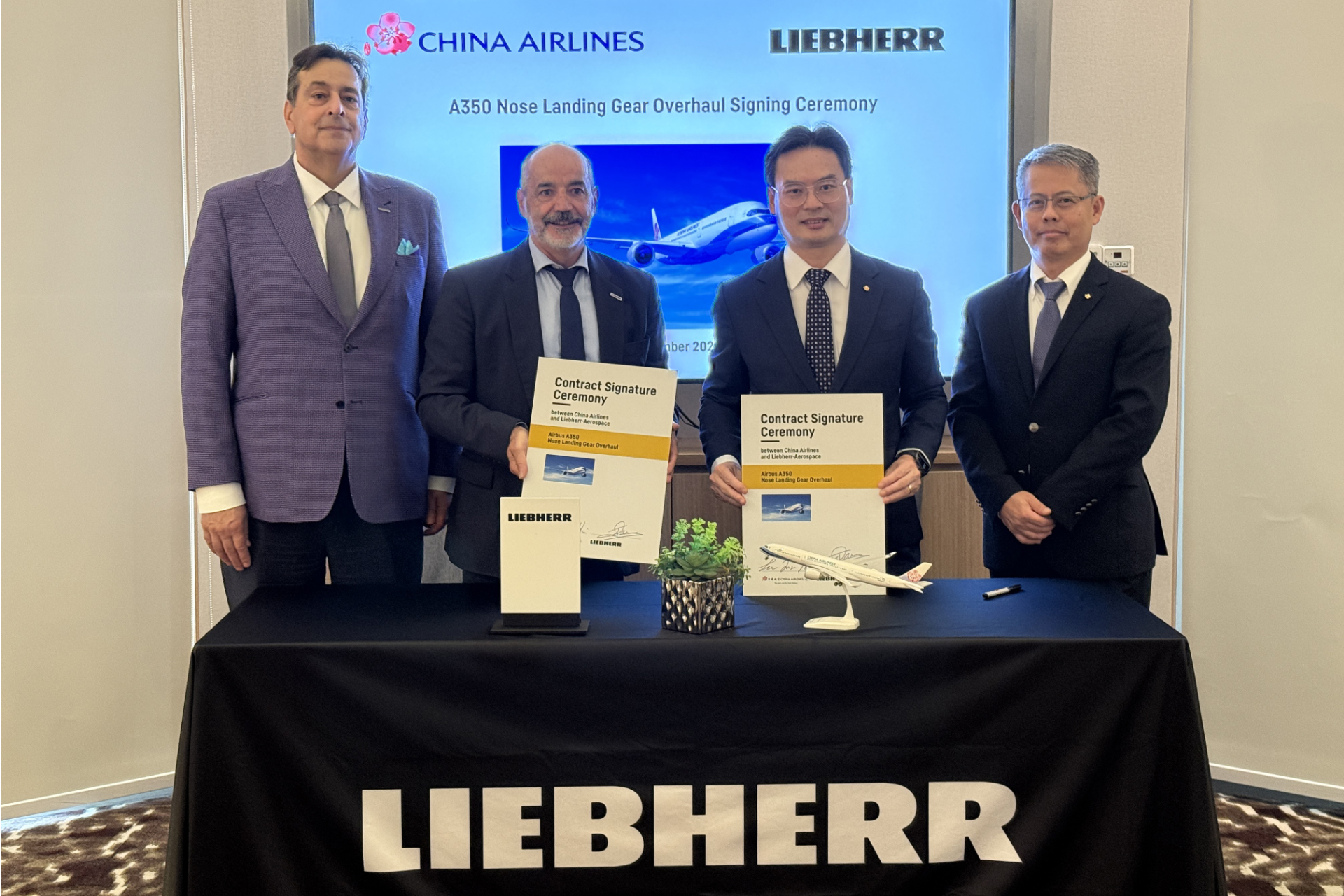
Liebherr-Aerospace and China Airlines reach an agreement for Airbus A350 nose landing gear overhaul
Liebherr-Aerospace and China Airlines have reached a commercial agreement for the overhaul of nose landing gear on the airline’s Airbus A350 fleet. The campaign is set to start this year and will continue through 2031.
21/09/2026
Press releases
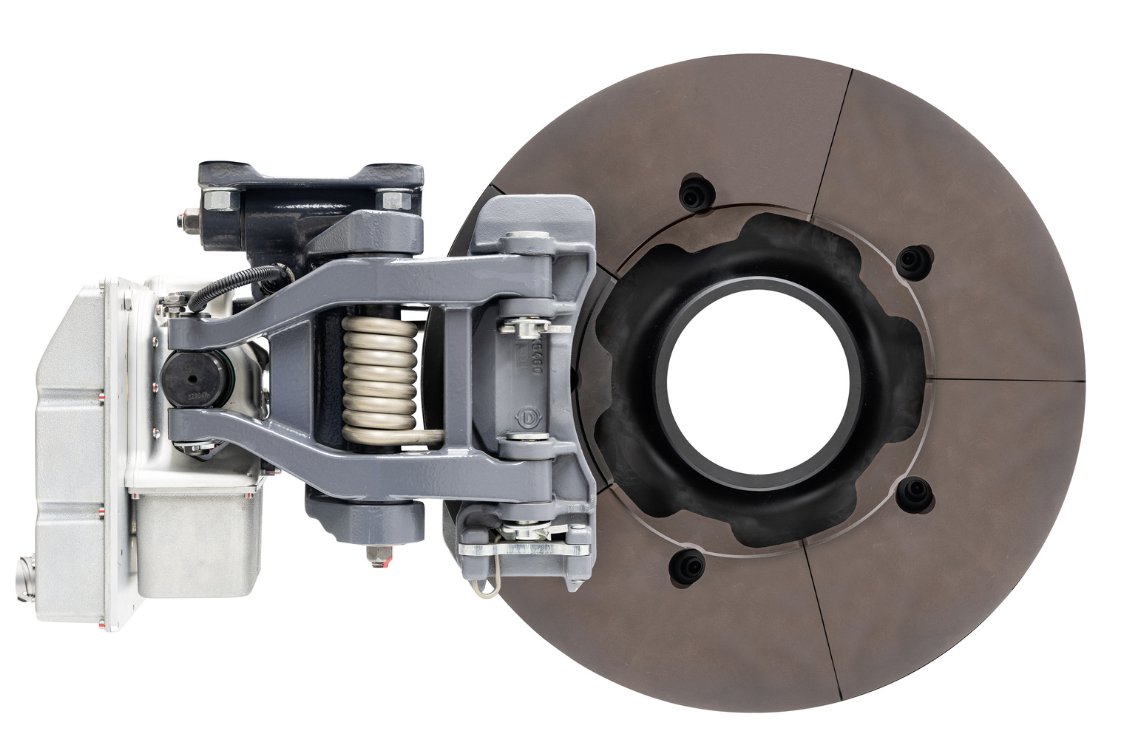
Liebherr – a reliable partner at InnoTrans 2026
At InnoTrans running in Berlin (Germany) from September 22 to 25 2026, Liebherr is presenting solutions from the transportation systems and rail-road excavators product areas. The Group will be displaying its exhibits at booth O/170 in the outdoor area. The Group’s appearance at the exhibition is focused not only on products, but also on topics such as partnership and its joint efforts with customers to actively shape the future.

18/09/2026
News
Liebherr-Aerospace participates in MRO Asia-Pacific 2026
Liebherr will present its customer service solutions [UB1.1]for the Asia-Pacific region from September 22 to 24, 2026, at booth no. 2207 in Singapore.