
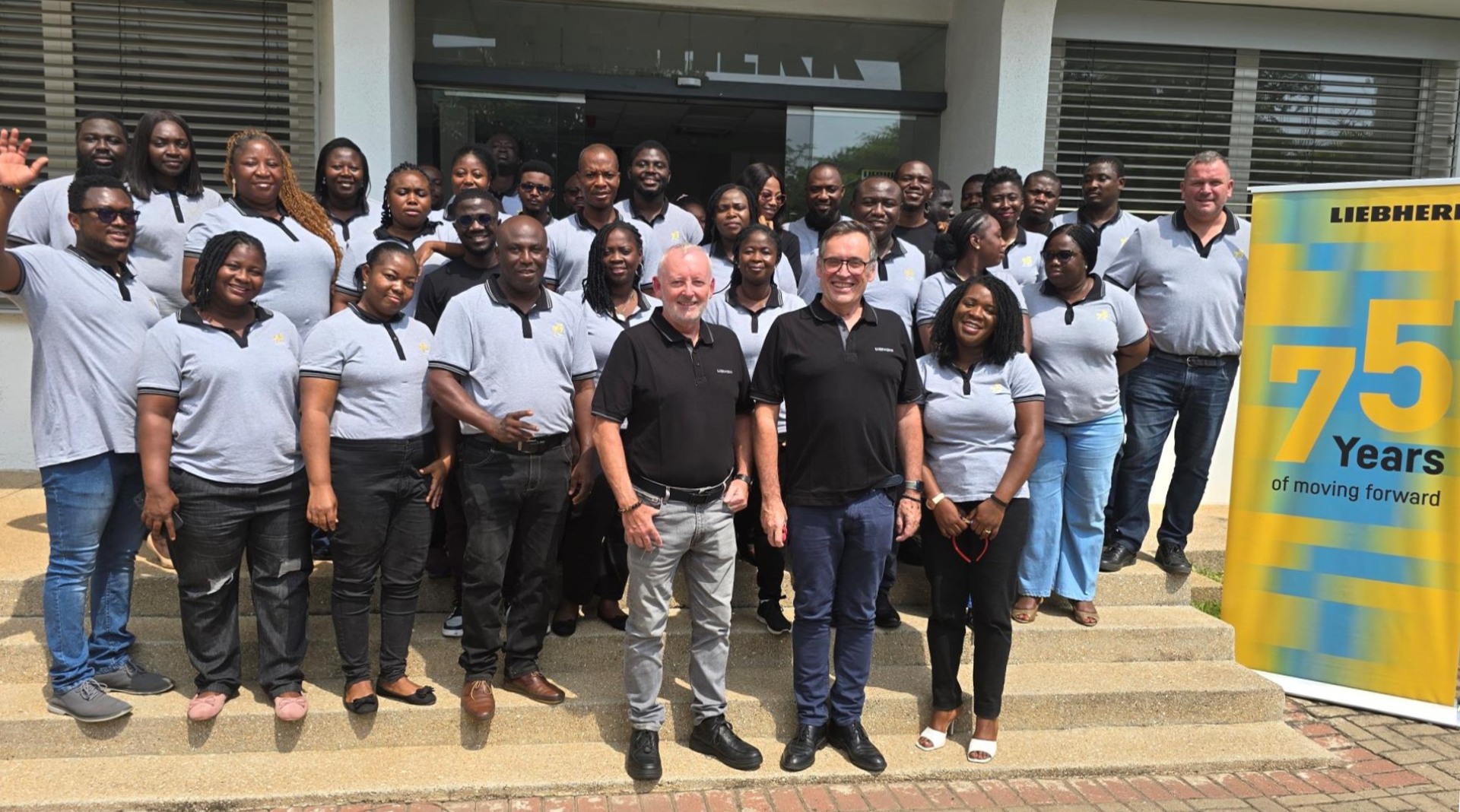
Friends in faraway places: getting to know Liebherr-Ghana
Historically, Ghana has been known for its incredible gold resources. For centuries, the country was known around the world as the Gold Coast. But did you know that the West African country also has rich reserves of bauxite, manganese, iron ore and diamonds? Not to mention critical commodities like lithium and rare earth minerals?
The mining sector plays an incredibly important role in Ghana’s economy as a major contributor to both the country’s GDP (gross domestic product) and the job market. To provide quality support to the growing number of Liebherr mining machines working in these mines, Liebherr- Ghana Ltd. was founded in 2008. As managing director of finance and administration for this sales and service company, Etienne Dupuy knows just how important it is to provide high-quality mining equipment as well as timely customer support for that equipment. We sat down with Etienne to better understand the unique needs of Ghanaian miners and their Liebherr machines.
What makes the Ghanaian mining industry different from other industries?
Mining in Ghana has long been associated with progress, territorial development and social mobility. It is an industry that dates back several centuries and has produced many highly skilled professionals. Ghanaian mining engineers in particular are recognised internationally and contribute significantly to the global mining industry. Public perception of mining in Ghana also remains very positive. For many people, the sector represents opportunity and a promising future for younger generations.
Another defining feature is Ghana’s strong institutional framework, supported by the country’s dynamic Minerals Commission and Chamber of Mines. Over the years, Ghana has positioned itself as a reliable and attractive investment destination for mining companies. Government policies have introduced local content regulations, reduced mining lease durations and supported exploration – all of which have helped create new opportunities for investment.
The recent reduction of mining lease durations in Ghana from 30 years to 10 or 15 years has meant that speed is now a defining characteristic of the industry and a strategic priority for mining companies in Ghana and across West Africa. The pace at which companies identify resources, secure permits and develop and operate mines is now critical. This has increased the need to maximise equipment uptime and solutions for cost-efficient and sustainable machine life cycles – which all reinforces customer loyalty.
Mining in Ghana is also a mature and highly regulated industry, with strong labour unions and oversight. The state positions itself as a strategic enabler, recognising that the real value of mining lies in industrialisation rather than simply exporting raw materials.
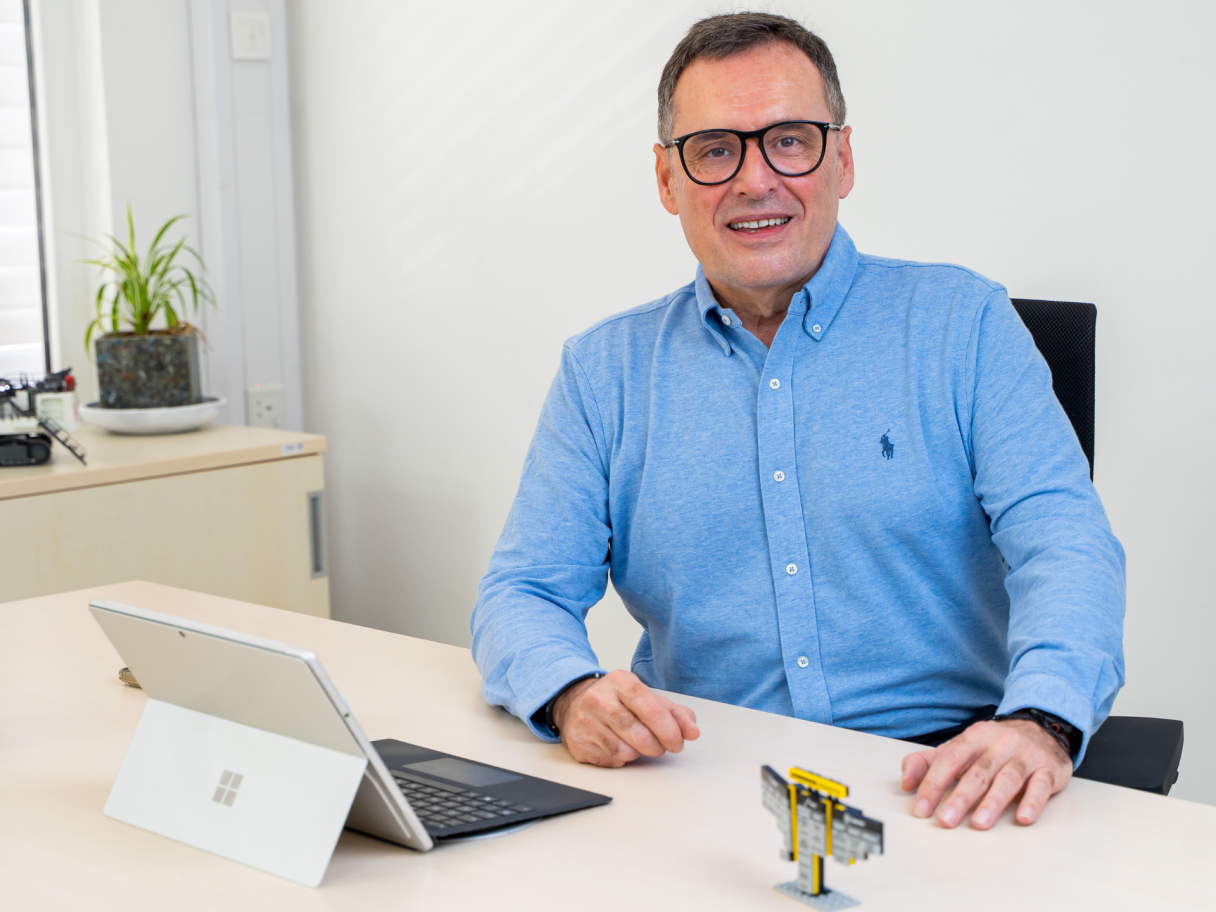
Etienne Dupuy, managing director, finance and administration, Liebherr-Ghana Ltd.
With our headquarters strategically located close to mining companies’ corporate offices in Accra, and our permanent warehousing and remanufacturing workshop in Tarkwa, Liebherr-Ghana has positioned itself for ultimate customer convenience.
How does Liebherr-Ghana support its customers throughout the country?
With our headquarters strategically located close to mining companies’ corporate offices in Accra, and our permanent warehousing and remanufacturing workshop in Tarkwa, Liebherr-Ghana has positioned itself for ultimate customer convenience. We maintain service technicians across seven major mining operations and additionally provide ad-hoc parts supply and technical services to mining contractors throughout Ghana.
How has the Ghanaian mining landscape changed since you first started at Liebherr-Ghana? What are the main drivers for industry and how is Liebherr-Ghana responding to these?
One of the most significant changes I’ve seen since joining the business seven years ago has been the shift from owner mining to contractor mining. This transition forms part of a broader government strategy aimed at strengthening local content development, not only within mining but also in the oil and gas sector.
In January 2025, Ghana’s Minerals Commission formally restricted surface mining operations to Ghanaian-owned companies. This policy effectively promotes contractor mining by requiring contractors to be incorporated in Ghana and fully owned and managed by Ghanaian shareholders and directors.
This transition to contractor mining has obviously impacted the financial structure of our clients’ balance sheets in a big way. Our ability to source competitive financing locally has become an essential part of our commercial strategy.
Ultimately, however, one factor continues to drive the mining economy: the price of gold. While political decisions and global events also influence the industry, gold prices remain the most significant driver of demand.
Speaking specifically about machines, how has the Liebherr fleet in Ghana changed in recent years?
Prior to 2012, the Liebherr fleet in Ghana mostly consisted of small to mid-sized excavators, including the R 984,
R 994 and R 9250 models that were precursors to some of the newer models in our current product portfolio. Customers today still typically prefer the small and midclass excavators, like the R 9200, R 9400 and R 9300 – our new machine in the 250-tonne class. But in 2025, we saw customers begin to show interest in our PR 776 dozer, which resulted in us delivering five of these machines in 2025.
Is there a particular growth market that you identify for Liebherr-Ghana in the near future? How is Liebherr-Ghana well positioned within this market?
Today, environmental and social standards play a critical role in determining access to bank financing and capital markets. Clean mining technology is the future of the Ghanaian mining industry. Liebherr-Ghana is at the forefront of this transition and will be delivering the very first electric excavators in the country, an R 9300 E and an R 9400 E, to one of our clients later this year.
We’re currently focused on providing equipment – specifically dozers, excavators and cranes – to new projects, specifically those in spodumene (lithium), bauxite, iron ore and gold. With three large gold mines set to open over the next two years, we’re hoping this will give us the opportunity to grow our market share.
Clean mining technology is the future of the Ghanaian mining industry. Liebherr-Ghana is at the forefront of this transition and will be delivering the very first electric excavators in the country, an R 9300 E and an R 9400 E, to one of our clients later this year.
Liebherr-Ghana in a nutshell
- Founded in 2008 in Ghana’s capital, Accra
- Provides support for Liebherr’s mining, marine cranes, refrigeration and mobile and crawler cranes product segments
- 131 employees in 2025
Is there anything else you would like to highlight about Ghanaian mining or Liebherr-Ghana?
The Ghanaian market is dynamic and extremely demanding, particularly when it comes to the availability of mining equipment, GET (ground engaging tools), timely service and spare parts. Liebherr-Ghana continues to adapt its strategies to keep pace with customer demands. We have been able to capture multiple opportunities by actively promoting machines that were readily available in stock. The days when we could ask our customers to wait a year for equipment delivery are over.
As the needs of our mining clients continue to evolve, success increasingly depends on the ability of Liebherr-Ghana to align closely with customer needs and deliver consistent, high-value support across the entire mining life cycle. End-to-end partnerships with clients supported by onsite personnel, readily available spare parts supported by our certified remanufacturing centre, continuous joint training programs and simplified maintenance processes – all these help us to sustain our growth and capture greater market share.
Did you know...?
- The country’s name, Ghana, means ‘warrior king’ in the Soninke language, which was spoken by the peoples of the ancient Empire of Ghana.
- Ghana is the second largest cocoa producer in the world.
- The world’s largest artificial lake, Lake Volta, is in Ghana. It spans over 8,500 square kilometres, taking up more than 3.6% of Ghana’s total landmass.
- In the 1990s, a Ghanaian man set the world record for running 100 metres backwards. It only took him 13.6 seconds.
- The cedi, Ghana’s currency, is named for the cowry shell to reflect its importance for trade in many parts of Africa.
- Because of Ghana’s geographical coordinates, many people consider it to be the country closest to the centre of the world.