


The first HS 8300 HD duty cycle crawler crane was recently sold to the Chioggia (Italy) based customer Zeta S.r.l. It will be installed on a ship for various dredging applications in the Mediterranean Sea.
The HS 8300 HD will be part of the equipment of a 41,000t heavy ship manufactured by Cantiere Navale Vittoria S.p.A, which can be classified as hopper dredger ship. The ship is intended to maintain navigable waterways in the Mediterranean Sea, especially trough deepening those canals that are seriously threatened of becoming silted.
The crane is equipped with the hybrd drive Pactronic offering both economic and ecological advantages. Mounted on a pedestal the HS 8300 HD has a weight of about 240 tonnes. It is equipped with a main boom of 41m and an underwater 2-rope hydraulic clamshell with a capacity of 20m³. For optimum performance the crane is fitted with two hydraulic freefall winches offering approximately 50t of line pull each.
You might also be interested in
10/21/2026
Press releases
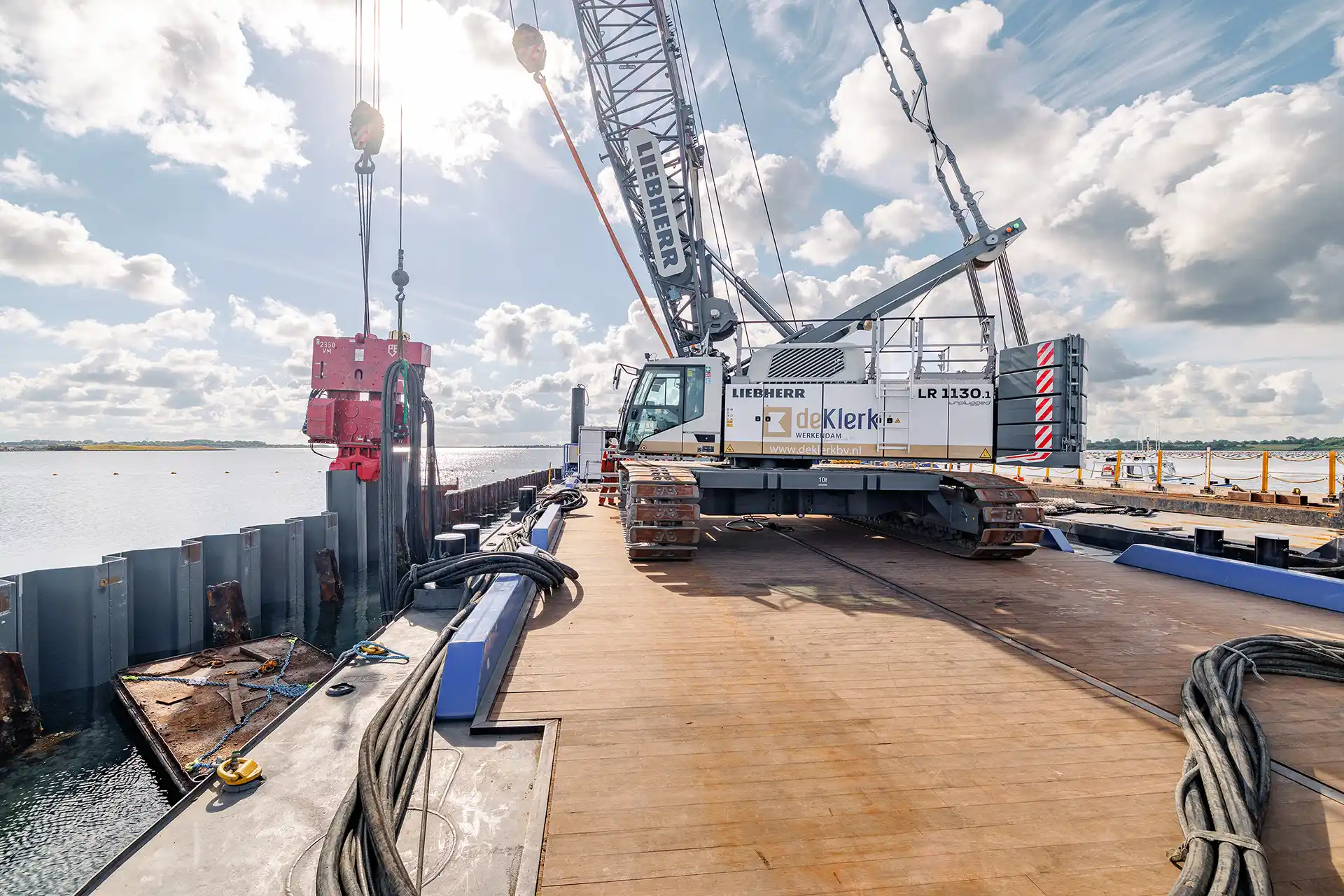
Liebherr electrifies hydraulic construction project with unplugged crawler crane
For the refurbishment of the Brouwer sluice lock complex on the Brouwersdam in the Netherlands, the company De Klerk Werkendam is relying on Liebherr’s battery-powered LR 1130.1 unplugged crawler crane. As part of this, the 50-year-old sheet pile structures are being replaced; these play a key role in regulating the flow of water between the North Sea and the Grevelingenmeer.
10/19/2026
Press releases
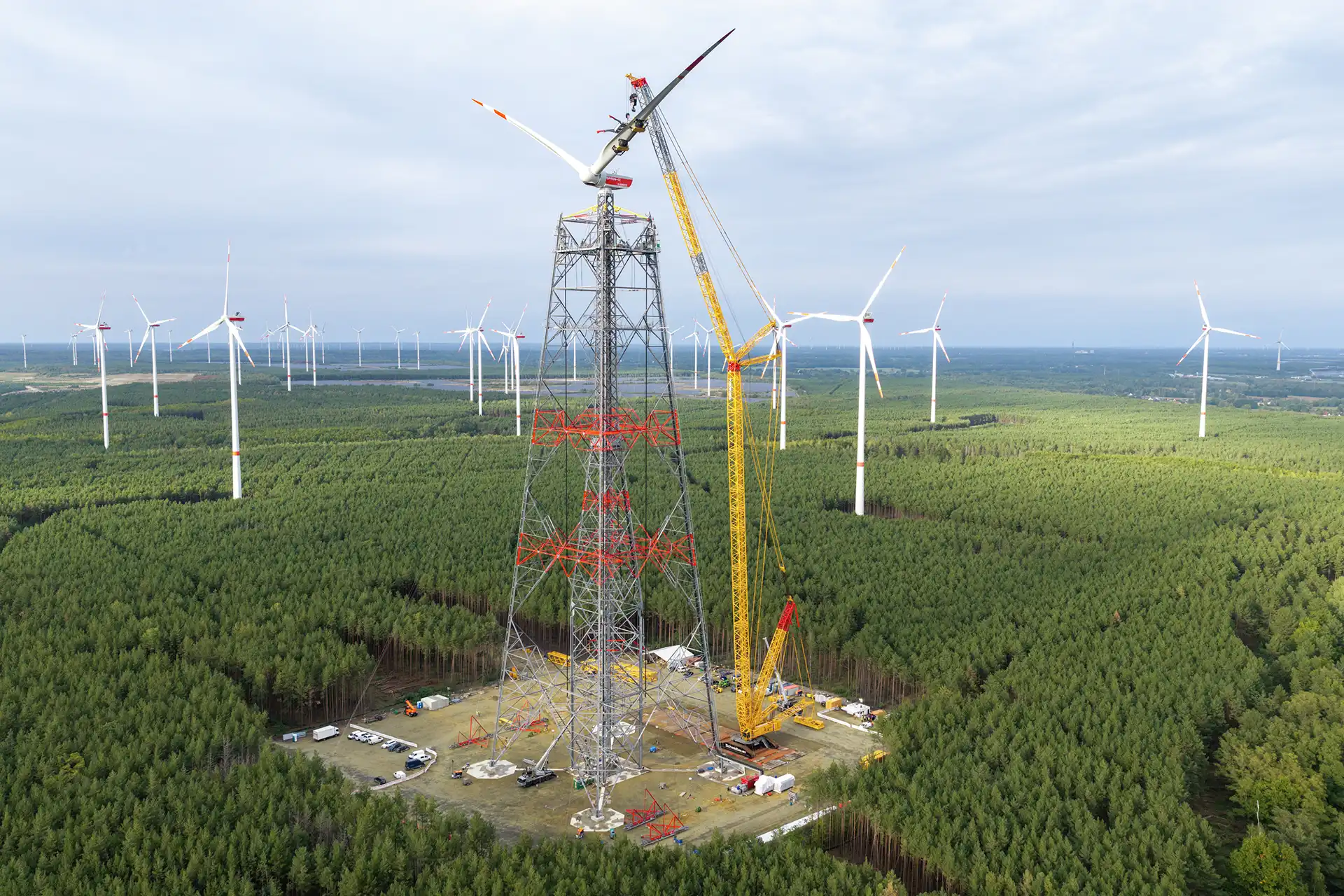
Liebherr LR 11350 erects the world’s tallest wind turbine
At the end of September, what is now the world’s tallest wind turbine was completed. A Liebherr LR 11350 crawler crane from Schmidbauer GmbH & Co. KG was used in the construction of the prototype of the so-called GICON high-altitude wind turbine in Lusatia, Brandenburg.
10/16/2026
Press releases
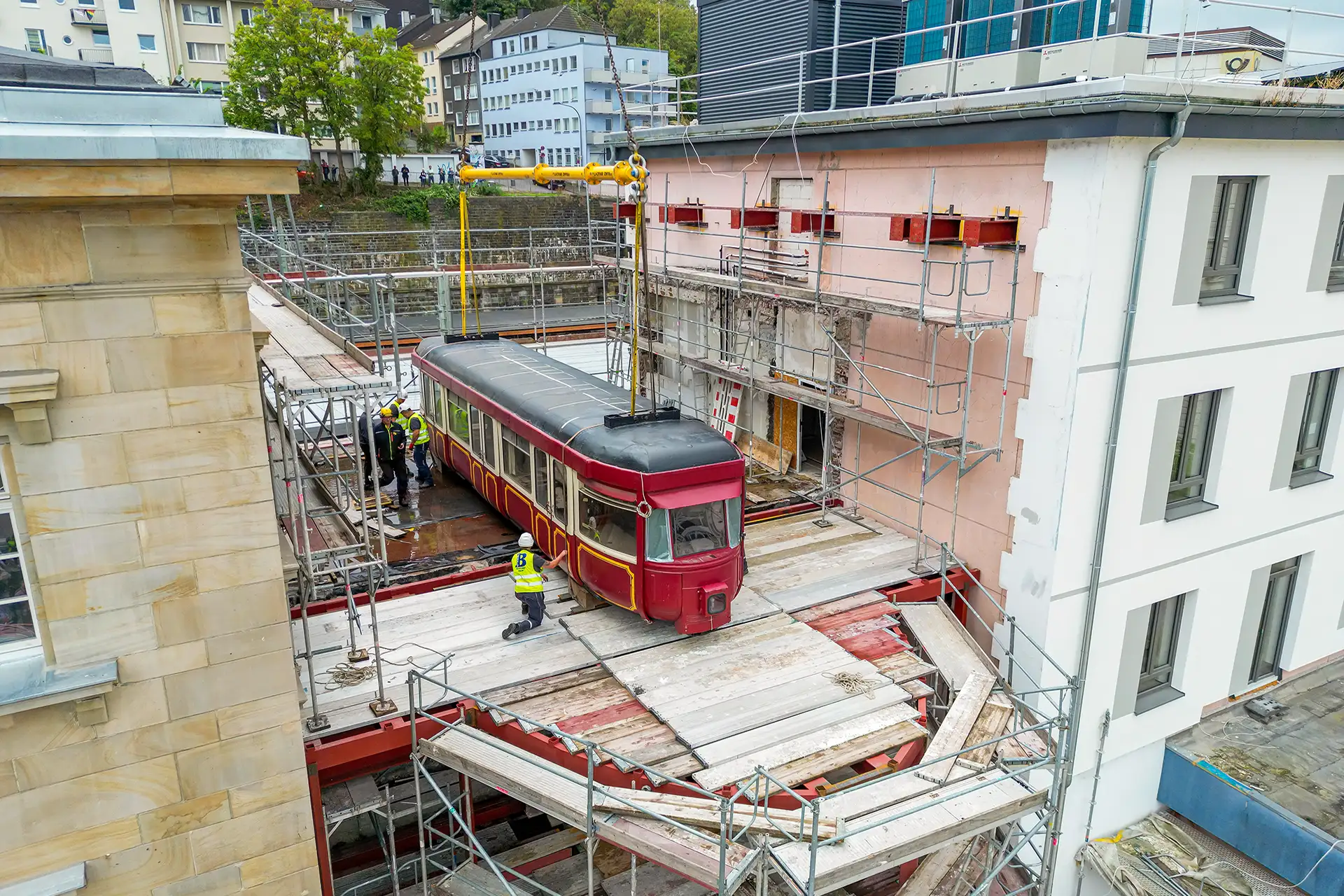
A historic suspension railway carriage is once again gliding through Wuppertal: using a Liebherr LTM 1450-8.1 mobile crane, Franz Bracht Kran-Vermietung GmbH lifted carriage 76, weighing around seven tonnes, into Wuppertal Central Station. Given the limited space available, precise operational planning and modern mobile crane technology were crucial.