



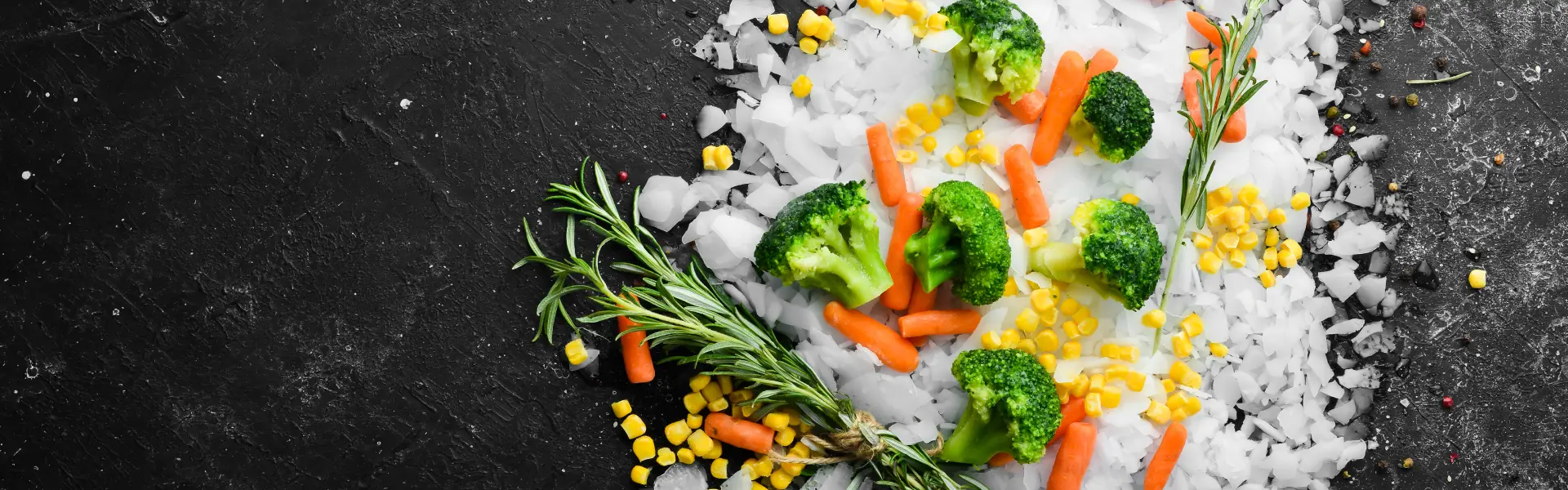
Healthy frozen food: Nutrients and tips
Healthy frozen food is a practical and nutritious solution for everyday life. If you don’t have much time, but want to eat a balanced diet, modern frozen food may be the answer. Flash freezing (very fast freezing at extremely low temperatures) means that vitamins, minerals, and the natural structure of the food can be preserved very well. Fruit and vegetables in particular are often processed and frozen directly after harvest. This puts them at an advantage over fresh products that need to be transported and stored. At the same time, there are important things to note when it comes to selecting and preparing the food. The right knowledge makes it not just easy, but also healthy to integrate frozen food into your daily diet.
The key points
- Frozen vegetables often contain just as many, or even more, nutrients as fresh food
- Flash freezing protects taste, structure, and vitamins
- Prepare frozen vegetables straight from frozen; do not defrost them
- Pay attention to unbroken cold chains and quality
- Choose ready meals purposefully and add to them with fresh ingredients
Is frozen food healthy and nutritious?
Frozen food is often thought to be less fresh, but its nutrient density is impressive.
Its key advantage is in flash freezing: Food is frozen immediately after harvest or production at temperatures under minus 30 degrees. This produces very small ice crystals that don’t destroy the cell structures. Vitamins and minerals are largely preserved.
In contrast, fresh food continuously loses nutrients during transport and storage due to light, air, and heat. The quality of the product is what’s important.
Look out for undamaged packaging and avoid goods with ice crystals on the inside as this may indicate a broken cold chain.
Overall, properly selected frozen food can add to a balanced diet and is a practical alternative in everyday life.
How healthy are frozen fruit and vegetables really?
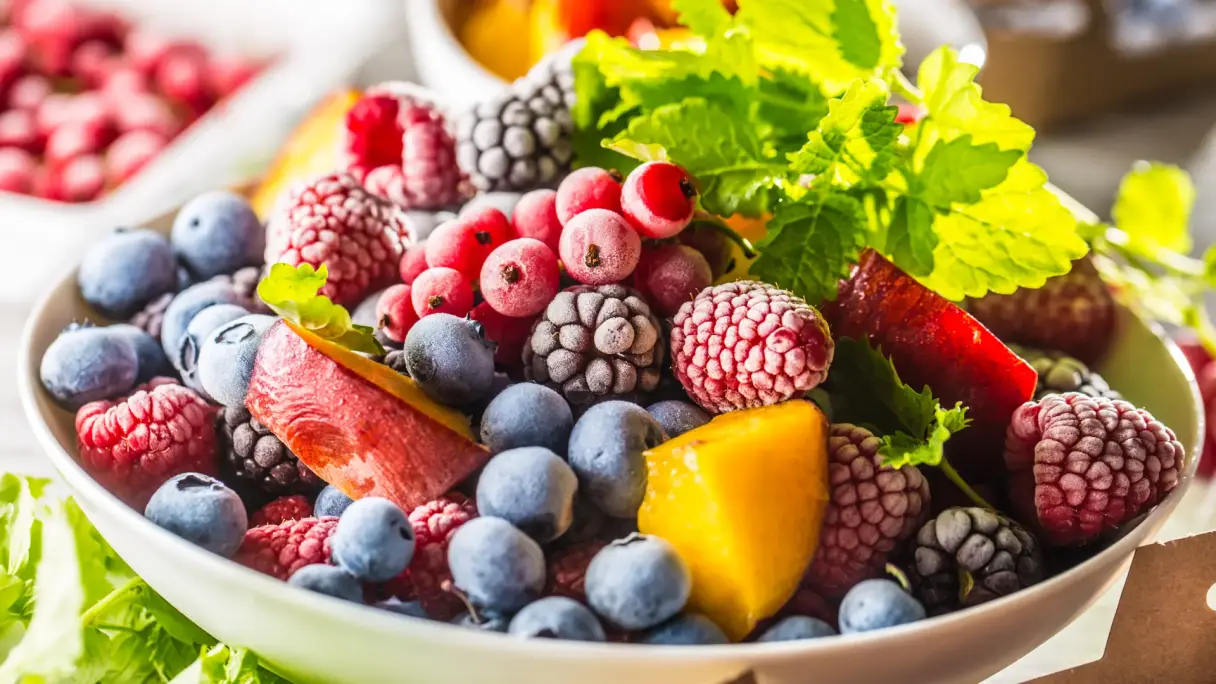
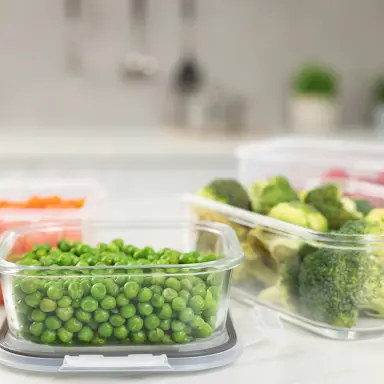
Frozen fruit and vegetables are particularly popular with health-conscious consumers. Fast processing after harvest and subsequent storage in the freezer preserves the natural nutrient content amazingly well.
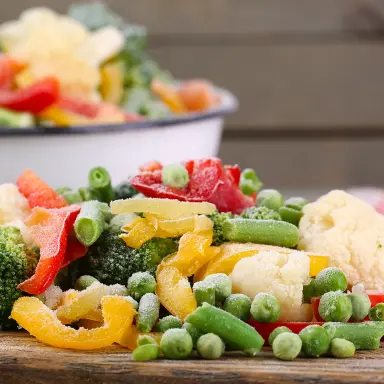
Frozen fruit is incredible in smoothies, bowls, and desserts, and contains valuable vitamins. You can benefit from a wide variety in vegetables: from broccoli to spinach, almost everything is available all year round. The important thing is choosing the right products. Opt for unprocessed variants with no added sugar, salt, or fat. Products with sauces or butter often contain unnecessary additives.
Studies show that regularly eating vegetables helps you meet your daily nutritional requirements. So think about what types you like to eat; this makes it easier to integrate the recommended amounts of fruit and vegetables into your everyday life.
The best way to cook frozen vegetables
Proper preparation is crucial to preserve the quality of frozen vegetables. You should generally cook frozen vegetables straight from frozen.
Defrosting beforehand can impact the structure and nutrients. Multiple methods are available to you for cooking amazing food.
For boiling, place the vegetables directly in the boiling water or steam them for a gentler approach. Frozen vegetables can be fried in a pan with a little bit of oil. This gives them an intense flavour.
You can also roast them in an oven: mix the vegetables with oil and roast them until crispy. Always make sure that the vegetables are sufficiently heated to kill off any germs.
Ideally, you should season your food yourself during cooking to control the taste and contents.
How can you tell if ready meals are healthy?
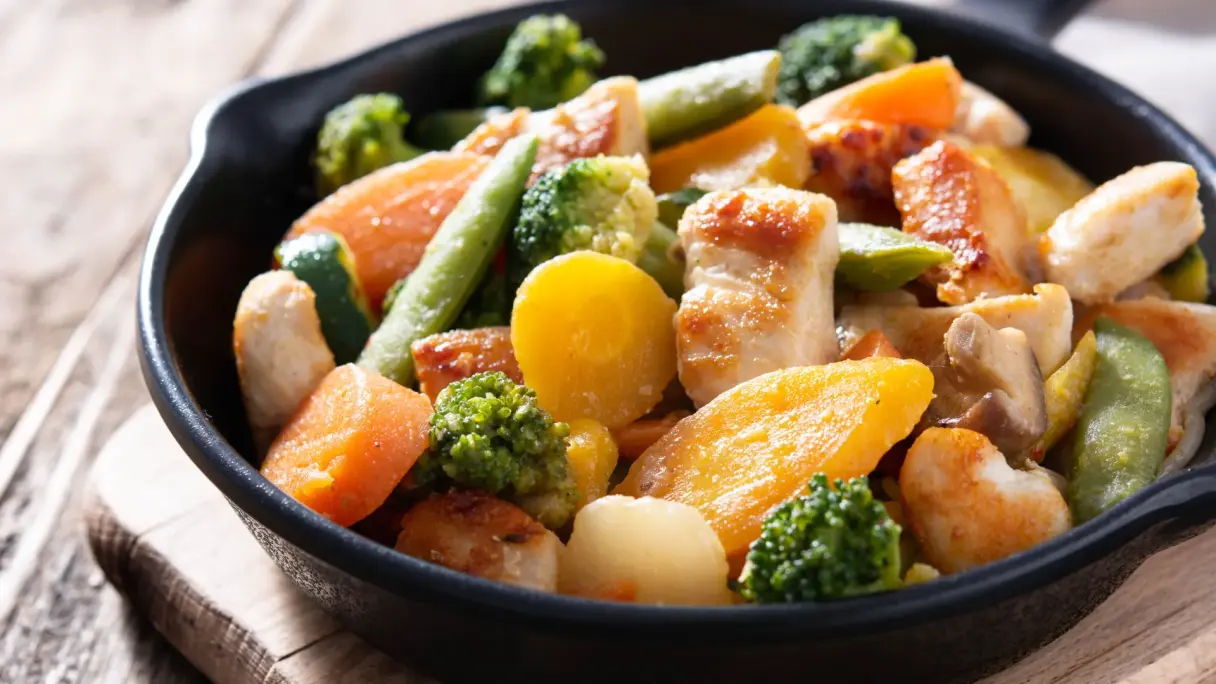
Ready meals are often criticised, but when properly selected they can be part of a healthy diet.
Pay attention to the list of ingredients when shopping: Healthy ready meals contain a large amount of vegetables, ideally at least 30 percent. They should also be rich in protein, for example from pulses, and contain little sugar or salt. As a guideline: less than 5 g sugar and less than 1 g salt per 100 g.
Avoid products with flavour enhancers, artificial flavours, or highly processed fats.
Frozen variants often have the advantage that nutrients are better preserved than in fresh ready meals. For even better balance, it’s good to add fresh ingredients to ready meals, such as vegetables and herbs. This increases the nutritional value and makes your plate fresher.
This text was machine translated from English.